
Pyar Ke Do Pal (1986)
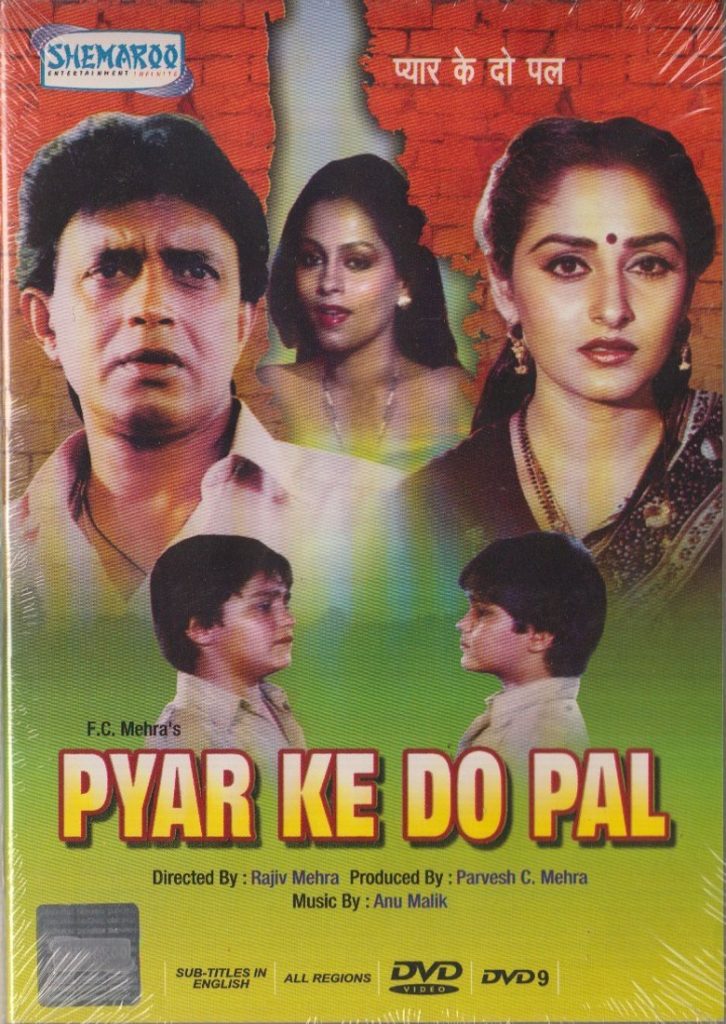
Story overview
In this 1986 Indian action-drama, Geeta Choudhary helps her friend Rajni by having an abortion under Rajni's name so Rajni can marry. When this secret is revealed, Geeta's husband Ashok accuses her of infidelity and forces her to leave their home. The couple's twin sons, Sunil and Anil, are separated—each parent gets custody of one child. The boys meet at a Scout camp and, unaware of the danger, devise a plan to reunite their parents, putting themselves and others at risk.
Parent Guide
A dramatic family story with action elements, suitable for mature pre-teens and up due to thematic complexity and emotional intensity.
Content breakdown
Includes perilous situations as the twins' plan unfolds, with action sequences typical of 1980s Bollywood dramas—chases, confrontations, and implied threats. No graphic violence shown.
Emotionally disturbing scenes include marital conflict, forced separation of family, and the twins in dangerous situations. The abortion theme and accusations of infidelity may be unsettling for sensitive viewers.
Hindi dialogue with occasional heated arguments and emotional outbursts, but no strong profanity. Subtitles may vary in translation.
References to infidelity and abortion, but no explicit sexual content or nudity. Themes are discussed rather than depicted.
No depiction of alcohol, drugs, or tobacco use.
High emotional drama throughout—betrayal, family breakdown, reconciliation attempts, and tense reunions. The twins' plight and parental conflict drive intense scenes.
Parent tips
This film deals with mature themes like abortion, marital conflict, and family separation, which may be confusing or distressing for younger viewers. The twins' dangerous plan to reunite their parents involves perilous situations typical of action dramas. Parents should be prepared to discuss the emotional impact of family breakdown and the consequences of secrets and misunderstandings. The film's length (over 2.5 hours) may challenge younger attention spans.
Parent chat guide
Parent follow-up questions
- How do you think the twins felt when they were separated?
- What are some safe ways to help people you love?
- Why did Ashok get so angry at Geeta? Was it fair?
- What could the twins have done instead of their dangerous plan?
- How does the film show the consequences of keeping secrets?
- What does the story say about judging others without knowing the full story?
- Discuss the ethical dilemmas Geeta faced in helping her friend. What would you have done?
- How does the film portray gender roles and societal expectations in 1980s India?
🎭 Story Kernel
The film explores the tension between romantic idealism and practical reality through its central conceit: a love story confined to a single train journey. It's not about whether the protagonists end up together, but about examining love as an intense, concentrated experience rather than a lifelong commitment. The characters are driven by a shared desire to escape their mundane realities and experience something pure, even if temporary. The movie suggests that some connections are meant to be brief but profound, challenging conventional narratives about relationships requiring permanence to be meaningful.
🎬 Visual Aesthetics
The cinematography creates a contained world through tight framing within train compartments, emphasizing the intimacy and isolation of the protagonists' encounter. A warm, golden-hour color palette bathes their interactions, contrasting with the cooler, bluer tones of the outside world they're passing through. The camera often lingers on close-ups of faces and hands, making small gestures feel significant. The rhythmic editing mirrors the train's motion, creating a sense of forward momentum even as the characters remain physically confined. Window reflections are used cleverly to show dual realities—what's inside versus what's outside their bubble.
🔍 Details & Easter Eggs
💡 Behind the Scenes
The entire film was shot on actual moving trains rather than sets, with the crew working around scheduled rail services. This created logistical challenges but lent authenticity to the confined setting. Several scenes were captured in single takes to maintain the natural rhythm of train movement. The director intentionally cast relatively unknown actors to avoid audience preconceptions interfering with the intimate story. Most dialogue was improvised within scene parameters to create naturalistic conversations.
Where to watch
Choose region:
- Netflix
- Netflix Standard with Ads