
Querelle (1982)
Story overview
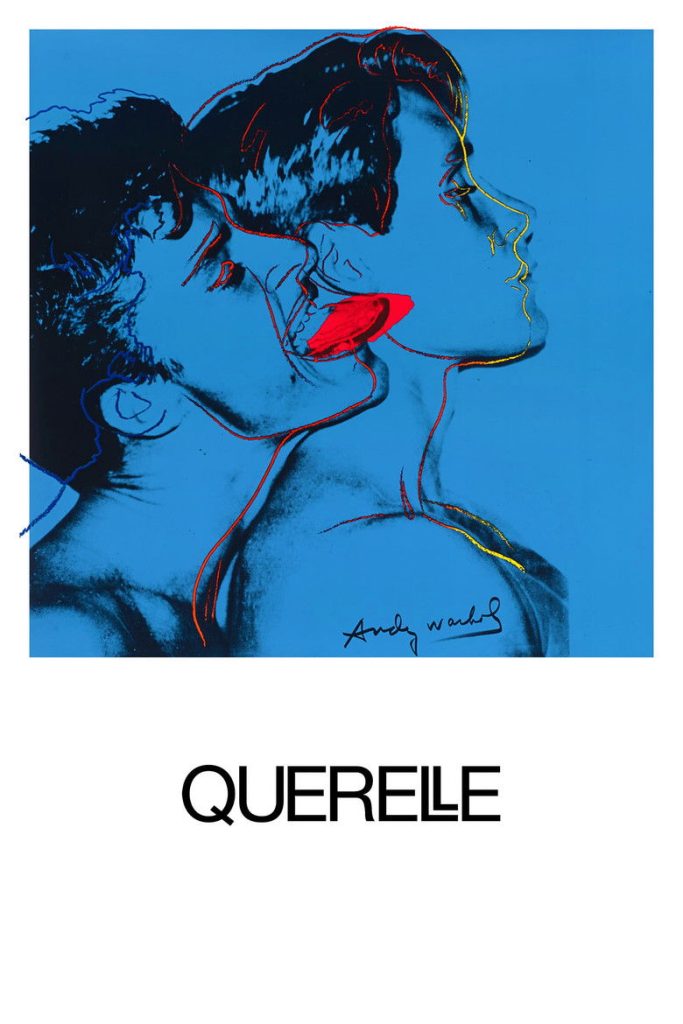
Querelle is a 1982 German-French drama film directed by Rainer Werner Fassbinder, based on Jean Genet's novel 'Querelle of Brest'. It follows the story of a handsome Belgian sailor named Querelle who arrives in the port city of Brest. While on shore leave, he engages in drug smuggling and murder, but the film primarily focuses on his intense and violent journey of homosexual self-discovery. Through surreal and stylized visuals, the film explores themes of identity, desire, crime, and existential transformation, depicting how Querelle's experiences fundamentally change him from who he once was. The narrative is charged with psychological and sexual tension, set against a dreamlike, atmospheric backdrop that blurs reality and fantasy.
Parent Guide
This film contains very strong adult content including explicit sexual scenes, graphic violence, drug use, and intense emotional themes. It is not appropriate for viewers under 18 due to its mature and challenging nature. The surreal style and complex narrative may also be confusing for younger audiences.
Content breakdown
Contains graphic violence including murder, physical altercations, and scenes of peril. The violence is often stylized but intense, with bloodshed and aggressive behavior depicted in a surreal context.
Features disturbing content such as psychological tension, surreal imagery, and themes of crime and existential dread. The film's atmosphere is dark and dreamlike, which may be unsettling for some viewers.
Includes some strong language and profanity, though not excessive. The dialogue contains mature themes and occasional coarse expressions consistent with the film's adult content.
Contains explicit sexual content including homosexual encounters, full nudity, and sensual scenes. The sexual themes are central to the plot and are depicted in a graphic and stylized manner.
Depicts drug smuggling and use, including scenes involving narcotics. Substance use is part of the criminal elements in the story and is presented in a mature context.
High emotional intensity due to themes of self-discovery, violence, and existential transformation. The film explores deep psychological and sexual conflicts, creating a charged and often tense atmosphere.
Parent tips
This film is rated R for strong sexual content, nudity, violence, and mature themes. It is not suitable for children or young teenagers. Due to its explicit depiction of homosexual encounters, graphic violence, drug use, and intense emotional content, it should only be viewed by mature adults who are comfortable with challenging and avant-garde cinema. The film's surreal style and complex themes may also be difficult for younger audiences to understand. Parents should be aware that this is an art-house film with very adult content and is intended for viewers aged 18 and above.
Parent chat guide
Parent follow-up questions
—
—
—
—
🎭 Story Kernel
At its core, 'Querelle' is about the performance of masculinity as a fragile, violent construct. The film isn't simply about homosexuality, but about how identity is forged through transgression and betrayal. Querelle himself is driven by a need to destroy the very image he projects—the perfect sailor—by committing murder and surrendering to Lieutenant Seblon's gaze. Every character seeks validation through degradation: Lysiane through her husband's humiliation, Nono through his wife's infidelity, and the police through maintaining order in a world where law and desire are indistinguishable. The brothel becomes a theater where roles are exchanged, and the only authentic act is the confession of one's deepest shame.
🎬 Visual Aesthetics
Fassbinder creates an artificial, stage-like world where every frame feels painted rather than filmed. The dominant color palette of deep reds, sickly yellows, and oppressive blues saturates the screen, making Brest's port look like a hellish expressionist painting. The camera lingers on bodies as architectural forms—muscles become landscapes, sweat glistens like liquid light. Action is ritualized: the slow-motion boxing match, the deliberate loading of the gun, the careful unbuttoning of uniforms. The recurring use of mirrors and reflective surfaces doesn't show characters as they are, but as they wish to be seen or feared, creating a visual echo chamber of desire and self-deception.
🔍 Details & Easter Eggs
💡 Behind the Scenes
This was Rainer Werner Fassbinder's final film, completed just before his death at 37. The script adapts Jean Genet's novel 'Querelle of Brest,' but Fassbinder made significant changes, particularly emphasizing the theatricality Genet only implied. Brad Davis, who plays Querelle, was primarily known for 'Midnight Express' and reportedly struggled with the role's sexual explicitness. The entire film was shot in Studio Babelsberg near Berlin, with the port of Brest recreated through elaborate sets and matte paintings. Jeanne Moreau's haunting song 'Each Man Kills the Thing He Loves' was recorded specifically for the film, with Fassbinder directing her to sound 'like a ghost remembering pleasure.'
Where to watch
Choose region:
- Amazon Prime Video
- HBO Max
- HBO Max Amazon Channel
- Criterion Channel
- Amazon Prime Video with Ads
- The Roku Channel
- Tubi TV
- Amazon Video
Trailer
Trailer playback is unavailable in your region.