
Quincy (2018)
Story overview
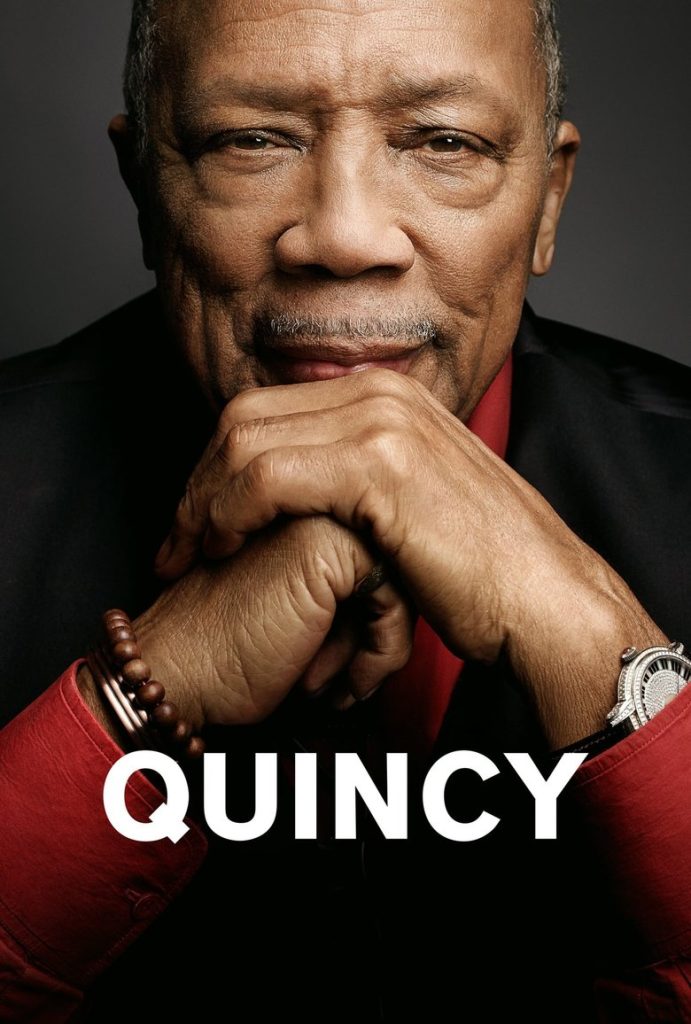
Quincy is a 2018 documentary that provides an intimate portrait of music legend Quincy Jones, tracing his remarkable 70-year career from jazz arranger to pop producer and film composer. The film explores his personal and professional journey, highlighting his role in breaking racial barriers in the music industry and his influence on American culture. Directed by his daughter Rashida Jones and Alan Hicks, it features interviews with Jones himself and notable figures like Tom Hanks and Oprah Winfrey.
Parent Guide
A documentary about music icon Quincy Jones, focusing on his career and cultural impact. It includes discussions of mature themes but is presented in a respectful, non-explicit way.
Content breakdown
No violence or peril depicted.
Mildly disturbing references to historical racism and personal struggles, but no graphic imagery.
Occasional mild language (e.g., 'hell' or 'damn') in interviews or archival footage.
No sexual content or nudity.
Brief, non-glamorized references to alcohol or smoking in historical context.
Moderate emotional intensity from discussions of racism, career challenges, and personal reflections.
Parent tips
This documentary is suitable for older children and teens interested in music history or cultural figures. It discusses mature themes like racism, personal struggles, and industry challenges, but does so in a thoughtful, non-graphic manner. Parents may want to watch with younger viewers to provide context for historical events and discuss the perseverance and creativity Jones demonstrated throughout his career.
Parent chat guide
Parent follow-up questions
—
- What instrument did you like in the movie?
- What was your favorite song?
- How did Quincy Jones help change music?
- Why is it important to try new things like he did?
- How did Quincy Jones navigate racial challenges in his career?
- What can we learn from his ability to work across different music genres?
🎭 Story Kernel
The documentary 'Quincy' is less a straightforward biography and more an exploration of the immense personal cost of a life dedicated to artistic creation and cultural bridge-building. It expresses the tension between monumental public legacy and profound private sacrifice. What drives Quincy Jones is not merely ambition, but a relentless, almost compulsive need to create, to connect, and to prove his worth—a drive forged in the trauma of his childhood and the racism of his era. The film reveals how his identity became synonymous with his work, leaving his personal life and health as collateral damage. The core theme is the paradox of the artist: building universal connections for audiences while navigating profound isolation.
🎬 Visual Aesthetics
The film's visual language masterfully mirrors Quincy's life—a seamless, rhythmic collage. Archival footage, home movies, and contemporary vérité are cut with the precision and swing of a big band arrangement. The color palette often shifts to reflect eras: warm, grainy tones for the jazz age; stark, high-contrast visuals for studio sessions. Camera work in present-day scenes is intimate and shaky, emphasizing his physical frailty against his towering legacy. Key symbolism lies in the recurring shots of airplanes and hotel rooms—visual motifs for a life perpetually in transit, belonging everywhere and nowhere simultaneously.
🔍 Details & Easter Eggs
💡 Behind the Scenes
The film is co-directed by Quincy's daughter, actress Rashida Jones, and Alan Hicks. This familial access is unparalleled, granting the filmmakers intimate, unguarded moments, such as Quincy receiving medical treatments. Much of the contemporary footage was captured over a pivotal three-year period as Jones worked on his final major project, the 2016 Kennedy Center Honors. The production sifted through over 2,000 hours of archival material, including never-before-seen home videos from the personal collections of Jones and his family, to construct this nonlinear narrative.
Where to watch
Choose region:
- Netflix
- Netflix Standard with Ads
Trailer
Trailer playback is unavailable in your region.