
Quite Like Paradise (2024)
Story overview
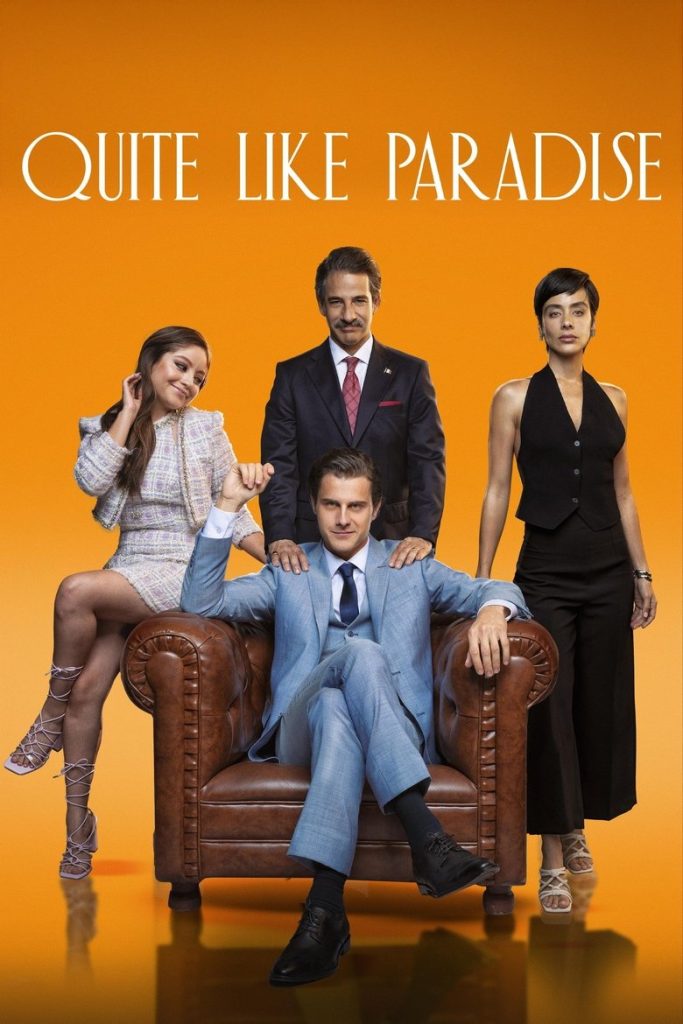
Quite Like Paradise is a 2024 drama-crime-comedy film that blends serious themes with humorous moments. The story explores complex human relationships and moral dilemmas within a contemporary setting. While it maintains a lighthearted tone at times, it delves into mature subject matter typical of its genres.
Parent Guide
A drama-crime-comedy blend with mature themes requiring parental guidance for younger viewers.
Content breakdown
May include crime-related situations and tense moments typical of the genre.
Some dramatic situations could be unsettling for sensitive viewers.
May include mature language consistent with crime and drama genres.
Possible romantic elements or suggestive content typical of adult dramas.
May depict substance use in crime or social contexts.
Combines serious dramatic moments with lighter comedic elements.
Parent tips
This film combines drama, crime, and comedy elements, which may present a challenging mix for younger viewers. The crime aspects could involve mature themes that require parental guidance. Consider previewing the film or watching together to discuss the content appropriately.
Parent chat guide
Parent follow-up questions
- What was your favorite funny part?
- How did the characters help each other?
- What colors did you see in the movie?
- Did you see any animals or toys?
- What made you smile in the story?
- What was the main problem in the story?
- How did the characters solve their problems?
- What would you do if you were in that situation?
- What lesson did the characters learn?
- Which character would you want as a friend and why?
- How did the comedy balance with the serious parts?
- What choices did characters make that you agreed or disagreed with?
- How did relationships between characters change during the film?
- What does the title 'Quite Like Paradise' mean to you?
- How did the film show different perspectives on right and wrong?
- How does this film comment on contemporary society?
- What techniques did the filmmakers use to blend drama, crime, and comedy?
- How did character motivations drive the plot forward?
- What ethical questions does the film raise about crime and justice?
- How does the film's tone affect your interpretation of its themes?
🎭 Story Kernel
The film explores the seductive power of European nobility within the context of Mexican social insecurity. It centers on Ugo Conti, an Italian impostor who infiltrates the elite by exploiting their desperate need for validation from Old World prestige. At its heart, the movie is an indictment of the Malinchismo complex—the tendency to overvalue foreign influence while devaluing one's own identity. It isn't just a story about a con man; it's a mirror held up to a society so obsessed with status and lineage that it willingly blinds itself to the most obvious deceptions. The narrative navigates the tension between the glittering facade of the wealthy and the hollow desperation that fuels their social climbing, ultimately questioning the authenticity of power when it is built entirely on a foundation of lies and performative elegance.
🎬 Visual Aesthetics
Edgar San Juan utilizes a polished, high-contrast visual palette that emphasizes the opulence of the Mexican elite while subtly hinting at the artifice beneath. The cinematography captures the sprawling luxury of modern Mexico City and Acapulco with a glossy finish that mirrors the characters' obsession with surface-level perfection. Framing often places Ugo Conti at the center of symmetrical, grand compositions, reinforcing his manufactured status as a Prince. However, the use of lighting occasionally shifts into colder, more clinical tones during moments of private vulnerability or impending exposure, creating a visual disconnect between the public spectacle and the private anxiety. The production design is meticulous, using architecture and fashion not just as setting, but as armor for the characters, highlighting the contrast between the historic weight of the European myth and the contemporary glass-and-steel reality.
🔍 Details & Easter Eggs
💡 Behind the Scenes
The film is a modern adaptation of the 1956 seminal novel by Luis Spota, which is considered a cornerstone of Mexican urban literature. Director Edgar San Juan updated the setting from the 1950s to the present day to demonstrate the timelessness of the novel's themes regarding social climbing and political corruption. The production is a significant international co-production between Mexico, Italy, and the United States. Lead actor Andrea Arcangeli, who is actually Italian, had to navigate the complex layers of playing a character who is himself performing a specific, idealized version of Italian identity for a foreign audience.
Where to watch
Choose region:
- HBO Max
- HBO Max Amazon Channel