
Race (2016)
Story overview
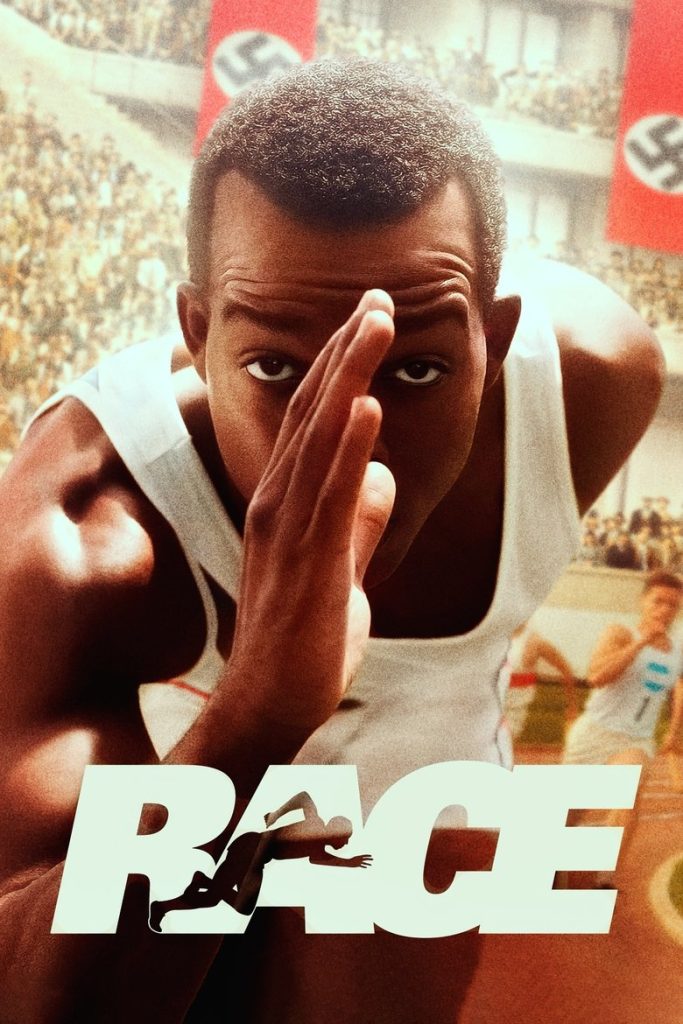
Race is a 2016 historical drama film that tells the inspiring story of Jesse Owens, the legendary African-American track and field athlete who overcame racial prejudice to achieve Olympic glory. Set against the backdrop of the 1936 Berlin Olympics, the film explores themes of perseverance, discrimination, and triumph in the face of adversity. It follows Owens' journey from his college days to his historic performance on the world stage, highlighting both his athletic achievements and the social challenges he faced.
Parent Guide
Historical drama about Jesse Owens' Olympic achievements with themes of racial discrimination and perseverance.
Content breakdown
Some tense competitive moments and historical references to discrimination, but no graphic violence.
References to historical racism and prejudice may be unsettling for sensitive viewers.
May include occasional mild language consistent with PG-13 rating.
No sexual content or nudity expected in this historical drama.
No substance use depicted in this sports-focused historical film.
Emotional themes of discrimination, perseverance, and triumph may be intense for younger viewers.
Parent tips
Race is an uplifting biographical drama suitable for older children and teenagers. The film deals with mature themes including racial discrimination and historical prejudice, which may require parental guidance for younger viewers. While the content is generally appropriate for its PG-13 rating, parents should be prepared to discuss the historical context of racism and the Nazi regime portrayed in the film.
The movie focuses on perseverance and overcoming obstacles, making it a good opportunity to discuss important values with children. Parents may want to watch alongside younger viewers to help them process the historical elements and provide context about the time period.
Parent chat guide
Ask your children how they think Jesse Owens felt during different moments in the film and what they would have done in similar situations. Discuss the importance of treating everyone with respect regardless of differences, and how one person's achievements can inspire others.
Parent follow-up questions
- What was your favorite part of the movie?
- What did you learn about running and sports?
- How did the people in the movie help each other?
- What challenges did Jesse Owens face in the movie?
- How did he show determination and hard work?
- What does it mean to be fair to everyone?
- Why was Jesse Owens' achievement so important historically?
- How did people treat him differently because of his race?
- What can we learn about overcoming obstacles from his story?
- How does the film portray the historical context of racism in the 1930s?
- What does Jesse Owens' story teach us about perseverance against systemic barriers?
- How do you think his achievements impacted race relations in America?
🎭 Story Kernel
At its core, 'Race' is less about athletic triumph and more about the psychological and social battles Jesse Owens faced as a Black man in 1930s America. The film explores the tension between personal ambition and collective identity, as Owens's victories on the track become political symbols he never asked for. His drive stems from a desire to prove his worth in a world that systematically denies it, while navigating the moral complexities of competing in Nazi Germany's 1936 Olympics. The real race is against the societal forces trying to define him, making his athletic achievements a defiant act of self-determination.
🎬 Visual Aesthetics
The film employs a muted, sepia-toned color palette to evoke the 1930s era, with stark contrasts in lighting during key moments—Owens is often framed in shadows or harsh light, symbolizing his isolation and scrutiny. Camera work during races uses dynamic, low-angle shots to emphasize speed and power, making the track feel both expansive and claustrophobic. Symbolism is subtle but effective; for instance, the repeated imagery of gates and barriers mirrors the racial obstacles Owens faces, while the Olympic stadium's grandeur is shot to feel imposing yet hollow, reflecting the hypocrisy of the event.
🔍 Details & Easter Eggs
💡 Behind the Scenes
Stephan James, who portrays Jesse Owens, underwent intensive athletic training to authentically replicate Owens's running style, consulting with track coaches to capture his distinctive form. Filming took place in Montreal, Canada, which stood in for 1930s Berlin and Ohio locations, with the Olympic stadium scenes shot at a reconstructed set to mirror the 1936 Games' scale. Director Stephen Hopkins emphasized historical accuracy, using archival footage and consulting Owens's family, though some timelines were condensed for narrative flow. The film's score incorporates period-appropriate jazz elements to enhance the era's atmosphere.
Where to watch
Choose region:
- Netflix
- Netflix Standard with Ads
- Amazon Video
- Apple TV
- Google Play Movies
- YouTube
- Fandango At Home
Trailer
Trailer playback is unavailable in your region.