
Radio (2003)
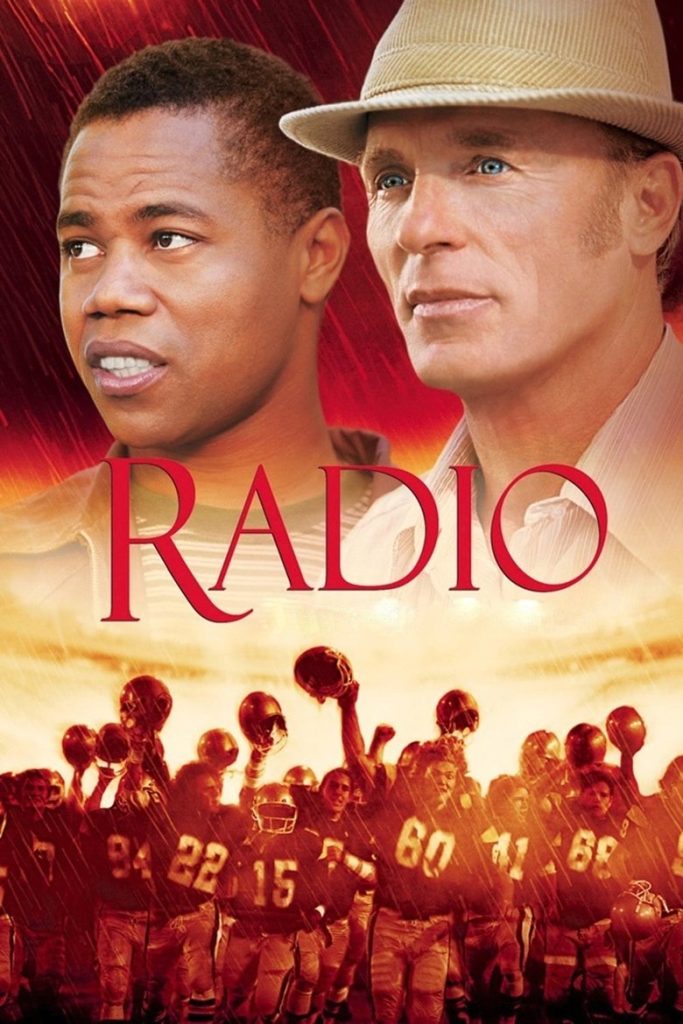
Story overview
Radio is a 2003 drama film based on a true story. It follows the relationship between a high school football coach and a mentally challenged young man nicknamed Radio. The coach takes Radio under his wing, helping him become part of the school community. The film explores themes of kindness, inclusion, and overcoming prejudice.
Parent Guide
Uplifting drama about inclusion and kindness with minimal concerning content.
Content breakdown
Some mild bullying and social exclusion shown, but no physical violence.
Emotional scenes involving social rejection and prejudice, handled gently.
No offensive language noted in PG-rated version.
No sexual content or nudity.
No substance use shown.
Themes of disability, bullying, and social acceptance create emotional moments.
Parent tips
Radio is a heartwarming drama with a PG rating that makes it suitable for most family viewing. The film deals with themes of disability, bullying, and social acceptance in a gentle, uplifting manner. Parents should be prepared to discuss how people with differences are treated in society and the importance of compassion.
While there's no graphic content, some scenes show mild bullying and social exclusion that might be upsetting to sensitive younger viewers. The emotional themes are handled positively overall, with the film emphasizing kindness and community support.
Parent chat guide
Consider discussing why some characters initially exclude Radio and how their attitudes change throughout the story. The film's message about seeing beyond labels and recognizing everyone's value is particularly relevant for family discussions about empathy and acceptance.
Parent follow-up questions
- How did the coach help Radio feel welcome?
- What kind things did people do for Radio?
- How did Radio make people smile?
- Why do you think some people were mean to Radio at first?
- How did Radio's friendship with the coach change both of them?
- What did you learn about including people who are different?
- What does this film teach us about standing up for others?
- How does the community's attitude toward Radio change throughout the story?
- Why is it important to look beyond someone's disabilities?
- How does the film portray the social dynamics of high school communities?
- What broader messages about inclusion and acceptance does this true story convey?
- How do the characters demonstrate growth in their understanding of disability?
🎭 Story Kernel
At its core, 'Radio' is less about a mentally challenged man finding acceptance and more about a community—and specifically Coach Jones—grappling with their own need for redemption. While Radio's journey toward inclusion is the surface narrative, the film's true engine is Coach Jones's quiet desperation to correct a past failure of character. His fierce protection of Radio stems not just from compassion, but from an unspoken recognition that helping this vulnerable man is his chance to become the person he wishes he'd been earlier. The town's gradual acceptance mirrors this internal shift, suggesting that inclusion often says more about the includers' growth than the included's worth.
🎬 Visual Aesthetics
The cinematography employs a warm, sun-drenched Southern palette that initially feels nostalgic but gradually reveals subtle tension. Early shots often frame Radio through windows or from a distance, visually representing his isolation. As the story progresses, the camera moves closer, sharing his perspective more intimately during key moments, like when he nervously clutches the football before his first game. The football field itself becomes a visual metaphor—its orderly lines and boundaries contrasting with Radio's unstructured world, yet becoming the very place where he finds belonging. Slow-motion during sports sequences isn't just for drama; it mirrors Radio's processing speed, making us experience time as he might.
🔍 Details & Easter Eggs
💡 Behind the Scenes
Cuba Gooding Jr. spent weeks observing students at a real South Carolina school for individuals with disabilities to prepare, refusing to mimic stereotypes. The film shot entirely in Walterboro, South Carolina, using many local residents as extras to maintain authenticity. Director Michael Tollin insisted on using the actual 1970s-era football plays from Hanna High School's playbook for accuracy. Ed Harris, playing Coach Jones, reportedly kept his distance from Gooding Jr. off-camera to preserve the coach's initial reserve in their early scenes together.
Where to watch
Choose region:
- Netflix
- Amazon Video
- Apple TV
- Google Play Movies
- YouTube
- Fandango At Home
Trailer
Trailer playback is unavailable in your region.