
Ran (1985)
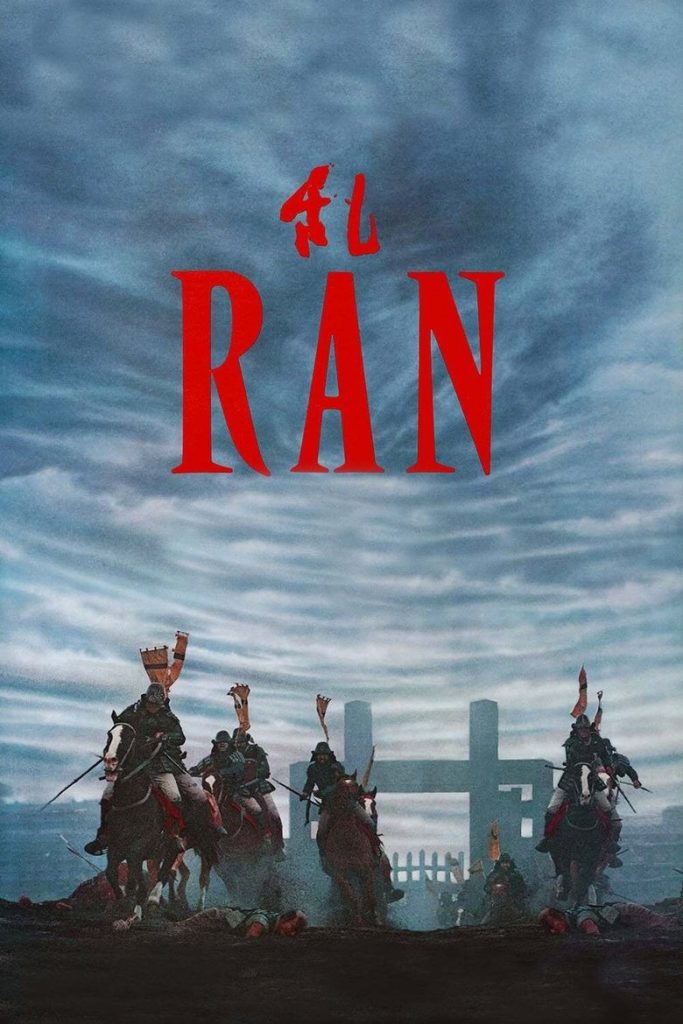
Story overview
Ran is a Japanese historical epic that adapts Shakespeare's King Lear to feudal Japan. The film follows an aging warlord who decides to divide his kingdom among his three sons, leading to tragic consequences. This visually stunning masterpiece explores themes of power, betrayal, family conflict, and the consequences of pride. The sweeping battle sequences and complex character relationships create a powerful meditation on human nature and the cyclical nature of violence.
Parent Guide
A visually stunning but intense historical epic with graphic violence and mature themes about power, betrayal, and family conflict. Best for mature teens who can handle complex narratives and battle scenes.
Content breakdown
Extensive medieval warfare including mass battles, sword fights, archery, and castle sieges with significant bloodshed and casualties. Scenes of betrayal and execution. The violence is stylized but graphic and central to the narrative.
Intense emotional scenes including madness, betrayal, and family disintegration. Some disturbing imagery related to warfare and its consequences. The overall tone is tragic and somber.
Minimal strong language. The film is in Japanese with English subtitles, containing period-appropriate dialogue about conflict and power.
Brief suggestive content and some non-explicit romantic elements. No graphic sexual scenes or nudity.
No notable substance use depicted.
High emotional intensity throughout with themes of betrayal, madness, loss, and the tragic consequences of pride. The film maintains a somber, tragic tone for most of its 160-minute runtime.
Parent tips
Ran is rated R for its intense battle violence and mature themes. The film contains graphic depictions of medieval warfare including sword fights, archery, and mass combat with significant bloodshed and casualties. The emotional intensity is high throughout, with themes of betrayal, madness, and family disintegration that may be disturbing for younger viewers. While there's minimal sexual content or strong language, the film's 160-minute runtime and complex narrative require sustained attention that may challenge younger audiences.
Parent chat guide
Parent follow-up questions
- What colors did you see in the movie?
- Did you see any animals in the film?
- What sounds did the horses make?
- Which costumes did you like best?
- Was the music happy or sad?
- Why do you think the father divided his kingdom?
- How did the brothers feel about each other?
- What made some scenes feel scary or exciting?
- What did you learn about old Japan from this movie?
- How did the music help tell the story?
- What does this story teach us about family relationships?
- How does power change the way people treat each other?
- Why do you think the director showed so much violence?
- What different emotions did you see characters experience?
- How is this story similar to or different from other family stories you know?
- How does the film explore the consequences of pride and ambition?
- What commentary does the movie make about the cyclical nature of violence?
- How does the visual style enhance the emotional impact of the story?
- What does the film suggest about loyalty and betrayal in family systems?
- How does adapting Shakespeare to a different culture change or preserve the story's meaning?
🎭 Story Kernel
At its core, 'Ran' explores the devastating consequences of dismantling established order without considering the human chaos that follows. Hidetora's attempt to peacefully retire by dividing his kingdom among his three sons isn't driven by wisdom but by a profound misunderstanding of human nature. The film suggests that power structures, however flawed, maintain a fragile stability—once broken, they unleash primal instincts of ambition, betrayal, and vengeance. What drives the characters isn't greed alone, but the existential terror of powerlessness in a world where loyalty is conditional and survival demands cruelty. The tragedy unfolds not from evil intentions, but from the collision of flawed systems with even more flawed human beings.
🎬 Visual Aesthetics
Kurosawa's visual language in 'Ran' operates like a Shakespearean tragedy painted on an epic canvas. The color-coded armies (yellow, red, blue) create a brutal visual poetry where human conflict becomes abstract art. Wide shots emphasize the characters' insignificance against landscapes, while sudden close-ups capture moments of profound human collapse. The siege of the Third Castle sequence—with its near-silent chaos, flaming arrows, and blood-red skies—transforms violence into a horrifying ballet. Kurosawa uses color not just symbolically but emotionally: Lady Kaede's scenes are dominated by cold blues and shadows, reflecting her calculated vengeance, while the final shots of Hidetora wandering through ash-gray fields visualize complete spiritual desolation.
🔍 Details & Easter Eggs
💡 Behind the Scenes
Kurosawa spent ten years storyboarding 'Ran' entirely through paintings before filming began—every shot was pre-visualized as a watercolor. The massive castle sets were built on the slopes of Mount Fuji, only to be burned down for the siege sequence, a practical effect that couldn't be replicated today. Tatsuya Nakadai, who played Hidetora, underwent hours of makeup daily to age decades, with Kurosawa insisting on realistic deterioration as the character descends into madness. The film's title means 'chaos' or 'turmoil' in Japanese, but Kurosawa noted it also implies 'rebellion' and 'the wheel of fate'—all themes visible in every frame.
Where to watch
Choose region:
- Criterion Channel
- BFI Player Amazon Channel
- Tubi TV
- Kanopy
Trailer
Trailer playback is unavailable in your region.