
Rashomon (1950)
Story overview
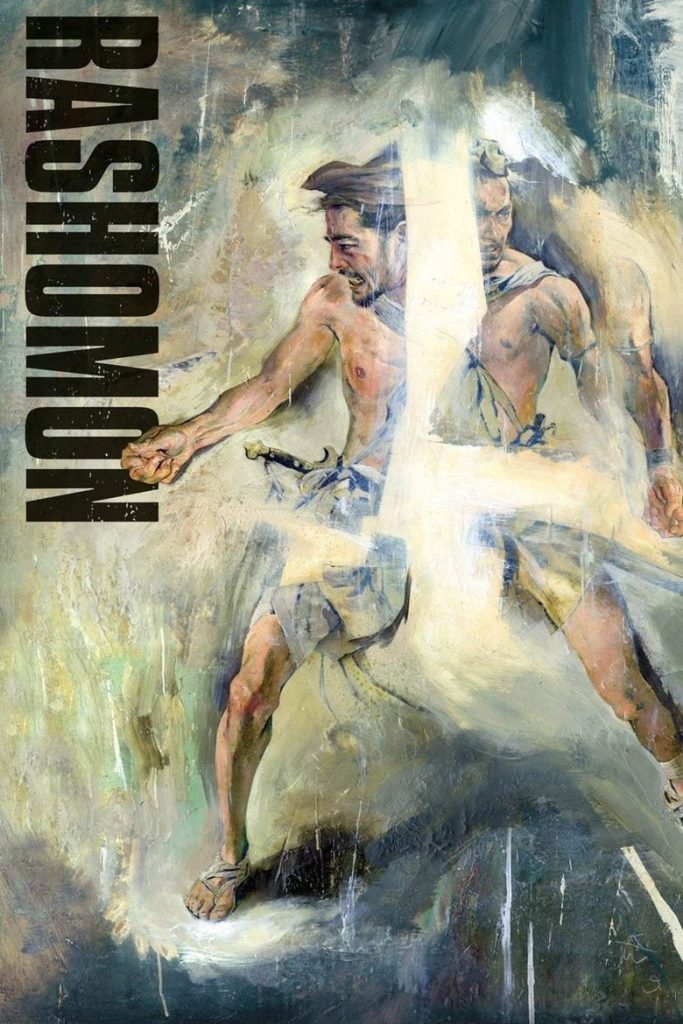
Rashomon is a classic Japanese film that explores a crime through multiple conflicting perspectives. Four witnesses provide different accounts of a violent incident involving a murder and assault. The movie examines themes of truth, memory, and human nature through these contradictory testimonies.
Parent Guide
A psychologically complex film exploring truth and memory through conflicting accounts of a violent crime.
Content breakdown
Includes discussion of murder and assault, though not graphically depicted. Psychological tension throughout.
Thematic elements involving crime and moral ambiguity may be disturbing. Atmospheric tension in rain and forest settings.
No concerning language in the English subtitles.
References to sexual assault, though not visually depicted. Some emotional intensity around these themes.
No substance use depicted.
Psychological tension and moral complexity create emotional weight. Characters experience fear, guilt, and confusion.
Parent tips
This film deals with mature themes including violence, sexual assault, and moral ambiguity. The narrative structure may be confusing for younger viewers as it presents multiple versions of the same events. Parents should be aware that while the violence isn't graphically shown, the subject matter is serious and psychologically complex.
Parent chat guide
Parent follow-up questions
- What was your favorite part of the movie?
- How did the people in the story feel?
- What colors did you see in the forest?
- Why do you think the people told different stories?
- How can we know what really happened?
- What makes a story true or not true?
- What does this film say about how people remember things?
- Why might someone change their story about what happened?
- How does the weather in the movie reflect the mood?
- What does Rashomon suggest about the nature of truth?
- How do cultural differences affect how we interpret this story?
- What contemporary situations might benefit from a 'Rashomon effect' perspective?
🎭 Story Kernel
Rashomon isn't about solving a crime but exposing how truth fractures under the weight of human ego. Each character—the bandit, the wife, the samurai (through a medium), and the woodcutter—reconstructs the same violent encounter to preserve their self-image: the bandit as virile warrior, the wife as violated victim, the samurai as honorable martyr, the woodcutter as innocent bystander. Their conflicting testimonies reveal less about the event and more about their psychological needs. The film suggests objective truth may be inaccessible, replaced by subjective narratives that serve personal survival and social face-saving. The final act's baby rescue offers a glimmer of hope—that even amidst deception, human compassion can emerge.
🎬 Visual Aesthetics
Kurosawa's visual language mirrors the narrative's subjectivity through aggressive, contrasting techniques. The Rashomon gate frames characters in oppressive shadows, symbolizing moral decay and societal collapse. Sunlight becomes a weapon—dappled through leaves during the assault, creating a chaotic, strobing effect that disorients both characters and viewers. Camera angles shift dramatically with each testimony: low angles empower the bandit's bravado, intimate close-ups amplify the wife's vulnerability, static shots convey the samurai's detached spirit. The forest itself feels like a character—dense, labyrinthine, and indifferent—while the relentless rain at the gate washes nothing clean, only deepening the mud of human deceit.
🔍 Details & Easter Eggs
💡 Behind the Scenes
Toshiro Mifune prepared for his role as the bandit Tajomaru by observing lions at the zoo, crafting the character's animalistic physicality. The famous forest scenes were shot in Nara's Kasuga Primeval Forest, with crew members manually shaking trees to create the distinctive dappled light effect. The film was initially a commercial failure in Japan, nearly ending Kurosawa's career, until it unexpectedly won the Golden Lion at Venice—catapulting Japanese cinema onto the world stage and creating the term 'Rashomon effect' for contradictory interpretations of the same event.
Where to watch
Choose region:
- HBO Max
- HBO Max Amazon Channel
- Criterion Channel
- Amazon Video
- Apple TV
- Fandango At Home
- Kanopy
- Plex
- Plex Channel
- Fawesome
Trailer
Trailer playback is unavailable in your region.