
Rear Window (1954)
Story overview
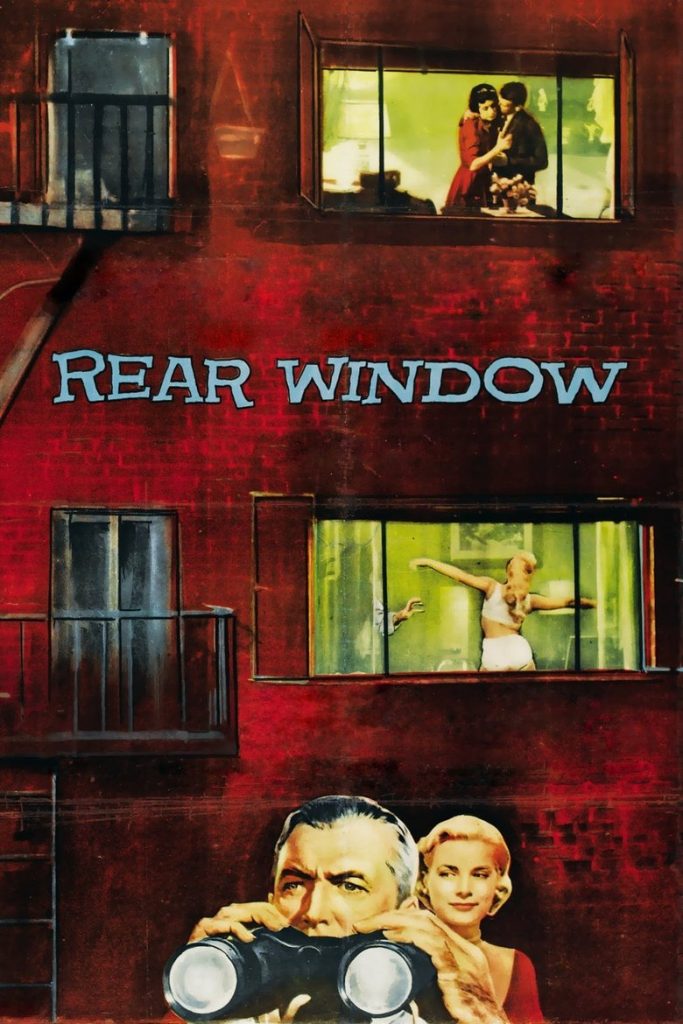
Rear Window is a classic thriller about a photographer confined to a wheelchair who observes his neighbors through his apartment window. He becomes increasingly suspicious that one neighbor has committed a serious crime. The film builds tension through observation and deduction rather than action, creating a suspenseful mystery that unfolds primarily from a single location.
Parent Guide
A psychological thriller that creates suspense through observation and suspicion rather than action or violence.
Content breakdown
Implied violence rather than shown, with tense situations and threat of danger.
Psychological suspense and implications of murder may be unsettling for sensitive viewers.
No notable strong language.
No sexual content or nudity.
Social drinking shown in some scenes.
Building suspense and moral tension throughout.
Parent tips
This Hitchcock classic is rated PG and features psychological suspense rather than graphic violence. The tension comes from the protagonist's growing suspicion and the threat of discovery rather than physical danger. Parents should note that the film deals with themes of voyeurism, potential murder, and moral ambiguity, which may be challenging for younger viewers. The pacing is deliberate, with much of the story told through observation and dialogue rather than action sequences.
Parent chat guide
Parent follow-up questions
- What did you see through the windows?
- How did the man in the wheelchair feel?
- Was it okay to watch the neighbors?
- Why do you think the photographer kept watching his neighbors?
- What clues made him suspicious?
- How would you feel if someone watched you like that?
- What does the film say about privacy and observation?
- How does the limited perspective affect the story?
- What ethical questions does the main character's behavior raise?
- How does Hitchcock build suspense without violence?
- What commentary does the film make about urban isolation?
- How does the protagonist's physical limitation shape the narrative?
🎭 Story Kernel
At its core, 'Rear Window' is a film about the ethics and psychology of observation. The protagonist, L.B. 'Jeff' Jefferies, is a photographer immobilized by a broken leg, forced to shift his professional gaze from the world to his neighbors' private lives. His boredom curdles into suspicion, then obsession, as he pieces together a potential murder from fragmented, silent scenes. The film argues that watching is an active, creative, and morally fraught act. Jeff's motivation isn't pure justice; it's a desperate need to re-engage with life and prove his own agency from a position of enforced passivity. His girlfriend Lisa and nurse Stella initially mock his hobby but become complicit, revealing how easily curiosity escalates into investigation.
🎬 Visual Aesthetics
Hitchcock constructs the entire film as a masterclass in subjective perspective. The camera is Jeff's eye. We see only what he sees from his apartment window, through his telephoto lens, or hears via his exaggerated listening. The set—a massive, detailed courtyard—functions as a living diorama or a giant television screen with multiple channels. The color palette is vibrant yet stifling, a humid summer tableau that makes the indoor confinement feel more acute. The action is deliberately restricted, making small gestures—a neighbor's pause, a suitcase being packed—carry immense dramatic weight. The climactic confrontation uses darkness and blinding flashbulbs not just for suspense, but to weaponize Jeff's own tools of observation against him.
🔍 Details & Easter Eggs
💡 Behind the Scenes
The entire film was shot on a single, enormous set built at Paramount, one of the largest indoor sets of its time. James Stewart performed most of his scenes from a wheelchair, with his leg cast being a genuine, cumbersome plaster prop. Grace Kelly's stunning wardrobe, designed by Edith Head, was a calculated contrast to the drab surroundings; her luminous, elegant outfits visually represent the 'real world' from which Jeff is isolated. Thelma Ritter ad-libbed many of her witty lines as the nurse Stella. Hitchcock makes a signature cameo, winding a clock in the songwriter's apartment.
Where to watch
Choose region:
- Amazon Prime Video
- Amazon Prime Video with Ads
- Amazon Video
- Apple TV
- Google Play Movies
- YouTube
- Fandango At Home
Trailer
Trailer playback is unavailable in your region.