
Recess: Taking the Fifth Grade (2003)
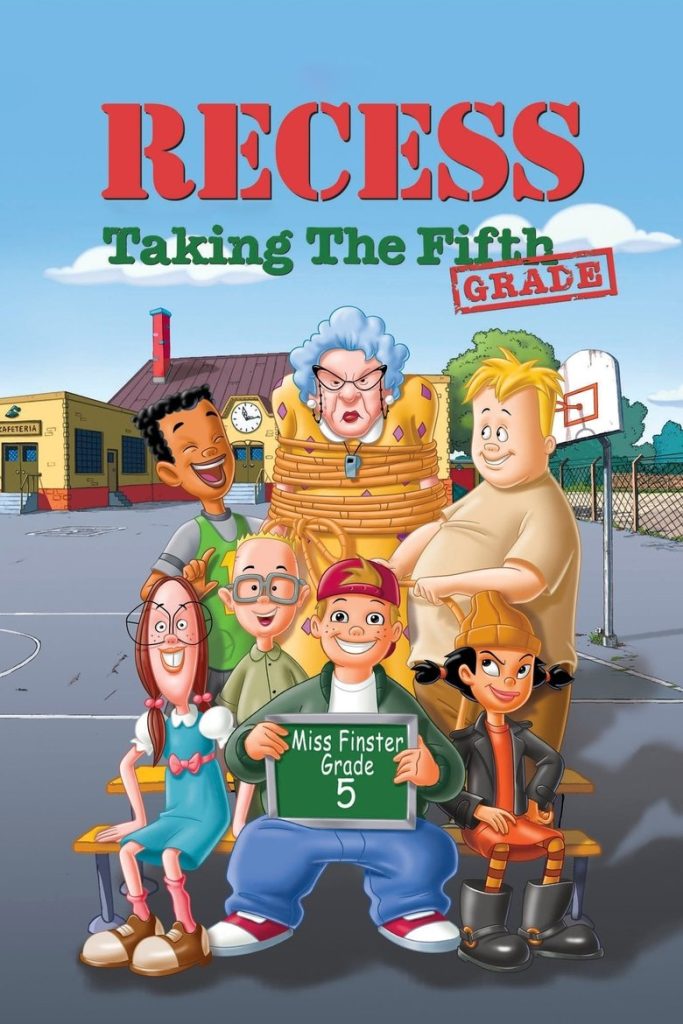
Story overview
In this animated family comedy, the beloved Recess gang enters fifth grade only to face disappointing changes at their school: no pizza, no playground, and no lockers, plus a strict new teacher, Miss Finster. Led by T.J., the kids band together to stand up for their rights and improve their school, learning valuable lessons about friendship, perseverance, and even finding common ground with authority figures like Miss Finster and Principal Prickly.
Parent Guide
A wholesome, G-rated animated film with no objectionable content. Perfect for children ages 5 and up, focusing on school adventures, friendship, and light problem-solving.
Content breakdown
No violence or peril. Conflicts are verbal and situational, such as disagreements with teachers or school rules.
Nothing scary or disturbing. The tone is consistently light and comedic, with no intense or frightening scenes.
No offensive language. Dialogue is clean and age-appropriate, with mild schoolyard banter like 'jerk' or 'mean' used occasionally in a harmless context.
No sexual content or nudity. The movie focuses purely on school and friendship themes.
No substance use. The setting is an elementary school with no references to drugs, alcohol, or smoking.
Mild emotional moments related to school frustrations or friendship, but quickly resolved in a positive, uplifting manner. Suitable for all ages without causing distress.
Parent tips
This movie is a gentle, humorous look at school life and student advocacy, ideal for family viewing. It models positive themes like teamwork, problem-solving, and respectful communication with adults. No concerning content is present—just lighthearted conflicts typical of school settings. Great for sparking conversations about school experiences and standing up for what's right.
Parent chat guide
Parent follow-up questions
- What was your favorite part of the movie?
- How did the friends help each other?
- What would you do if your school changed something you liked?
- Why was T.J. upset about the changes at school?
- How did the kids solve their problem without being mean?
- What did Miss Finster learn from the students?
- What strategies did the kids use to advocate for themselves?
- How does the movie show that adults and kids can understand each other better?
- What real-life school issues could this story relate to?
- How does this movie portray student activism in a kid-friendly way?
- What are the pros and cons of the kids' approach to conflict resolution?
- How might this story differ if it were set in a modern school?
🎭 Story Kernel
At its core, 'Recess: Taking the Fifth Grade' explores the bittersweet transition from childhood freedom to structured adolescence. The movie's true driver isn't the plot about the kids trying to avoid fifth grade—it's their desperate attempt to preserve the anarchic playground ecosystem they've built. Each character's motivation reveals a different facet of this fear: TJ's leadership stems from protecting his kingdom, Spinelli's aggression masks vulnerability, Gretchen's logic tries to rationalize the irrational, and Mikey's innocence represents what's being lost. The film ultimately argues that growing up means trading spontaneous joy for predictable responsibility, with the playground serving as the last bastion of pure, unregulated childhood.
🎬 Visual Aesthetics
The animation maintains the series' signature Saturday morning cartoon aesthetic but subtly darkens the palette as the story progresses—notice how the blues and greens of the playground gradually give way to the grays and browns of the school interior. Camera angles become more dramatic during emotional moments, particularly low-angle shots that make the kids appear smaller against the looming school building. The action sequences, especially the final playground defense, use exaggerated physics and squash-and-stretch animation to emphasize the chaotic energy of childhood. Symbolically, the locked fifth-grade door represents the irreversible nature of growing up, while the playground equipment serves as both fortress and prison.
🔍 Details & Easter Eggs
💡 Behind the Scenes
This direct-to-video film was produced in 2003 as the final Recess project, created by the same team behind the TV series but with a slightly higher animation budget allowing for more detailed backgrounds. Several voice actors recorded their lines separately due to scheduling conflicts, requiring careful editing to maintain chemistry. The playground set was expanded from the TV version to include new areas for the climactic battle scenes. Interestingly, the filmmakers considered a darker ending where the kids actually entered fifth grade, but test audiences reacted negatively, leading to the more ambiguous final shot that suggests their rebellion continues.
Where to watch
Choose region:
- Disney Plus
- Amazon Video
- Apple TV Store
- Google Play Movies
- YouTube
- Fandango At Home
Trailer
Trailer playback is unavailable in your region.