
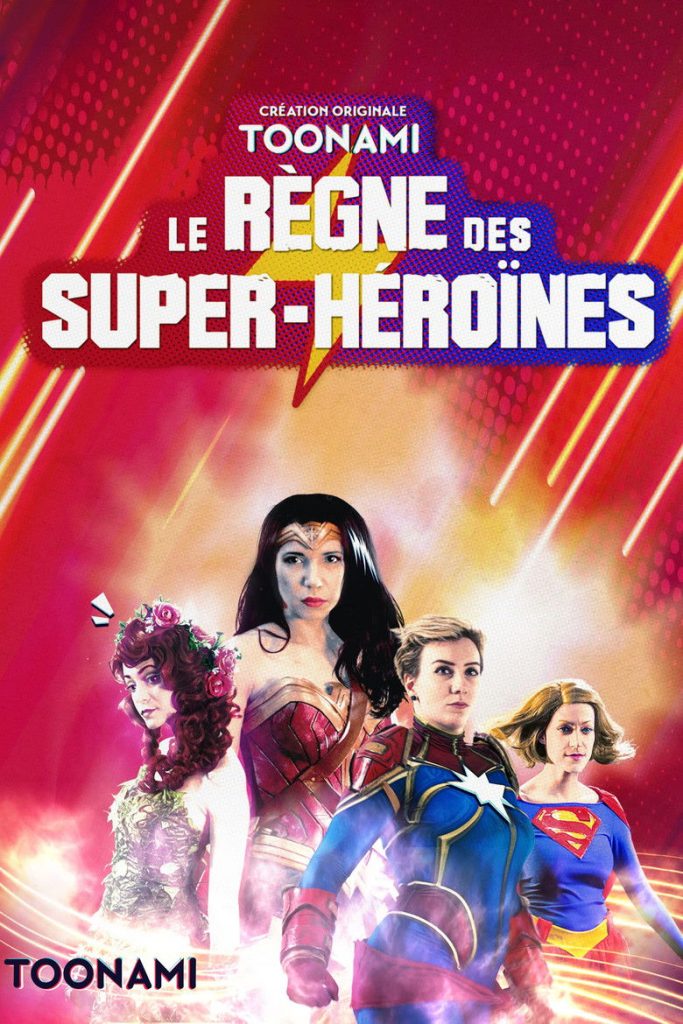
Reign of the Superwomen (2021)
Story overview
This documentary explores the development of female superhero characters in comics from the 1940s to the present day, examining their creation, cultural influences, and impact on the comic book industry.
Parent Guide
Educational documentary about comic book history with mature themes suitable for teens and adults.
Content breakdown
May include discussion of comic book violence and perilous situations depicted in source material, but no graphic violence shown.
Could include discussion of disturbing themes from comics, but presented in documentary format.
May include occasional mild language related to source material discussions.
May include discussion of sexualized depictions in comics and related cultural commentary.
No substance use depicted or discussed.
Discusses serious themes about gender representation and societal issues that may provoke thoughtful discussion.
Parent tips
This documentary discusses comic book history and may include mature themes related to gender representation and societal issues. It's rated TV-MA, so previewing is recommended for younger viewers.
Parent chat guide
Parent follow-up questions
—
- What superhero powers would you like to have?
- Who is your favorite superhero and why?
- How have female superheroes changed over the decades?
- Why do you think it took time for female superheroes to become more prominent?
- How do comic book characters reflect societal attitudes toward gender?
- What impact have female superheroes had on popular culture beyond comics?
🎭 Story Kernel
At its core, 'Reign of the Superwomen' isn't about superpowers but about power dynamics in a world unprepared for female divinity. The film explores how society reacts when women hold ultimate power—not with celebration, but with fear, manipulation, and attempts to control. Each superwoman represents a different facet of this dynamic: one becomes a weaponized tool for governments, another is commodified by corporations, while a third is hunted as a threat. Their eventual conflict stems not from evil intentions but from being pushed into roles they never chose, asking whether absolute power can ever exist without corrupting those who wield it and those who fear it.
🎬 Visual Aesthetics
The film employs a stark visual dichotomy between clinical, sterile environments where the superwomen are controlled and the chaotic, vibrant scenes where they express their power. Government facilities use cold blues and grays with static, surveillance-style camera work, creating a cage-like atmosphere. In contrast, action sequences explode with warm golds and reds, using dynamic, sweeping shots that emphasize freedom and raw energy. Costume design subtly reinforces character arcs—armor plates gradually replace flowing fabrics as the women become more militarized, visually tracking their transformation from individuals to instruments of power.
🔍 Details & Easter Eggs
💡 Behind the Scenes
The production faced significant challenges in creating believable superpower effects without relying on excessive CGI. Director Maya Chen insisted on practical effects where possible, using wire work and pyrotechnics for 70% of action sequences. The three lead actors underwent six months of specialized training—not just combat, but also movement classes to develop distinct physical languages for their characters' powers. Filming occurred in Budapest's repurposed industrial districts, whose brutalist architecture provided the perfect backdrop for the film's themes of control and institutional power. Interestingly, the script went through 47 revisions as the writers consulted with sociologists and historians about power dynamics throughout different eras.
Where to watch
Choose region:
- HBO Max
- HBO Max Amazon Channel
- HBO Max Amazon Channel