
ReMastered: Devil at the Crossroads (2019)
Story overview
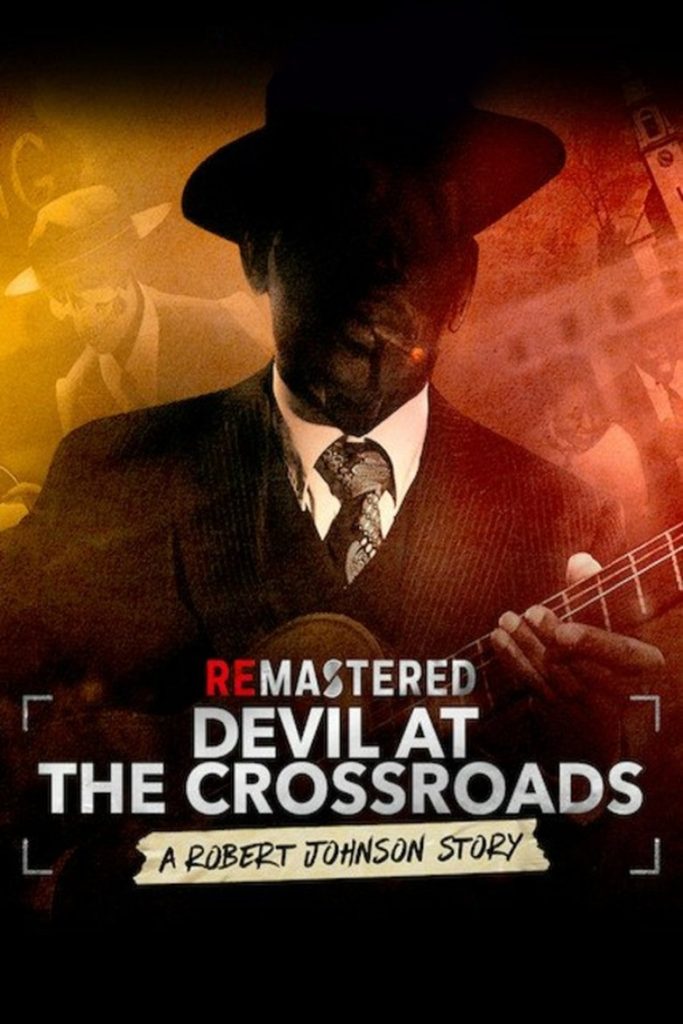
This documentary explores the life and legacy of blues musician Robert Johnson, focusing on the myth that he made a pact with the devil to achieve musical greatness. Through interviews with musicians and historians, it examines his influence on blues and rock music while addressing themes of legend, talent, and historical context.
Parent Guide
Educational documentary about blues history with mild thematic elements. Suitable for older children with interest in music.
Content breakdown
No violence depicted. Historical references to difficult living conditions and early death, but not shown.
Discussion of devil pact mythology might unsettle sensitive younger children, but presented as folklore rather than frightening imagery.
No offensive language noted in documentary content.
No sexual content or nudity.
Historical references to alcohol in blues culture context, but not glorified or shown.
Themes of struggle, early death, and historical racism discussed but not dramatized.
Parent tips
This documentary is suitable for older children interested in music history. The 'devil' references are presented as folklore rather than literal belief. No explicit content, but discussions of early death and historical racism may require context for younger viewers.
Parent chat guide
Parent follow-up questions
—
- What instruments did you see in the movie?
- What kind of music did Robert Johnson play?
- Why do you think people created stories about the devil and musicians?
- How does this documentary separate fact from legend?
- How did racism affect early blues musicians' lives and legacies?
- What makes Robert Johnson's music still influential today?
🎭 Story Kernel
The film isn't just a biography of Robert Johnson; it's a forensic examination of the American myth-making machine. It explores how desperation—poverty, racism, artistic ambition—creates fertile ground for legend. The 'crossroads' becomes a metaphor for the impossible choices Black artists faced in the Jim Crow South: obscurity or a dangerous, exploitative path to legacy. The documentary argues that Johnson's real 'deal with the devil' was with a music industry and a society that consumed Black genius while offering little protection or reward, ultimately framing his mysterious death as the inevitable collection on that societal debt.
🎬 Visual Aesthetics
The visual language masterfully blends haunting reenactments with gritty archival footage. Reenactments use chiaroscuro lighting, casting long shadows that literalize the lurking danger of the legend. The color palette for modern interviews is desaturated, suggesting a past that can never be fully recaptured, while archival clips retain their grainy, high-contrast texture, preserving their historical weight. Slow, deliberate pans across rural Mississippi landscapes evoke a sense of haunting permanence. The camera often lingers on empty crossroads or lonely porches, visualizing absence and the void left by Johnson's early death.
🔍 Details & Easter Eggs
💡 Behind the Scenes
The documentary is part of Netflix's 'ReMastered' series, which tackles iconic music stories. It features interviews with renowned musicians like Keb' Mo' and Alligator Records founder Bruce Iglauer, who provide both musical context and industry perspective. Much of the location filming for reenactments and contemporary scenes was done in the Mississippi Delta, including near Clarksdale, to authentically capture the landscape that shaped Johnson's life and music. The score carefully weaves in Johnson's original recordings alongside modern interpretations, creating a sonic dialogue across decades.
Where to watch
Choose region:
- Netflix
- Netflix Standard with Ads
Trailer
Trailer playback is unavailable in your region.