
ReMastered: Massacre at the Stadium (2019)
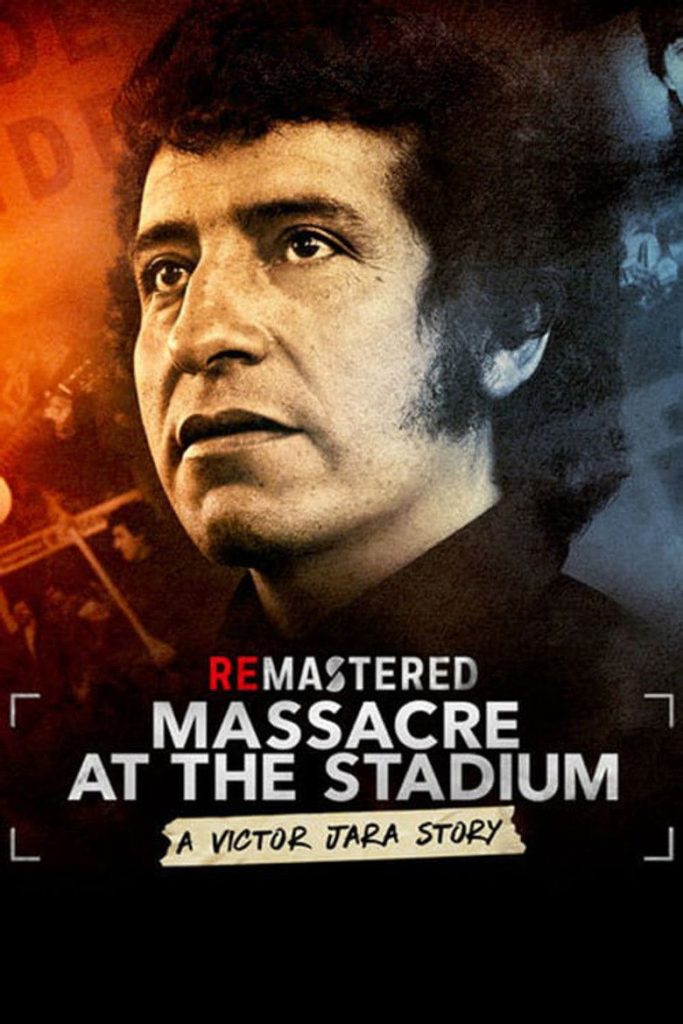
Story overview
This 2019 documentary investigates the 1973 murder of Chilean protest singer Víctor Jara during the Pinochet dictatorship, focusing on attempts to identify and prosecute those responsible. It explores political violence, human rights abuses, and the ongoing pursuit of justice through interviews and archival footage.
Parent Guide
A serious documentary about political violence and justice that requires maturity to process its disturbing content and complex themes.
Content breakdown
Discusses murder, torture, and political violence in detail. Contains archival footage and descriptions of violent acts during Chile's military dictatorship. The central focus is investigating a specific murder case.
Deals with disturbing historical events including state-sponsored violence, human rights abuses, and murder. Contains emotional interviews with victims' families and potentially upsetting archival material.
May contain occasional strong language in interviews or historical context, but not excessive. Typical of documentary discussions of serious topics.
No sexual content or nudity present in this historical/political documentary.
No depiction or discussion of substance use.
High emotional intensity due to discussions of murder, injustice, political repression, and human suffering. Deals with grief, trauma, and the pursuit of justice across decades.
Parent tips
This documentary deals with mature themes including political violence, murder, dictatorship, and human rights abuses. It contains disturbing historical footage and discussions of torture. Best suited for mature teens who can process complex political contexts. Consider watching together to discuss historical events and human rights.
Parent chat guide
Parent follow-up questions
—
—
- What is a documentary? How is it different from other movies?
- Who was Víctor Jara and why do people remember him?
- What does 'justice' mean when something bad happened long ago?
- How does this documentary present evidence and build its case?
- What challenges exist in prosecuting crimes from decades ago?
- How do political systems sometimes protect human rights violators?
- What role does music play in social and political movements?
- How should societies remember and address historical atrocities?
🎭 Story Kernel
The film explores the 1973 Chilean coup through the lens of a soccer match between Chile and the Soviet Union, using it as a microcosm of Cold War politics. It reveals how the stadium, a symbol of national unity and joy, was transformed into a detention and execution site by Pinochet's regime. The narrative drives home how sports arenas, typically associated with escape and celebration, can be weaponized for propaganda and terror. The characters, including players and journalists, are driven by survival, political manipulation, and the haunting realization that their beloved game was complicit in state violence.
🎬 Visual Aesthetics
The documentary employs a stark visual contrast between archival footage of the vibrant, energetic soccer match and grim, grainy images of the stadium under military control. The camera lingers on wide shots of the empty stadium seats, emphasizing their eerie silence post-massacre. A muted color palette dominates the historical segments, with splashes of red in flags and uniforms symbolizing both passion and bloodshed. The editing juxtaposes celebratory crowd scenes with harrowing testimonies, creating a visceral tension that underscores how quickly joy can turn to horror.
🔍 Details & Easter Eggs
💡 Behind the Scenes
This documentary is part of Netflix's 'ReMastered' series, which investigates iconic music and sports events with political undertones. It relies heavily on declassified documents and interviews with survivors, including former prisoners detained at the stadium. Filming involved accessing rare archival materials from Chilean and Soviet sources, with some footage restored to emphasize the era's tension. The production faced challenges in verifying accounts due to the regime's suppression of records, relying on oral histories to piece together events.
Where to watch
Choose region:
- Netflix
- Netflix Standard with Ads
Trailer
Trailer playback is unavailable in your region.