
ReMastered: Tricky Dick & The Man in Black (2018)
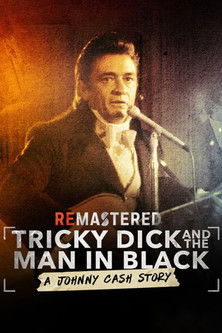
Story overview
This 2018 documentary explores Johnny Cash's 1970 White House performance for President Richard Nixon, highlighting the tension between Cash's evolving social conscience and Nixon's conservative political agenda. Through archival footage and interviews, it examines this pivotal cultural moment when music intersected with politics during a turbulent era in American history.
Parent Guide
Educational documentary suitable for family viewing with children ages 8+. Focuses on historical and cultural analysis of a specific musical-political event. No concerning content, but requires some historical context understanding.
Content breakdown
No violence or peril depicted. The documentary discusses political tensions but shows no physical conflict.
Nothing scary or disturbing. Some archival footage shows political protests of the era but nothing graphic or intense.
No strong language. Historical political speeches and interviews use standard formal language.
No sexual content or nudity. Focus is entirely on political and musical history.
No depiction or discussion of substance use. Johnny Cash's personal struggles with addiction are not addressed in this specific documentary.
Mild emotional intensity related to political disagreements and cultural tensions of the era. The documentary maintains an analytical rather than dramatic tone.
Parent tips
This documentary is suitable for most families with children ages 8+. It focuses on historical events and cultural analysis rather than sensational content. The political context may require explanation for younger viewers. Consider watching together to discuss the historical significance and how artists can engage with social issues.
Parent chat guide
Parent follow-up questions
—
- What kind of music did Johnny Cash play?
- Why was it special that he visited the White House?
- What is a documentary?
- Why do you think Johnny Cash wanted to perform at the White House despite political differences?
- How can music help people express their beliefs?
- What was happening in America during the early 1970s that made this performance significant?
- How does this documentary illustrate the tension between art and politics?
- What does this event reveal about both Johnny Cash and Richard Nixon as historical figures?
- How might this performance be viewed differently today than in 1970?
- What responsibilities do artists have when engaging with political leaders?
🎭 Story Kernel
The film's core is a collision between raw, flawed humanity and calculated political theater. It's not just about Nixon inviting Johnny Cash to the White House; it's about power attempting to co-opt authenticity. Nixon's team, reeling from anti-war protests, sought Cash's 'law and order' credibility with his working-class fanbase. Cash, however, was a man haunted by personal demons and a genuine empathy for the marginalized, as evidenced in his Folsom Prison performance. The real drama unfolds in Cash's internal conflict—the pressure to conform to a political narrative versus his instinct to speak truth to power, culminating in his subversive setlist that subtly undermined the very image Nixon hoped to project.
🎬 Visual Aesthetics
The documentary employs a stark, archival-heavy visual language that mirrors its themes of contrast. The crisp, often coldly lit footage of the Nixon White House—all sharp suits and calculated smiles—is juxtaposed with grainy, warm, intimate concert footage of Cash. This creates a visual dialectic between institutional power and grassroots authenticity. The use of split-screen during key moments, like contrasting Nixon's speeches with Cash's performances, visually argues their ideological divide. The color palette often desaturates around political machinations, while Cash's segments retain a richer, earthier tone, symbolizing the 'real' versus the manufactured.
🔍 Details & Easter Eggs
💡 Behind the Scenes
The documentary is part of Netflix's 'ReMastered' series. Key interviews include Cash's daughter Rosanne and former Nixon aides, providing insider perspectives. Much of the White House footage comes from the Nixon Presidential Library, while Cash's performances are drawn from original broadcast tapes. The filmmakers faced challenges in syncing rarely-heard audio recordings of White House planning meetings with the visual timeline. Notably, the specific setlist Cash played, including 'The Ballad of Ira Hayes' (about a mistreated Native American war hero), was a carefully researched detail confirmed through multiple historical sources.
Where to watch
Choose region:
- Netflix
- Netflix Standard with Ads
Trailer
Trailer playback is unavailable in your region.