
Return of the Jedi (1983)
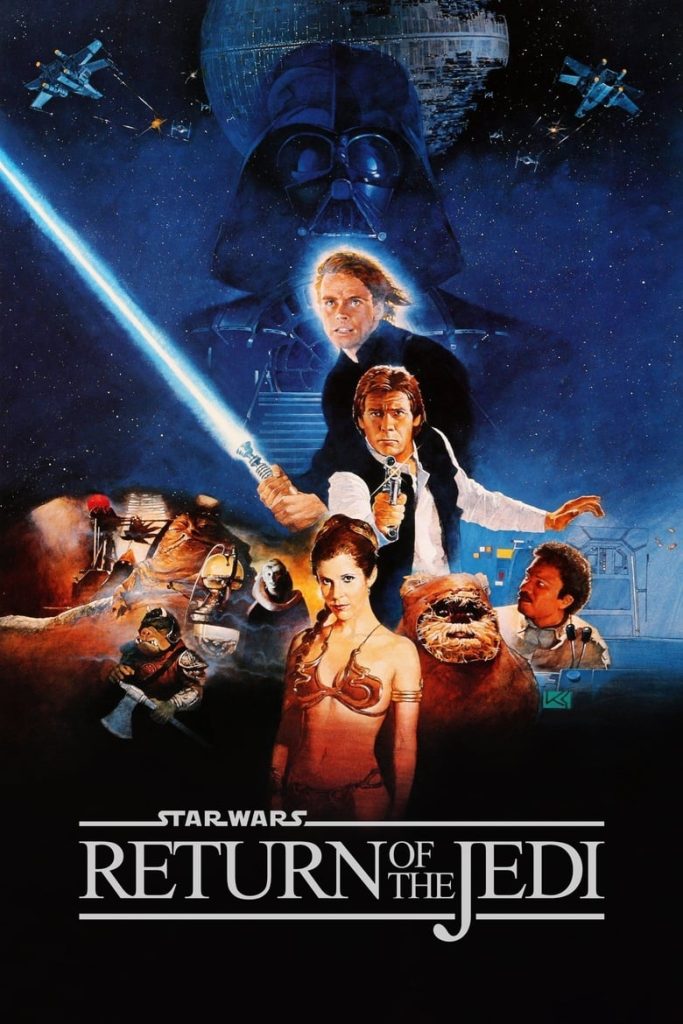
Story overview
This classic space adventure concludes an epic saga where heroes battle against a galactic empire. The story involves rescue missions, space battles, and confrontations between opposing forces. Characters face moral choices while engaging in action-packed sequences across different settings.
Parent Guide
A classic space adventure with moderate action violence and positive themes about redemption and courage.
Content breakdown
Fantasy violence including laser battles, space combat, and confrontations. Some perilous situations and threatening characters.
Intimidating villains and intense confrontations. Some scenes may be frightening for sensitive viewers.
No concerning language issues noted.
No sexual content or nudity.
No substance use depicted.
Emotional confrontations and high-stakes situations involving family relationships and moral choices.
Parent tips
This film contains action violence including laser battles, space combat, and confrontations between characters. Some scenes involve perilous situations and intimidating villains that might be intense for younger viewers. The story explores themes of redemption, family relationships, and standing up against oppression, which can provide good discussion points about making ethical choices.
The PG rating reflects moderate action violence and some frightening moments, particularly involving villainous characters and high-stakes situations. Parents should be aware that while this is a classic adventure story, it does contain scenes of conflict and peril that might be overwhelming for very young or sensitive children.
Consider your child's comfort with science fiction action and their ability to distinguish fantasy violence from reality. The film's positive messages about friendship, courage, and redemption can outweigh the action elements for many children, but preparation and discussion can help them process what they see.
Parent chat guide
During viewing, be available to answer questions about what's happening on screen. If scenes become intense, you can remind them that it's a story and discuss how the characters are feeling. Point out positive behaviors like teamwork and perseverance.
After watching, talk about the story's messages. Ask what they thought about the characters' choices and how conflicts were resolved. Discuss the difference between fantasy violence and real-world conflict, and explore the themes of forgiveness and doing what's right even when it's difficult.
Parent follow-up questions
- What was your favorite spaceship in the movie?
- How did the friends help each other?
- What made you feel brave while watching?
- Which character did you like the most?
- What was something happy that happened?
- What did you think about how the characters worked together?
- How did the story show that people can change?
- What was exciting about the adventure?
- What would you do if you were helping friends in trouble?
- What made some characters good and others not so good?
- What messages did the story give about making difficult choices?
- How did the characters show courage in different ways?
- What did you think about how conflicts were resolved?
- How does this story compare to other adventure movies you've seen?
- What lessons about friendship and loyalty did you notice?
- How did the film explore themes of redemption and forgiveness?
- What did you think about the portrayal of good versus evil in the story?
- How did the characters' relationships influence their decisions?
- What aspects of the story's moral conflicts resonated with you?
- How does this fantasy adventure relate to real-world ethical dilemmas?
🎭 Story Kernel
At its core, 'Return of the Jedi' is a story about redemption through familial love and the rejection of inherited evil. Luke Skywalker's journey isn't about defeating the Empire militarily—it's about saving his father's soul from the spiritual cancer of the Dark Side. The Emperor represents pure ideological corruption, offering power through hatred, while Luke demonstrates that vulnerability and connection are greater strengths. Every character faces a choice between selfishness (Han's initial reluctance, Lando's past betrayal) and self-sacrifice. The Ewoks aren't just cute—they represent how primitive, communal values can overcome technological tyranny when fighting for home.
🎬 Visual Aesthetics
The film masterfully uses color to track emotional and moral states. Luke's wardrobe progresses from the hopeful white of his pilot suit on Tatooine to the ominous black of his Jedi robes when confronting Vader—a visual echo of his father's armor. The Emperor's scenes are bathed in sickly blues and deep shadows, making his throne room feel like a surgical theater for souls. The speeder bike chase through Endor's redwoods creates vertigo through first-person perspectives and whip-pans, while the space battle above contrasts with sterile grays and explosive oranges. Jabba's palace uses oppressive browns and ochers to create a sweaty, decaying atmosphere of decadence.
🔍 Details & Easter Eggs
💡 Behind the Scenes
The famous 'I am your father' line was kept secret from nearly everyone during filming—David Prowse spoke different dialogue, and only James Earl Jones (voice), Irvin Kershner (director), and George Lucas knew the twist during 'Empire' production. The Ewok language was created by sound designer Ben Burtt combining Tibetan, Nepali, and Kalmyk phrases sped up. Harrison Ford only agreed to return if Han Solo died heroically, but Lucas convinced him the character's arc needed redemption through survival. The speeder bike chase required building 96 identical trees at different scales to create forced perspective illusions in California's redwood forests.
Where to watch
Choose region:
- Disney Plus
- Amazon Video
- Apple TV
- Google Play Movies
- YouTube
- Fandango At Home
Trailer
Trailer playback is unavailable in your region.