
Revanche (2008)
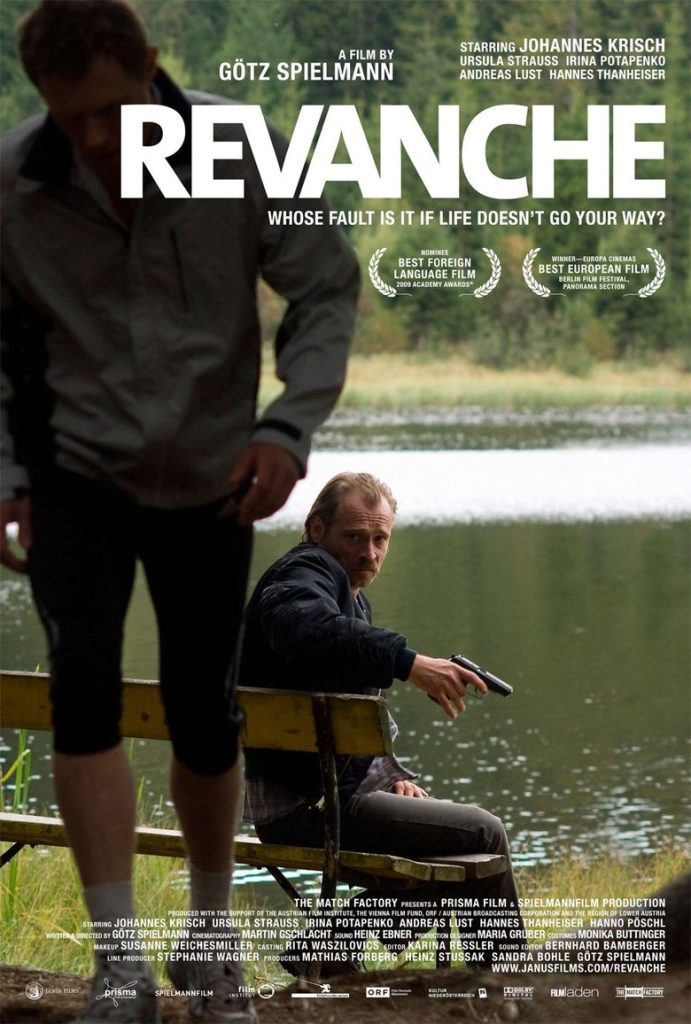
Story overview
Revanche is a 2008 crime drama thriller that explores themes of revenge and moral consequences. The film follows characters whose lives become entangled after a tragic event, examining how past actions shape present circumstances. With elements of romance and tension, it presents a thoughtful narrative about guilt, redemption, and the complexities of human relationships.
Parent Guide
A thoughtful crime drama with mature themes suitable for older teens and adults.
Content breakdown
Contains crime-related violence and perilous situations, though not excessively graphic. Scenes involve criminal activities and their consequences.
Psychological tension and disturbing themes related to crime, guilt, and moral dilemmas. Some scenes may be emotionally intense.
May contain some strong language consistent with the crime drama genre and tense situations.
May contain romantic elements and some sexual references appropriate to the storyline.
May include social drinking or smoking as background elements in some scenes.
Deals with heavy themes of guilt, revenge, and moral consequences that create emotional tension throughout.
Parent tips
This film deals with mature themes including crime, moral dilemmas, and emotional consequences. Parents should be aware that while not explicitly graphic, the subject matter involves criminal activities and their aftermath. The film's thoughtful pacing and character-driven narrative make it more suitable for older viewers who can process complex moral questions.
Consider the emotional maturity of your child before viewing, as the film explores guilt, revenge, and difficult life choices. The crime elements are presented with psychological depth rather than sensationalism, but still involve serious subject matter. This is not an action-oriented thriller but rather a character study with tense moments.
Parent chat guide
You could explore themes of forgiveness versus revenge, and how people cope with traumatic events. The film provides opportunities to discuss moral decision-making and how people justify their actions. These conversations can help young viewers think critically about complex ethical situations.
Parent follow-up questions
- What did you notice about how the characters felt?
- Can you tell me about one nice thing someone did in the movie?
- What colors or places did you see that you liked?
- How did the music make you feel?
- Was there anything that made you feel happy or sad?
- How did the characters show they cared about each other?
- What problems did the characters face and how did they try to solve them?
- Can you think of a different way the story could have ended?
- What did you learn about how people make decisions?
- How did the characters' feelings change during the movie?
- What moral choices did characters face and what influenced their decisions?
- How did the theme of revenge affect different characters' lives?
- What consequences resulted from characters' actions?
- How did the film show that people are complex with both good and bad qualities?
- What did the movie suggest about justice and forgiveness?
- How does the film explore the psychological impact of guilt and revenge?
- What commentary does the movie make about the cycle of violence?
- How do the characters' backgrounds and circumstances influence their moral choices?
- What does the film suggest about redemption and whether people can change?
- How does the cinematography and pacing contribute to the film's themes?
🎭 Story Kernel
Revanche is less about revenge than about the impossibility of it. Alex, a brooding ex-con, plans to rob a bank to escape with his girlfriend Tamara, a Ukrainian prostitute. When a police officer accidentally kills Tamara during the robbery, Alex retreats to his grandfather's farm, living next to the officer and his wife. The film explores how grief and guilt paralyze rather than motivate—Alex's planned vengeance dissolves into mundane farm chores and silent observation. The characters are driven by shame and the weight of unexpressed emotions, revealing that true revenge isn't action but the psychological erosion of living with loss and proximity to those who caused it.
🎬 Visual Aesthetics
Director Götz Spielmann employs a restrained, observational visual style with long static shots that emphasize the characters' emotional stagnation. The color palette shifts from the muted grays of urban Vienna to the lush, oppressive greens of the countryside, mirroring Alex's internal turmoil. Scenes are often framed through windows or doors, creating a sense of voyeurism and separation. Violence occurs off-screen or in brief, jarring cuts—Tamara's death is heard rather than seen, making it more haunting. The camera lingers on mundane actions like chopping wood or washing dishes, turning them into metaphors for unresolved tension and the slow passage of grief.
🔍 Details & Easter Eggs
💡 Behind the Scenes
Revanche was Austria's official submission for the 2009 Academy Awards and was nominated for Best Foreign Language Film. It was shot on location in Vienna and rural Austria, with the farm scenes filmed in Lower Austria to emphasize isolation. Actor Johannes Krisch, who plays Alex, spent time with ex-convicts to prepare for the role, contributing to his authentic, restrained performance. The film's title, meaning 'revenge' in French, hints at its European art-house influences, and its minimal dialogue required precise visual storytelling, with many scenes relying on ambient sounds like wind or creaking floors to build tension.
Where to watch
Choose region:
- HBO Max
- Criterion Channel
- Amazon Video
Trailer
Trailer playback is unavailable in your region.