
Ricardo Quevedo: Tomorrow Will Be Worse (2022)
Story overview
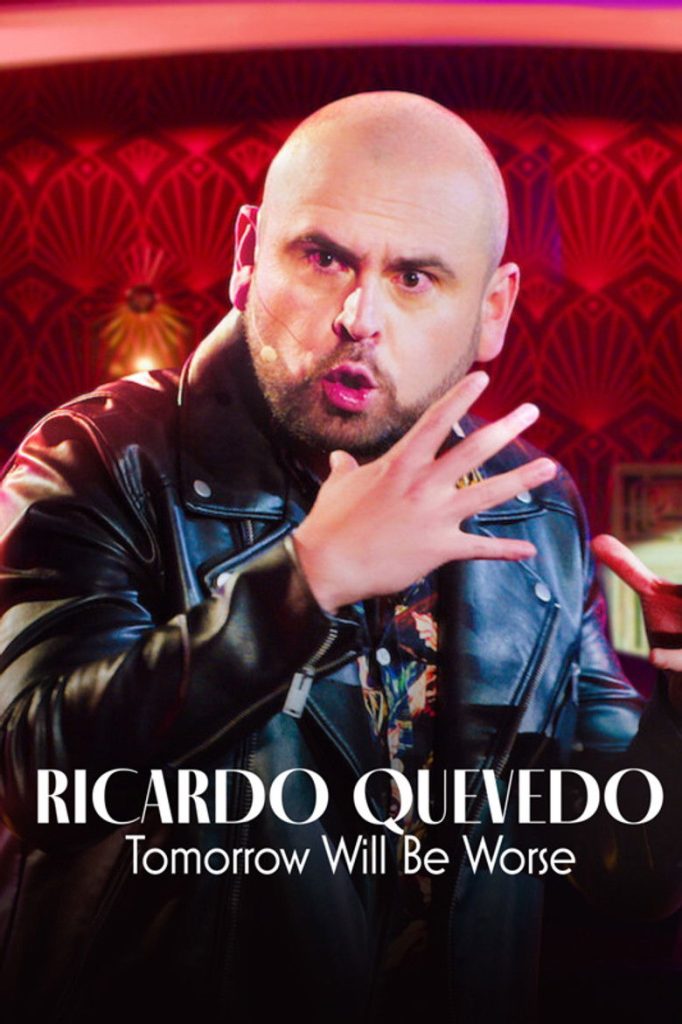
Ricardo Quevedo: Tomorrow Will Be Worse is a 2022 comedy special featuring Colombian comedian Ricardo Quevedo. The performance consists of stand-up comedy routines where Quevedo shares humorous observations about everyday life, relationships, and cultural topics. As a comedy special, it focuses entirely on Quevedo's monologue delivery without narrative plot or characters.
Parent Guide
Conservative guidance recommended due to unspecified content in comedy special format
Content breakdown
Stand-up comedy typically contains no violence, but check specific content
Comedy format unlikely to include scary elements, but humor style may vary
Comedy specials often include adult language; level depends on specific content
Many comedy specials include sexual references; check specific material
Some comedy routines reference substance use; level depends on content
Comedy aims to entertain; emotional content varies by material
Parent tips
This is a stand-up comedy special, so parents should be aware that content will depend entirely on the comedian's material. Since no specific content details are provided in the input, consider previewing or researching the special to understand the humor style and topics covered. Comedy specials often include adult-oriented humor, so parental guidance is recommended until you can assess the specific content.
Parent chat guide
Parent follow-up questions
- What was the funniest part you remember?
- Did you understand what the person was talking about?
- How did the comedian make people laugh?
- What kind of jokes do you like best?
- Was there anything that confused you?
- What topics did the comedian talk about?
- Can you explain why certain jokes were funny?
- How is stand-up comedy different from other shows?
- Did any jokes make you uncomfortable?
- What did you learn about comedy from watching this?
- What themes or messages did you notice in the comedy?
- How does the comedian use personal experiences in humor?
- What makes certain types of humor appropriate or inappropriate?
- How does cultural background influence comedy?
- Would you recommend this to friends and why?
- What social or cultural commentary did you notice?
- How does the comedian's perspective shape the humor?
- What boundaries should comedians consider with their material?
- How does this comedy compare to other specials you've seen?
- What discussions about humor and society does this special prompt?
🎭 Story Kernel
The film is not a traditional narrative but a dissection of the comedian as a modern-day tragic figure. Ricardo Quevedo uses his stand-up special to perform a public autopsy on his own anxieties, familial disappointments, and Colombian societal absurdities. The 'story' is the tension between the crafted persona—the sharp, observational comic—and the raw, weary man revealed in quieter, confessional moments between bits. The driving force is Quevedo's compulsion to metabolize personal and collective frustration into comedy, questioning whether this alchemy is a healthy release or a perpetuating cycle. The 'tomorrow will be worse' refrain isn't just a punchline; it's the show's philosophical core, a fatalistic acceptance that humor is a temporary bandage on a perpetually bleeding wound.
🎬 Visual Aesthetics
The visual language is deceptively simple, leveraging the intimacy of the single-camera stand-up special format. The stage is stark, often bathed in a warm, isolating spotlight against deep shadow, visually mirroring the comedian's position—exposed yet alone. Camera work is crucial: tight close-ups on Quevedo's face during punchlines capture micro-expressions of doubt or exhaustion that undercut the joke's success. Wider shots of the laughing audience serve as a rhythmic counterpoint, highlighting the transactional nature of performance. The color palette is muted, with Quevedo's simple attire keeping focus on his physical delivery—the shrugs, the weary smiles—which become the film's true visual symbolism, portraying a man physically weighed down by the material he's delivering.
🔍 Details & Easter Eggs
💡 Behind the Scenes
The special was filmed at the Teatro Libre in Bogotá, a venue known for theatrical productions, which adds a layer of performative irony to Quevedo's 'conversational' style. Quevedo, a former lawyer, often draws on his legal training for material, but this special is noted for being more autobiographical than his previous work. The title, 'Tomorrow Will Be Worse,' became a cultural catchphrase in Colombia following the special's release, reflecting a shared national mood. The production opted for a minimal crew to preserve the feeling of a raw, uninterrupted performance, with many of the reaction shots captured in a single take to maintain authentic audience energy.
Where to watch
Choose region:
- Netflix
- Netflix Standard with Ads