
Road to Roma (2020)
Story overview
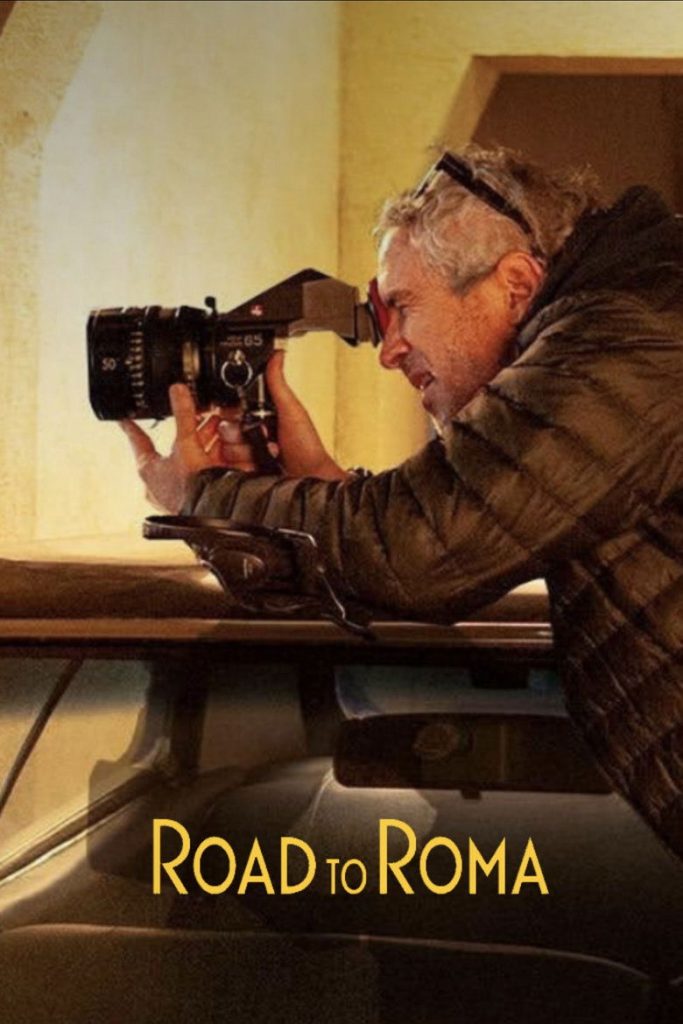
Road to Roma is a 2020 Mexican documentary that provides an intimate behind-the-scenes look at the making of Alfonso Cuarón's acclaimed film 'ROMA.' Through interviews with the director, cast, and crew, the documentary explores Cuarón's personal childhood memories, the meticulous period recreation of 1970s Mexico City, and the creative decisions that shaped this Oscar-winning cinematic work. The film offers insights into filmmaking processes, cultural representation, and artistic vision.
Parent Guide
Educational documentary about filmmaking with no concerning content. Suitable for children interested in cinema and storytelling.
Content breakdown
No violence, peril, or dangerous situations depicted.
No scary or disturbing content. Contains behind-the-scenes footage and interviews.
No strong language. Professional discussions about filmmaking in Spanish with English subtitles.
No sexual content or nudity. Focus is on film production and artistic process.
No depiction of substance use.
Mild emotional moments when discussing personal memories and artistic challenges, but nothing intense or distressing.
Parent tips
This documentary is suitable for children interested in filmmaking and storytelling. It contains no concerning content but may be slow-paced for younger viewers. Best for ages 8+ who can appreciate discussions about artistic creation and cultural history. The Spanish language with English subtitles provides language exposure opportunity.
Parent chat guide
Parent follow-up questions
- Did you see any cameras in the movie?
- What colors did you notice?
- Was anyone smiling in the film?
- What tools do filmmakers use to make movies?
- Why do you think the director wanted to tell this story?
- How is making a documentary different from making a regular movie?
- How does Alfonso Cuarón use his childhood memories in his filmmaking?
- What challenges might filmmakers face when recreating historical periods?
- Why is it important to have diverse stories in cinema?
- How does 'Road to Roma' explore the relationship between personal memory and artistic creation?
- What does this documentary reveal about the filmmaking process and industry challenges?
- How does the documentary address themes of class, race, and gender representation in Mexican cinema?
🎭 Story Kernel
At its core, 'Roma' is less about specific events than about the quiet, monumental dignity of everyday survival. The film expresses the profound, often invisible emotional labor performed by domestic workers like Cleo, whose personal tragedies unfold against the backdrop of a family's disintegration and Mexico's political turmoil. Characters are driven by a search for stability and belonging—Cleo through her maternal devotion to a family that isn't hers, Sofía through maintaining domestic normalcy as her marriage collapses, and Antonio through escaping his own failures. The real engine is the collision between intimate personal crises and the indifferent sweep of history, where small acts of care become radical resistance.
🎬 Visual Aesthetics
Cuarón's cinematography employs meticulous, sweeping long takes and deep focus, creating a tableau-like quality where foreground and background actions hold equal weight. The black-and-white palette isn't nostalgic but starkly textual, emphasizing texture, light, and social contrasts. The camera often remains static or moves with deliberate slowness, observing rather than intruding, making the sudden violence of the Corpus Christi massacre or the ocean rescue viscerally shocking. Recurring visual motifs—water, airplanes, dog excrement—accumulate meaning through repetition, while the symmetrical framing of domestic spaces highlights both order and its fragility.
🔍 Details & Easter Eggs
💡 Behind the Scenes
The film is deeply autobiographical, with Cleo based on Cuarón's childhood nanny Liboria 'Libo' Rodríguez. Cuarón served as his own cinematographer after originally hiring a DP who couldn't achieve his precise vision. The movie was shot in sequence over 108 days, mostly at actual locations in Mexico City's Roma neighborhood, with many scenes using natural lighting. Yalitza Aparicio, who plays Cleo, had no prior acting experience and was studying to be a teacher when discovered through an open casting call. The stunning ocean rescue scene was filmed in real ocean waves with Aparicio performing her own stunts after intensive swimming training.
Where to watch
Choose region:
- Netflix
- Netflix Standard with Ads