
Roald Dahl’s Matilda the Musical (2022)
Story overview
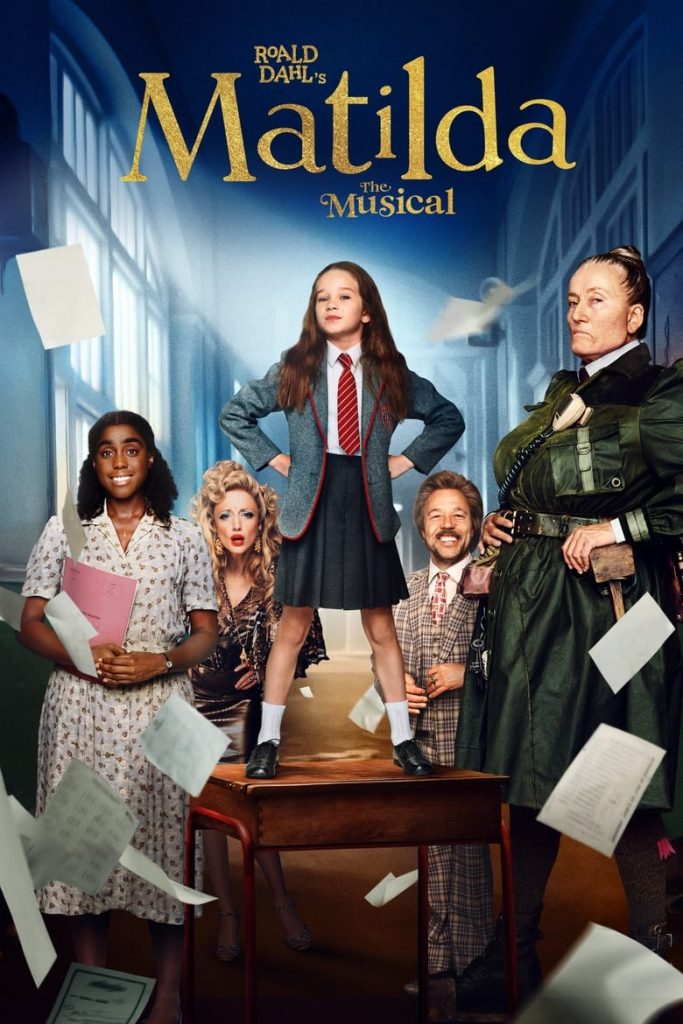
Based on Roald Dahl's classic story, this 2022 musical adaptation follows Matilda, a brilliant and resilient young girl with a passion for reading and a hidden telekinetic ability. Neglected by her self-absorbed parents and terrorized by her cruel headmistress, Miss Trunchbull, Matilda finds solace and support in her kind teacher, Miss Honey. Using her intelligence and newfound powers, she courageously stands up against injustice to protect her friends and change her own destiny, ultimately discovering the power of kindness and finding a true family.
Parent Guide
A lively musical adaptation with strong messages about intelligence, resilience, and justice, but containing some intense moments with exaggerated villains that may be frightening for very young children.
Content breakdown
Cartoonish peril and exaggerated threats from adult villains. Miss Trunchbull threatens children with punishment (like being thrown by her hair or locked in a dark closet). Some children are shown in dangerous situations (like being swung by pigtails). No actual physical harm occurs, but the threats are intense and the villain is menacing.
Miss Trunchbull is an intimidating, larger-than-life villain who shouts and threatens children. Some scenes in the dark or confined spaces (like the 'chokey' closet) might be tense. The neglect from Matilda's parents is emotionally distressing but not graphically depicted. Overall tone remains musical and fantastical despite these elements.
No profanity or offensive language. Some creative insults like 'revolting children' and 'maggots' used by Miss Trunchbull in a theatrical, exaggerated way.
No sexual content or nudity. Some mild romantic tension between minor adult characters is briefly mentioned but not shown.
No substance use depicted. Matilda's father is a dishonest used car salesman but not shown drinking or using drugs.
Strong emotional themes including parental neglect, bullying by authority figures, and a child feeling alone. Matilda's longing for a loving family and her courageous stand against injustice create emotionally resonant moments. The musical numbers provide relief from tense scenes, and the ending is uplifting.
Parent tips
This film is a vibrant, song-filled adaptation that celebrates intelligence, resilience, and standing up to bullies. While mostly lighthearted, it contains exaggerated cartoonish villains and moments of peril that may be intense for very young viewers. The musical numbers are energetic and clever, with themes of empowerment and justice. Parents should be prepared to discuss the emotional neglect Matilda experiences from her parents and the exaggerated cruelty of Miss Trunchbull, while emphasizing the positive messages about using one's gifts for good and the importance of supportive adults like Miss Honey.
Parent chat guide
Parent follow-up questions
- Which song did you like best?
- What made Matilda special?
- How did Matilda help her friends?
- Who was your favorite character and why?
- What would you do if you saw someone being treated unfairly like Matilda was?
- How did Matilda's love of books help her?
- Why do you think Miss Trunchbull was so mean?
- What does it mean to be 'revolting' like the children sing about?
- How does the film show that intelligence can be a kind of superpower?
- What do you think about how Matilda's parents treated her?
- How did Matilda balance using her powers for good versus just getting revenge?
- What messages does the film send about education and authority figures?
- How does the musical format enhance or change the original story's themes?
- What commentary does the film make about different parenting styles and their effects on children?
- How does Matilda's journey represent a coming-of-age story?
- In what ways does the film use exaggeration and fantasy to discuss real issues children face?
🎭 Story Kernel
The film isn't just about a gifted child—it's a manifesto on the transformative power of education as both weapon and sanctuary. Matilda's telekinesis serves as a physical manifestation of repressed anger finding constructive expression, while Miss Honey represents the nurturing environment where such gifts can flourish. The Wormwoods embody anti-intellectualism as a form of cruelty, their garish materialism contrasting with the library's quiet dignity. Ultimately, the story argues that true magic isn't supernatural ability but the courage to rewrite one's narrative, whether through books, rebellion, or simply saying 'no' to those who underestimate you.
🎬 Visual Aesthetics
Director Matthew Warchus employs Wes Anderson-esque symmetrical framing for authority figures (the Trunchbull's office, the Wormwood home), creating visual cages that Matilda's chaotic, handheld-camera energy disrupts. The color palette shifts from the Wormwoods' tacky neon excess to the Trunchbull's oppressive institutional greens, finally blooming into Miss Honey's warm earth tones. Dance sequences aren't mere musical numbers—they're psychological landscapes, particularly in 'Revolting Children' where choreographed chaos becomes political resistance. Notice how books literally glow in Matilda's hands, making knowledge appear as tangible light.
🔍 Details & Easter Eggs
💡 Behind the Scenes
Alisha Weir (Matilda) learned all choreography in three weeks despite no prior dance training. The library set contained 500 custom-made books with punny titles like 'The Grapes of Math.' Emma Thompson spent four hours daily in Trunchbull prosthetics that included a false nose, chin, and neck. The film's iconic 'Revolting Children' number required 200 child performers and was shot over five nights at the historic Hatfield House.
Where to watch
Choose region:
- Netflix
- Netflix Standard with Ads
Trailer
Trailer playback is unavailable in your region.