
Robin Hood (1973)
Story overview
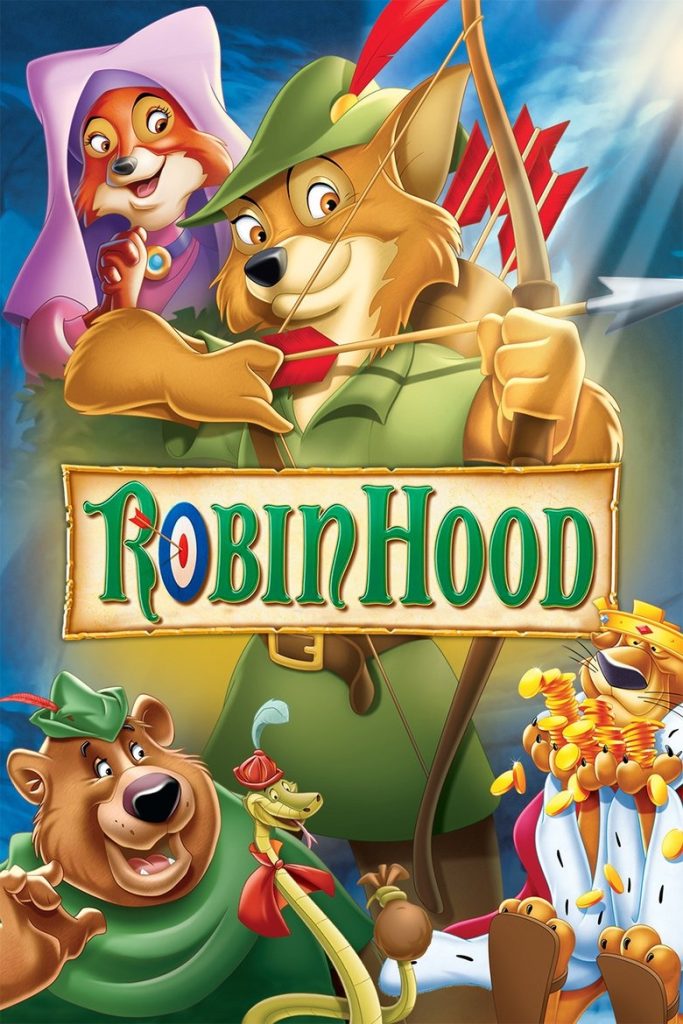
This animated Disney classic retells the Robin Hood legend with animal characters. Set in medieval England, the story follows Robin Hood and his friend Little John as they outwit the greedy Prince John and his corrupt sheriff, who overtax the poor citizens of Nottingham. The film combines adventure, humor, and themes of justice and helping those in need. With memorable musical numbers and charming animation, it presents a family-friendly version of the famous outlaw hero.
Parent Guide
A classic Disney animation with mild adventure elements and positive messages about helping others, suitable for most children with minimal concerns.
Content breakdown
Cartoon-style action including arrows being shot (none hit characters), chases, and comical fights. Villains threaten characters but no one is seriously hurt.
Prince John's tantrums and the Sheriff's scheming might be slightly intense for very young viewers. The snake character Sir Hiss might unsettle some children with ophidiophobia.
No offensive language. Mild insults like 'numbskull' or 'blundering fool' are used comically.
Very tame romantic elements between Robin and Maid Marian, limited to longing looks, dancing, and one brief kiss.
No depiction of substance use. Characters drink what appears to be ale or wine in tavern scenes without emphasis on intoxication.
Mild tension during chase scenes and confrontations. The poverty of Nottingham's citizens might elicit empathy, but the tone remains generally lighthearted.
Parent tips
This G-rated Disney animation is generally appropriate for most children, featuring animal characters in medieval costumes and situations. The conflict centers on Robin Hood's clever schemes to redistribute wealth from the rich to the poor, which provides opportunities to discuss fairness, generosity, and standing up against injustice. Some mild peril occurs during chase scenes and confrontations with authority figures, but the cartoon violence is non-graphic and typically resolved with humor.
Parents should be aware that the film depicts authority figures (Prince John and the Sheriff) as corrupt and greedy, which might prompt questions about governance and power. The portrayal of taxation as oppressive could lead to discussions about civic responsibility versus exploitation. The romantic subplot between Robin and Maid Marian is very tame, consisting mainly of longing glances and one kiss.
Parent chat guide
During viewing, you could point out how the animal characters' personalities match their species (cunning fox, strong bear, sneaky snake) and discuss how the animators use these traits to tell the story. If scenes with Prince John's tantrums or the Sheriff's schemes cause concern, reassure children that these are cartoon villains whose plans always fail.
After the movie, consider discussing why Robin Hood is considered a hero despite breaking laws, and explore the difference between stealing for personal gain versus helping others. You might also talk about how the film shows different responses to unfair leadership, from passive suffering to clever resistance.
Parent follow-up questions
- Which animal character did you like best?
- Was it funny when Prince John sucked his thumb?
- How did Robin Hood help the poor animals?
- What was your favorite song in the movie?
- Did you like that Robin and Marian got married at the end?
- Why do you think Prince John was so mean to everyone?
- What made Robin Hood a hero even though he broke rules?
- How did the different animal characters help tell the story?
- What would you do if you saw someone being treated unfairly?
- How did music help tell the story in different scenes?
- Do you think Robin Hood's methods were justified? Why or why not?
- How does the film show the difference between good and bad leadership?
- What historical elements did you notice in the medieval setting?
- How does the animation style compare to more recent animated films?
- What messages about wealth distribution does the film present?
- How does this adaptation compare to other Robin Hood stories you know?
- What commentary does the film make about taxation and government power?
- How does the use of animal characters affect how we view the social conflicts?
- What values from 1973 might be reflected in this family film?
- How does the film balance entertainment with its messages about justice?
🎭 Story Kernel
At its core, this 'Robin Hood' is less about robbing from the rich to give to the poor, and more a visceral critique of systemic corruption and manufactured poverty. The film posits that the Sheriff and the Church aren't just greedy individuals, but cogs in a machine that extracts wealth from the many to enrich the few. Robin's transformation isn't into a noble hero, but a tactical insurgent. His driving force is a seething rage against a system that declared him disposable, reframing his crusade as a calculated dismantling of economic oppression rather than mere charity. The characters are driven by survival in a rigged game—Marian by protecting her community, the Sheriff by maintaining the extractive status quo, and Robin by a need to break the machine that broke him.
🎬 Visual Aesthetics
The visual language aggressively rejects idyllic medievalism, trading verdant greens for the soot, mud, and grime of a proto-industrial Nottingham. The camera is restless, employing shaky, urgent handheld shots during raids that feel less like swashbuckling and more like gritty, modern combat footage. The color palette is dominated by steely blues, dank browns, and the oppressive grey of stone and poverty, with the opulent gold of the Sheriff's hall and the Church serving as stark, hateful contrasts. The action sequences are kinetic and brutal, emphasizing the weight and chaos of medieval warfare—arrows thud with tangible impact, and the famed longbow shots are presented with a tense, almost sniper-like precision, stripping away romanticism for tactical brutality.
🔍 Details & Easter Eggs
💡 Behind the Scenes
Taron Egerton underwent extensive archery training to perform many of the shots himself, aiming for a raw, physically strained technique rather than a polished one. The production heavily utilized the ruins of medieval castles and towns in Hungary and Croatia to build Nottingham, seeking authentic, weathered textures. Director Otto Bathurst cited modern political unrest and inequality as a direct inspiration, wanting the film's conflict to feel urgently contemporary rather than a dusty fairy tale.
Where to watch
Choose region:
- Disney Plus
- Amazon Video
- Apple TV
- Google Play Movies
- YouTube
- Fandango At Home
Trailer
Trailer playback is unavailable in your region.