
RoboCop (1987)
Story overview
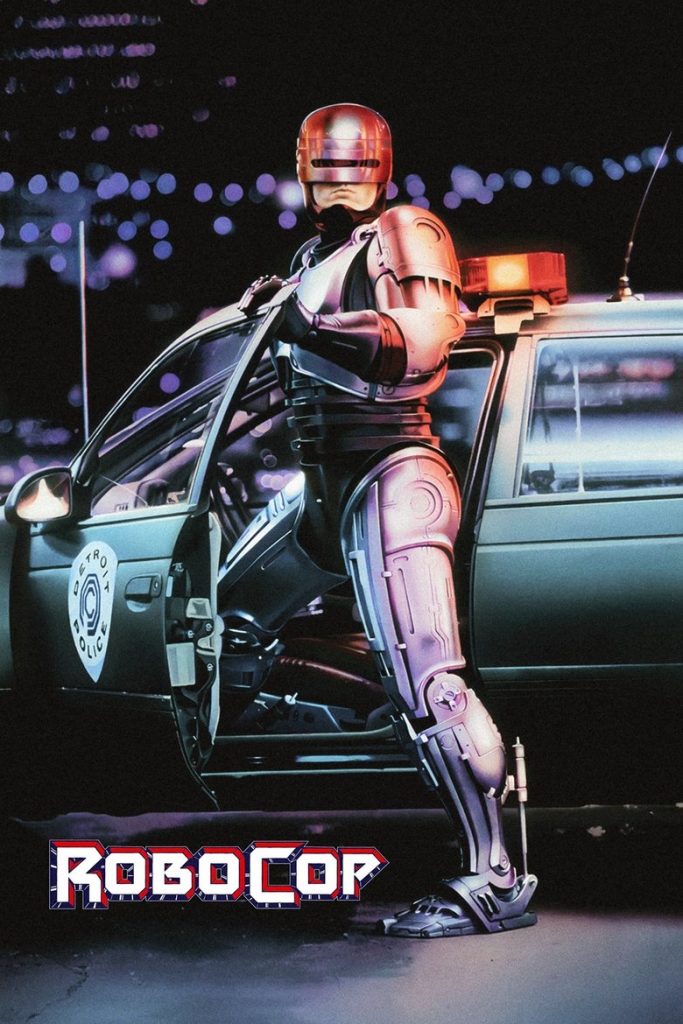
Set in a dystopian Detroit, this sci-fi action film follows police officer Alex Murphy, who is brutally murdered by criminals and then transformed into RoboCop—a cyborg law enforcer created by the corrupt Omni Consumer Products corporation. As RoboCop regains fragments of his human memories, he uncovers corporate conspiracies and seeks justice against those who destroyed his life, blending themes of identity, corporate greed, and redemption with intense action sequences.
Parent Guide
This is a violent, intense sci-fi action film with mature themes including corporate corruption, identity loss, and revenge. Rated R for strong graphic violence, language, and brief nudity. Not suitable for children or young teens; best reserved for mature viewers 17+ who can handle its dark and gritty content.
Content breakdown
Extreme and graphic violence throughout: a police officer is brutally shot multiple times (shown in detail), characters are killed with guns and explosives, a man is dissolved in toxic waste, cyborgs and humans engage in violent confrontations with blood and gore. Peril is constant, with life-threatening situations.
Disturbing scenes include the graphic murder of the protagonist, body horror elements as he is transformed into a cyborg, and intense action sequences. Themes of death, loss of humanity, and corporate manipulation may be unsettling. The dystopian setting adds to a bleak, tense atmosphere.
Frequent strong language, including multiple uses of 'f--k,' 's--t,' 'a--hole,' and other profanities. Language is aggressive and fits the film's gritty tone.
Brief nudity in a scene where a woman is shown topless in a news report. Some sexual references and innuendo, but not a major focus. Overall, sexual content is minimal compared to the violence.
Minor depictions: characters are shown drinking alcohol in social settings, and there are references to drug use by criminals, but no explicit drug use scenes. Not a central theme.
High emotional intensity due to themes of betrayal, loss, and identity crisis. The protagonist's transformation and quest for justice evoke strong feelings. The film's dark tone and violent content contribute to a consistently tense and impactful experience.
Parent tips
This film contains graphic violence, strong language, and mature themes. It is rated R for a reason—not suitable for children under 17 without parental guidance. Consider watching it first yourself to assess appropriateness for older teens. Discuss the film's portrayal of violence, corporate ethics, and the human-cyborg identity conflict afterward.
Parent chat guide
Parent follow-up questions
—
—
—
- What did you think about the way violence was shown in the movie? Was it necessary for the story?
- How did you feel about RoboCop remembering his past life? What does that say about memory and identity?
- The movie shows a corporation taking over police work. What are the pros and cons of privatizing public services?
- Do you think the bad guys got what they deserved? Why or why not?
- How does this movie compare to other sci-fi or action films you've seen in terms of its messages?
🎭 Story Kernel
At its core, 'RoboCop' explores the dehumanization of both corporate America and law enforcement. The film presents a world where human life is commodified—literally, as Murphy's body parts are sold to Omni Consumer Products after his execution. The driving force isn't Murphy seeking revenge, but rather his fragmented consciousness struggling to reclaim identity against corporate programming. The executives at OCP aren't villains in the traditional sense; they're amoral capitalists viewing human beings as either assets or liabilities. The real conflict is between Murphy's residual humanity and the corporate entity that owns his body, culminating in his ultimate rebellion against his own creators.
🎬 Visual Aesthetics
Verhoeven employs a stark, almost documentary-style visual language that contrasts with the film's heightened reality. The color palette shifts from cold blues and grays in corporate settings to warm, almost nostalgic tones during Murphy's memory flashes. The infamous ED-209 boardroom scene uses static, wide shots to emphasize corporate detachment from violence. Action sequences are brutally efficient rather than stylish—RoboCop's movements are mechanical, his gunshots precise and unemotional. The recurring news segments and commercials serve as visual commentary, framing the dystopia as normalized entertainment. The transformation sequence remains shocking not for gore, but for its clinical, assembly-line presentation of human reconstruction.
🔍 Details & Easter Eggs
💡 Behind the Scenes
Peter Weller studied mime and movement for months to perfect RoboCop's mechanical gait, spending hours watching NASA footage of astronauts in zero gravity. The iconic suit weighed over 50 pounds and caused Weller severe back problems—he could only wear it for 30 minutes at a time. The ED-209 puppet frequently malfunctioned; its jerky movements in the boardroom scene were unintentional but kept for their unsettling effect. Kurtwood Smith (Clarence Boddicker) based his villain performance on Richard Nixon's mannerisms. The film's Detroit locations were actually filmed in Dallas due to tax incentives, with the dystopian Delta City representing corporate visions of urban 'renewal.'
Where to watch
Choose region:
- fuboTV
- MGM+ Amazon Channel
- Peacock Premium
- MGM Plus Roku Premium Channel
- Philo
- Peacock Premium Plus
- Amazon Video
- Apple TV Store
- Google Play Movies
- YouTube
- Fandango At Home
- Spectrum On Demand
- Plex
Trailer
Trailer playback is unavailable in your region.