
Rolling Thunder Revue: A Bob Dylan Story by Martin Scorsese (2019)
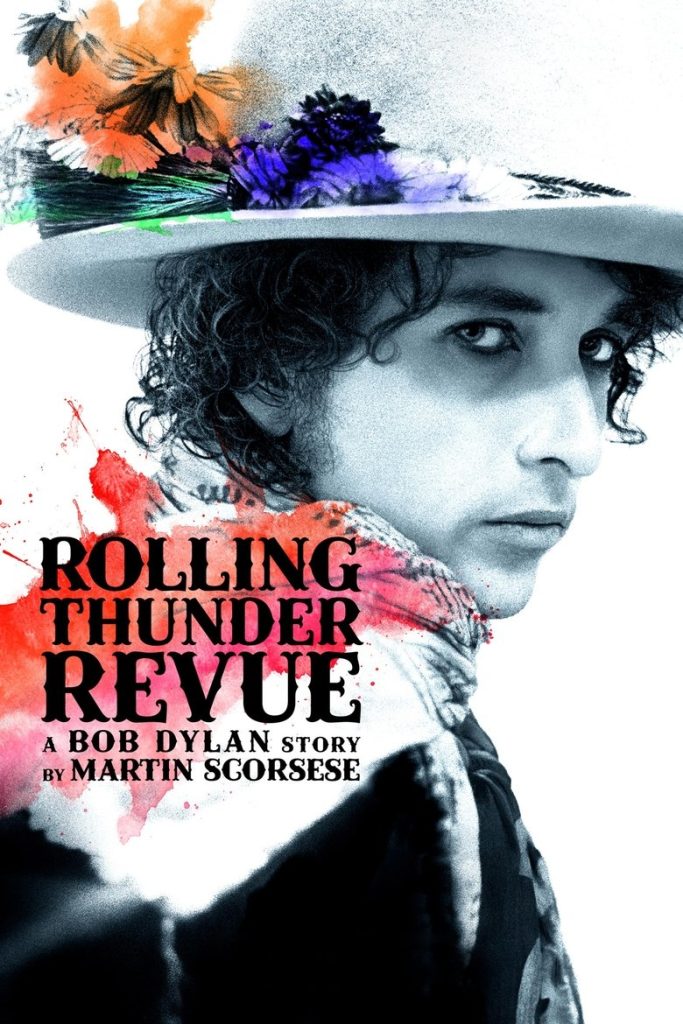
Story overview
This Martin Scorsese-directed film blends documentary, concert footage, and fictional elements to explore Bob Dylan's 1975 Rolling Thunder Revue tour. It captures the musical energy and cultural atmosphere of mid-1970s America through performances, interviews, and artistic storytelling that sometimes blurs reality and fiction.
Parent Guide
A sophisticated music documentary with artistic liberties that explores 1970s culture through Bob Dylan's tour. Most appropriate for mature middle schoolers and high school students due to thematic complexity and occasional strong language.
Content breakdown
No violence or peril depicted. The film focuses on musical performances and documentary-style content.
Some atmospheric elements and artistic sequences might feel unconventional or slightly disorienting to younger viewers, but nothing traditionally scary or disturbing.
Occasional strong language consistent with the TV-MA rating. Includes some profanity in interview segments and musical lyrics.
No sexual content or nudity present in the film.
Some references to or depictions of smoking and alcohol consumption consistent with the 1970s music scene context.
Emotional content relates to artistic expression and cultural reflection rather than personal drama. The film's tone is contemplative rather than intense.
Parent tips
This film is best suited for older children and teenagers with interest in music history or documentary filmmaking. The TV-MA rating reflects mature themes and occasional strong language. Parents should note the film's unconventional structure, which mixes factual and fictional elements, potentially confusing younger viewers. The runtime of 142 minutes may require breaks for younger audiences.
Parent chat guide
Parent follow-up questions
—
—
- What instruments did you notice in the concert scenes?
- How is this music different from what you listen to today?
- What do you think a 'documentary' means?
- How does the film blend reality and fiction? Why might filmmakers choose this approach?
- What cultural or political themes from the 1970s still resonate today?
- How does Dylan's music reflect the 'troubled spirit of America' mentioned in the overview?
- What makes this different from a traditional concert film or biography?
🎭 Story Kernel
The film isn't a documentary but a meditation on myth-making itself. It explores how identity, especially an artistic one like Bob Dylan's, is a fluid performance. The 1975 Rolling Thunder Revue tour becomes a canvas where Dylan and his collaborators (like Joan Baez and Allen Ginsberg) consciously construct a legend, blending concert footage with staged interviews and fictional characters. The driving force is the desire to escape the prison of a fixed public persona. The characters are driven by a shared understanding that authenticity in art often requires the deliberate creation of a compelling illusion, questioning whether the 'real' Dylan can ever be separated from the masks he wears.
🎬 Visual Aesthetics
Scorsese employs a gritty, vérité aesthetic—grainy 16mm film, handheld cameras, and stark natural lighting—to manufacture a sense of raw, uncovered truth. This visual language deliberately contrasts with the film's fabricated elements, creating a compelling dissonance. The color palette is muted, dominated by the browns and grays of 1970s America, punctuated by the stark theatrical whites of Dylan's face paint. The camera lingers on candid, off-stage moments and intense, close-up performance shots, suggesting intimacy while simultaneously reminding us that every frame is a curated part of the larger fiction. The visual style itself becomes a character in the deception.
🔍 Details & Easter Eggs
💡 Behind the Scenes
Much of the 'found footage' was not archival but meticulously recreated for the film. Actor Michael Murphy plays the fictional politician Jack Tanner, a character from Robert Altman's 'Tanner '88', creating a crossover of fabricated realities. Sharon Stone appears as herself but recounts a fabricated, charming story of being a teenage fan who met Dylan, which she has admitted was a scripted piece for the film. The project originated from a vast archive of footage shot during the 1975 tour by a crew including director Howard Alk, which Scorsese and his editor, David Tedeschi, spent years shaping into this hybrid narrative.
Where to watch
Choose region:
- Netflix
- Netflix Standard with Ads
Trailer
Trailer playback is unavailable in your region.