
Room (2015)
Story overview
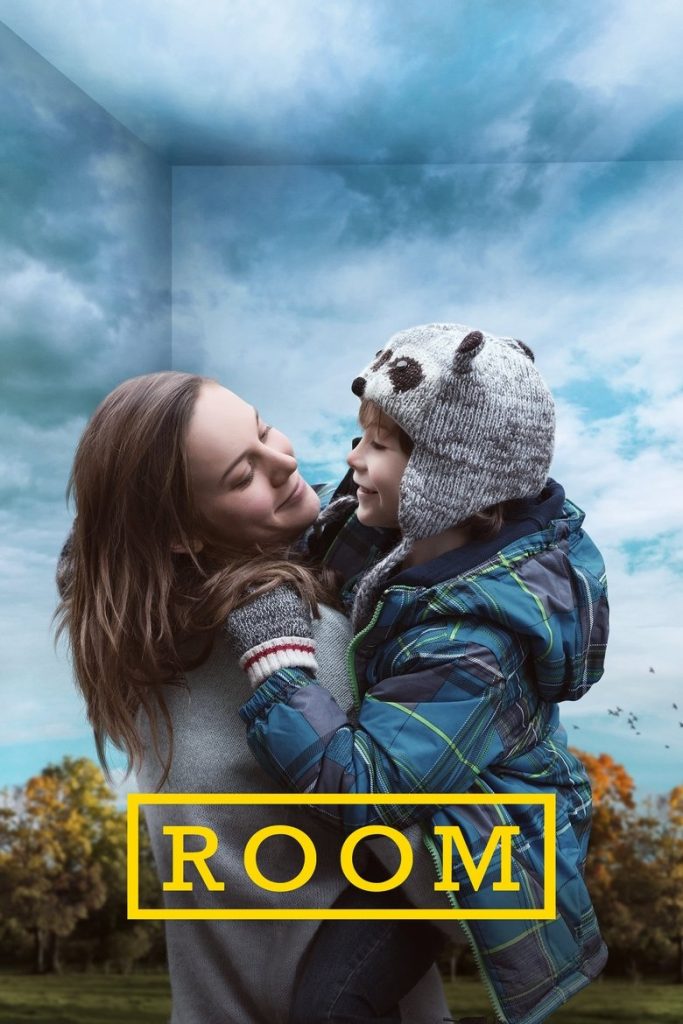
Room is a powerful drama about a woman and her young son who escape from years of captivity in a confined space. The story follows their journey as they adjust to the outside world, with the boy experiencing freedom and new surroundings for the first time. It explores themes of resilience, adaptation, and the bond between mother and child in challenging circumstances.
Parent Guide
A mature drama with intense emotional themes suitable for older teens with parental guidance.
Content breakdown
Contains scenes of implied threat and psychological tension related to captivity, but no graphic violence.
Themes of confinement and trauma may be psychologically intense for sensitive viewers.
Some strong language occurs infrequently.
Implied references to difficult circumstances but no explicit sexual content.
No substance use depicted.
High emotional content dealing with trauma, adaptation, and mother-child relationships.
Parent tips
This film deals with intense themes of captivity and trauma, though it focuses more on emotional recovery than graphic violence. The R rating reflects mature content including brief strong language and emotionally challenging situations. Parents should be aware that while the film handles sensitive topics with care, it may be too intense for younger viewers due to its psychological themes and emotional weight.
Parent chat guide
Parent follow-up questions
- What was your favorite part of the movie?
- How did the characters help each other?
- What would you do if you saw something new for the first time?
- How do you think the characters felt when they were together?
- What did you learn about how people can be strong in hard times?
- How did the characters show they cared about each other?
- What would be challenging about experiencing new things after being somewhere familiar?
- How do you think the characters changed during the story?
- What themes about family and resilience did you notice in the film?
- How did the characters' perspectives on the world differ?
- What challenges might someone face when adjusting to major life changes?
- How did the film show the importance of emotional support?
- How does the film explore the psychological impact of confinement and freedom?
- What commentary does the movie make about adaptation and trauma recovery?
- How are different forms of strength portrayed through the characters?
- What did you think about how the film balanced difficult themes with hope?
🎭 Story Kernel
At its core, 'Room' explores how our perception constructs reality. For five-year-old Jack, Room isn't a prison—it's the entire universe, complete with its own cosmology where objects like Lamp and Rug are sentient beings. The film's true tension emerges not from the physical escape but from the psychological aftermath: Joy's struggle with trauma versus Jack's gradual discovery of an infinitely larger world. Their reversed roles—Jack adapting while Joy regresses—reveals how captivity shapes identity. The film ultimately argues that freedom isn't just physical liberation but the terrifying responsibility of choice in an unbounded existence.
🎬 Visual Aesthetics
Director Lenny Abrahamson masterfully uses aspect ratio and camera placement to mirror psychological states. The first half unfolds in claustrophobic 4:3 framing, with the camera often positioned at Jack's eye level—making Room feel like his entire world. After escape, the aspect ratio expands to widescreen, visually overwhelming both characters and audience. The color palette shifts from Room's muted yellows and browns (a womb-like warmth) to the hospital's sterile blues and the outside world's chaotic saturation. Notice how the camera lingers on mundane objects—a skylight, a leaf—transforming them into profound discoveries through Jack's perspective.
🔍 Details & Easter Eggs
💡 Behind the Scenes
Brie Larson spent a month in isolation preparing for her role, communicating only through letters with director Lenny Abrahamson. Jacob Tremblay, only eight during filming, worked with a child psychologist to understand trauma responses. The Room set was constructed as a single rotating cube to allow 360-degree shooting—when Jack says 'I love you, Room' at the end, he's literally addressing the actual set. Author Emma Donoghue adapted her own novel, changing the perspective to be more cinematic while keeping Jack's voice authentic.
Where to watch
Choose region:
- Amazon Video
- Apple TV
- Google Play Movies
- YouTube
- Fandango At Home
- Fandango at Home Free
- Tubi TV
- Plex
- Plex Channel
Trailer
Trailer playback is unavailable in your region.