
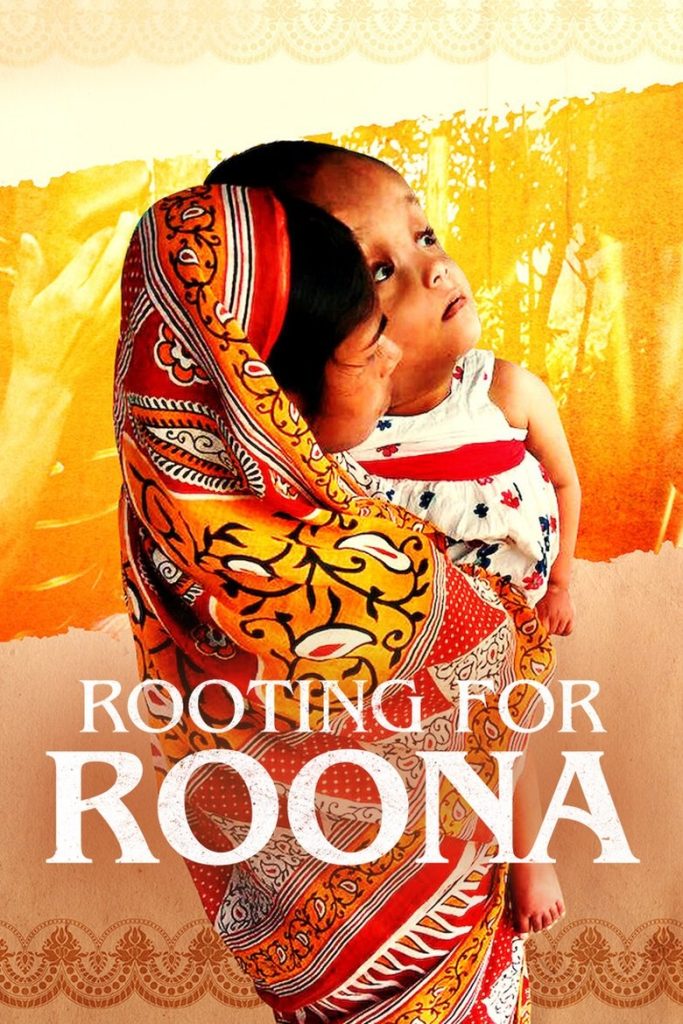
Rooting for Roona (2020)
Story overview
This 2020 Indian documentary follows Roona, an infant from rural India born with hydrocephalus (a condition causing fluid buildup in the brain that dramatically enlarges her head). After her photos spread online and capture global attention, she receives medical intervention that offers hope for her survival and quality of life. The film documents her family's journey through medical challenges, emotional struggles, and the impact of viral media in accessing critical healthcare.
Parent Guide
A compassionate documentary about medical challenges and family resilience. While not containing traditional content concerns, the serious medical themes and emotional intensity require parental guidance for younger viewers.
Content breakdown
No violence. Contains medical peril as Roona faces life-threatening health complications. Shows hospital settings and medical procedures that might be concerning to sensitive viewers.
The visual depiction of hydrocephalus (enlarged head) may be startling or disturbing to some children. Medical scenes including hospital stays, surgical preparation, and medical equipment could be anxiety-provoking. The seriousness of Roona's condition creates emotional tension.
No concerning language. The documentary includes dialogue in Bengali with English subtitles, all appropriate for family viewing.
No sexual content. Shows baby Roona in typical infant clothing/diapers during medical care - nothing inappropriate.
No depiction of substance use. Shows medical treatments and hospital care only.
High emotional content as the documentary follows a baby's serious medical journey. Shows family distress, medical uncertainty, and the emotional toll of caregiving. Moments of hope are balanced with medical reality. Parents should be prepared for children to have emotional reactions to Roona's situation.
Parent tips
This documentary deals with serious medical themes that may be emotionally intense for younger viewers. Recommended for ages 8+ with parental guidance. Parents should be prepared to discuss: 1) Hydrocephalus and medical conditions in children, 2) Healthcare disparities in rural communities, 3) The role of social media in raising awareness, 4) Family resilience in difficult circumstances. The film shows medical procedures and hospital settings that might be unsettling for sensitive children.
Parent chat guide
Parent follow-up questions
- What did you notice about baby Roona?
- How do you think her family felt?
- What ways did people help her?
- What challenges did Roona face because of her condition?
- Why was it hard for her family to get medical help at first?
- How did people on the internet help Roona?
- What is hydrocephalus and how does it affect the body?
- What does this documentary show about healthcare access in different communities?
- How did social media activism make a difference in this case?
- What ethical questions does this documentary raise about medical intervention and quality of life?
- How does this story illustrate systemic healthcare disparities?
- What role does media representation play in medical advocacy cases like this?
🎭 Story Kernel
At its core, 'Rooting for Roona' is less about a child's miraculous medical journey and more about the crushing weight of systemic failure. The film exposes how Roona's hydrocephalus becomes a lens through which we see India's rural healthcare collapse, media sensationalism, and the brutal economics of survival. What drives the parents isn't just hope for their daughter, but a desperate navigation of bureaucratic labyrinths and performative charity. The real tension isn't whether Roona will survive surgery, but whether any intervention can address the deeper poverty and neglect that created her condition. It's a stark critique of how individual stories become temporary feel-good narratives while structural problems persist.
🎬 Visual Aesthetics
The cinematography employs intimate, unflinching close-ups of Roona's enlarged head, forcing viewers to confront her reality without aesthetic distance. A muted, dusty color palette dominates the family's slum environment, contrasting sharply with the sterile whites of hospital scenes. Handheld camera work creates a visceral, observational feel, as if we're witnessing private moments of struggle. Recurring shots of cramped living spaces emphasize how poverty physically constrains hope. The documentary avoids dramatic music, instead using ambient sounds—traffic, hospital machines, neighborhood chatter—to ground the story in harsh reality. Visual motifs of barriers (windows, doorways, medical curtains) subtly reinforce themes of separation and access.
🔍 Details & Easter Eggs
💡 Behind the Scenes
Directors Pavitra Chalam and Akshay Shankar spent three years following Roona's family, often filming in extremely challenging conditions in Tripura, India. The project began as a photojournalism piece before evolving into a documentary. Remarkably, much of the footage was captured with minimal crew to maintain intimacy with the family. Local journalists initially broke Roona's story after her photos went viral online, which directly led to the documentary being made. The filmmakers faced ethical dilemmas about documenting the family's poverty without exploitation, which influenced their observational approach.
Where to watch
Choose region:
- Netflix
- Netflix Standard with Ads
Trailer
Trailer playback is unavailable in your region.