
Rosie O’Donnell: A Heartfelt Stand Up (2015)
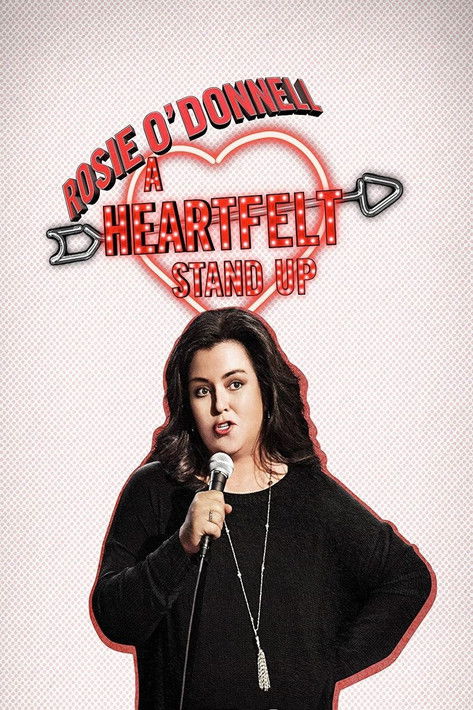
Story overview
This 2015 comedy special features Rosie O'Donnell delivering a stand-up performance that blends humor with personal reflections. As a TV-14 rated program, it contains material that may be suitable for older children and adults. The content focuses on observational comedy and life experiences rather than fictional storytelling.
Parent Guide
TV-14 comedy special featuring observational humor and personal reflections. Contains mature themes and language typical of stand-up comedy.
Content breakdown
No physical violence or peril depicted in this comedy performance.
May include mildly disturbing references to real-life situations or personal challenges, handled with humor.
Likely contains some strong language and adult references consistent with TV-14 rating and stand-up comedy format.
May include mild sexual references or innuendo typical of adult-oriented comedy.
No substance use depicted, though may include references to adult behaviors.
Contains personal reflections that may evoke mild emotional responses, balanced with comedic delivery.
Parent tips
This TV-14 comedy special contains mature themes and language typical of stand-up comedy. Parents should preview the content to determine if it's appropriate for their family, as comedy specials often include adult-oriented humor and references. The TV-14 rating suggests the program may be unsuitable for children under 14 without parental guidance.
Parent chat guide
Parent follow-up questions
- What makes something funny to you?
- Do you like when people tell stories about their lives?
- What kind of jokes do you think are nice?
- Have you ever tried to make someone laugh?
- What do you think a comedian does?
- What topics do you think are okay for comedians to joke about?
- How can you tell if a joke might hurt someone's feelings?
- What's the difference between laughing with someone and laughing at someone?
- Why do you think people enjoy stand-up comedy?
- How do comedians get ideas for their jokes?
- How does personal experience influence a comedian's material?
- What responsibility do comedians have to their audience?
- How can humor help people deal with difficult situations?
- What makes some comedy appropriate for certain ages but not others?
- How do comedians balance being funny with being respectful?
- How does stand-up comedy reflect cultural attitudes and values?
- What ethical considerations should comedians keep in mind when discussing personal topics?
- How has stand-up comedy evolved as an art form over time?
- What role does audience interaction play in live comedy performances?
- How do comedians navigate the line between edgy humor and offensive content?
🎭 Story Kernel
This stand-up special is less about traditional joke-telling and more about the raw excavation of personal history as a source of both trauma and resilience. The driving force isn't a quest for laughs per se, but a public reckoning—a need to frame a lifetime of public perception, private struggle, and family legacy into a coherent, survivable narrative. O'Donnell uses the stage not just to perform, but to testify, weaving her mother's death, her own motherhood, and the absurdities of fame into a single thread. The real plot is the emotional arc from guardedness to disclosure, where humor becomes the tool for disarming pain, making the audience complicit in her healing rather than mere spectators of her comedy.
🎬 Visual Aesthetics
The visual language is deliberately intimate and unadorned, rejecting the flashy spectacle of many modern specials. The camera stays tightly focused on O'Donnell in a simple, warm spotlight against a dark backdrop, creating a confessional booth atmosphere. Close-ups dominate, capturing every micro-expression of grief, defiance, and wry amusement. The color palette is muted—earthy tones and deep shadows—which grounds the performance in seriousness, making the bursts of laughter feel earned and cathartic. This isn't a concert film; it's a documented therapy session where the stage is a safe space, and the static, respectful framing forces us to sit with her discomfort and revelations.
🔍 Details & Easter Eggs
💡 Behind the Scenes
Filmed at the Baldwin Theatre in Michigan, the location was chosen for its acoustics and intimate feel, far from the glitz of Vegas or NYC clubs. The special was directed by Joe DeMaio, who previously worked with O'Donnell on her talk show, fostering a trusted collaboration that allowed for a more personal, less polished visual approach. Notably, the material was honed over months in smaller clubs, with O'Donnell famously testing and reshaping stories about her mother's death based on audience connection, making the final performance a refined product of shared catharsis.
Where to watch
Choose region:
- HBO Max
- HBO Max Amazon Channel
- Amazon Video
- Apple TV
- Google Play Movies
- YouTube
- Fandango At Home