
Roving Mars (2006)
Story overview
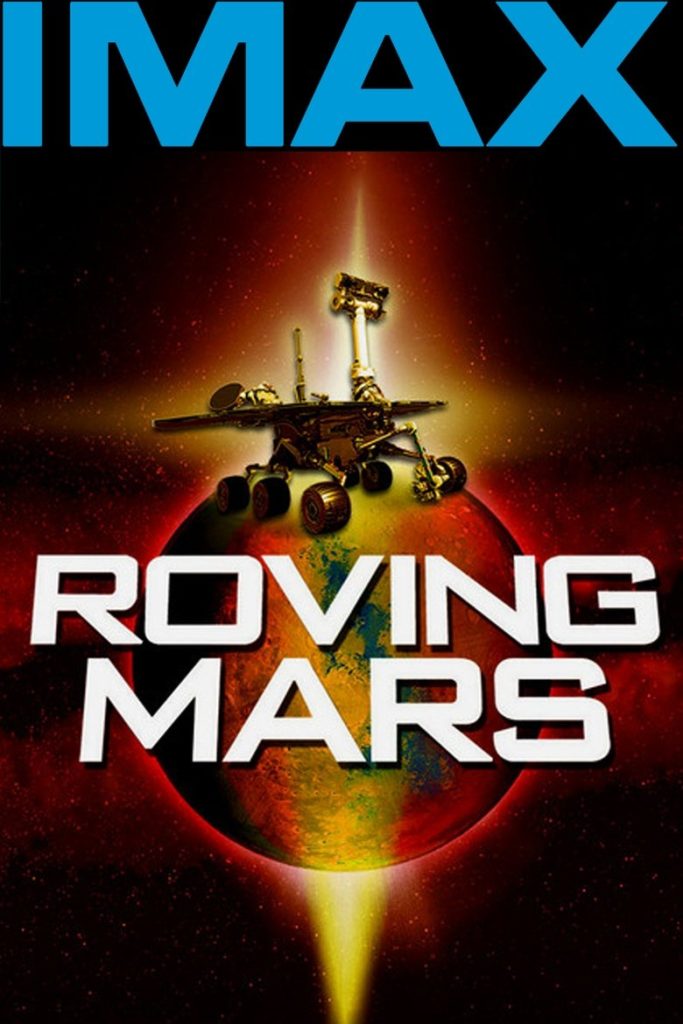
Roving Mars is a 2006 documentary that follows the Mars rovers Spirit and Opportunity on their groundbreaking mission to explore the red planet. Narrated by Paul Newman, the film combines stunning NASA footage with behind-the-scenes insights from scientists and engineers, offering an educational and inspiring look at space exploration and scientific discovery.
Parent Guide
This educational documentary about Mars exploration contains no concerning content and is appropriate for all ages. It presents scientific information in an engaging, accessible way that can inspire interest in space and technology.
Content breakdown
No violence or peril. The film focuses on scientific exploration and engineering achievements.
Nothing scary or disturbing. The tone is educational and inspirational throughout.
No inappropriate language. All dialogue is professional and educational.
No sexual content or nudity.
No substance use depicted.
Some mild excitement during launch sequences and rover deployments, but nothing overwhelming. The overall tone is educational rather than emotionally intense.
Parent tips
This G-rated documentary is completely family-friendly with no concerning content. It's an excellent educational resource about space exploration that can spark children's interest in science. The 40-minute runtime makes it accessible for younger viewers. Consider watching together to discuss the scientific concepts and engineering achievements shown in the film.
Parent chat guide
Parent follow-up questions
- What color is Mars?
- Did you like the robot cars?
- What do you think is on Mars?
- Would you want to visit Mars?
- How do the rovers move on Mars?
- What do scientists learn from the rovers?
- Why is Mars called the red planet?
- How long does it take to get to Mars from Earth?
- What challenges did engineers face when designing the rovers?
- How do the rovers communicate with Earth?
- What scientific instruments do the rovers carry?
- Why is exploring Mars important for science?
- What were the key scientific discoveries from the Spirit and Opportunity missions?
- How does this mission compare to current Mars exploration efforts?
- What engineering innovations were necessary for this mission?
- What does this tell us about the possibility of life on Mars?
🎭 Story Kernel
The film is less about the technical achievement of landing on Mars and more about the profound, almost spiritual, act of extending human consciousness across the cosmos through our mechanical proxies. The driving force isn't a single character's ambition, but the collective, obsessive will of the entire NASA/JPL team. They pour their hopes, fears, and intellect into Spirit and Opportunity, transforming the rovers from complex tools into digital avatars. The real drama is the emotional transference: the team's jubilation is the rover's successful landing; their anxiety is its stuck wheel; their legacy is its enduring data stream. It's a story of creation, release, and letting your children go to live a life you can only watch from 140 million miles away.
🎬 Visual Aesthetics
The film masterfully employs a dual visual language. Archival footage and clean, technical animations depict the Earth-bound engineering with a sterile, procedural clarity. This contrasts sharply with the rendered Martian landscapes, which are bathed in a haunting, dusty palette of ochres, rusts, and deep crimson shadows. The 'action' here is geological time—the slow pan across a desolate crater or the patient tracking shot as a rover wheel disturbs billion-year-old dust. The most powerful symbolism is in the rover's 'eyes'—the panoramic cameras. We see Mars *through* them, making their perspective our own, and their eventual silence feels not like a machine powering down, but like a pair of eyes closing for the last time.
🔍 Details & Easter Eggs
💡 Behind the Scenes
The film's most stunning visuals, the Martian surface recreations, were not simple animation. They were generated using real data from the Mars Orbiter Laser Altimeter, creating accurate 3D terrain models. The rover's journeys were then painstakingly plotted onto these models. Actor Paul Newman, a lifelong space enthusiast, provided the narration, bringing a gravelly, contemplative warmth to the scientific narrative. Notably, the production had unprecedented access to JPL mission control during the actual landings in January 2004, capturing the raw, unscripted euphoria and tension of the team in real-time.
Where to watch
Choose region:
- Disney Plus
- Amazon Video
- Apple TV Store
- Google Play Movies
- YouTube
- Fandango At Home
Trailer
Trailer playback is unavailable in your region.