
Rubaru Roshni (2019)
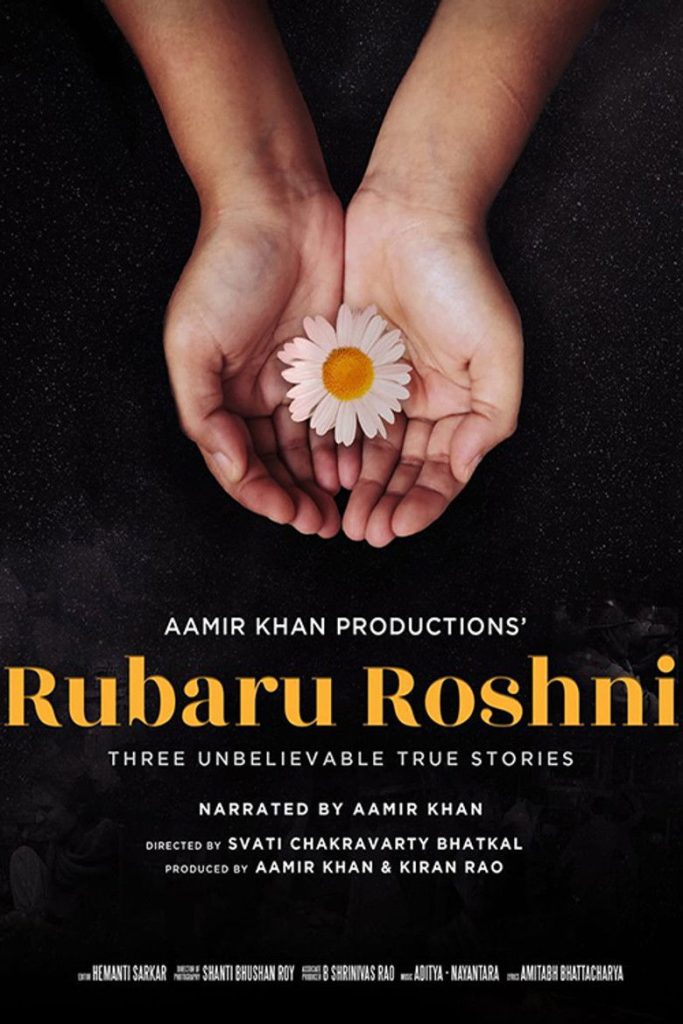
Story overview
Rubaru Roshni is a 2019 Indian documentary that explores three real-life incidents from different decades through interconnected stories: 'Orphan and the Convict' (1980s), 'The Farmer and the Nun' (1990s), and 'The Terror and the Mom' (2000s). Narrated by Aamir Khan, it examines themes of forgiveness, resilience, and human connection in the face of tragedy, based on true events.
Parent Guide
A documentary exploring real-life tragedies and forgiveness through three stories. While not visually graphic, it deals with mature themes that require emotional readiness.
Content breakdown
References to real-life violent incidents (murder, terrorism) but no graphic depictions. Descriptions of peril and loss are present.
Themes of death, grief, and tragedy may be disturbing. Emotional intensity from real stories could upset sensitive viewers.
No offensive language noted. Documentary-style narration in Hindi with English subtitles.
No sexual content or nudity.
No substance use depicted.
High emotional content dealing with loss, forgiveness, and resilience. Real-life stories may evoke strong feelings.
Parent tips
This documentary deals with mature themes like violence, loss, and forgiveness in real-life contexts. While not graphic, it may be emotionally intense for younger viewers. Recommended for ages 8+ with parental guidance to discuss the serious topics presented.
Parent chat guide
Parent follow-up questions
—
- What does 'forgiveness' mean to you?
- How would you help someone who is sad?
- Why do you think forgiveness is important in difficult situations?
- How do the stories show different ways people cope with loss?
- How does the documentary present the complexity of human emotions in tragedy?
- What societal messages about resilience and justice does it convey?
🎭 Story Kernel
Rubaru Roshni is not a true crime documentary but a profound meditation on the anatomy of forgiveness in the aftermath of senseless violence. The film's core engine is the radical choice by victims' families—like the parents of Priyanka and Avtar Singh—to not only survive but to actively forgive the perpetrators who destroyed their lives. It explores how grief, when left unprocessed, calcifies into generational trauma, and positions forgiveness not as weakness or forgetting, but as a deliberate, arduous path to reclaiming one's own humanity from the abyss. The narrative drive comes from these individuals wrestling with a societal expectation for vengeance and choosing a more difficult, transformative peace.
🎬 Visual Aesthetics
The visual language is starkly intimate, relying heavily on close-ups and interviews framed against neutral, often dark backgrounds, forcing absolute focus on the raw emotion in every wrinkle and tear. Archival news footage and home videos provide jarring contrast—grainy, chaotic bursts of the past interrupting the composed present. There's no manipulative score, just the weight of silence and unadorned voices. The color palette is muted, almost drained, mirroring the emotional desolation, with occasional warmth reserved for photographs of the lost, making their absence more palpable. This aesthetic austerity becomes the film's greatest strength, refusing to sensationalize and instead building a sacred space for testimony.
🔍 Details & Easter Eggs
💡 Behind the Scenes
The title Rubaru Roshni translates to Face to Face with Light. Director Svati Chakravarty Bhatkal spent over four years researching and gaining the trust of the families featured, ensuring an ethical, non-exploitative approach. The film was produced by the non-profit Aamir Khan Productions, known for socially conscious projects, and was released directly on Hotstar, bypassing traditional theatrical routes to reach a wide audience immediately. Notably, it features real-life individuals, not actors, and the production team provided ongoing counseling support to participants throughout the emotionally grueling interview process.
Where to watch
Choose region:
- Netflix
- Netflix Standard with Ads
- Google Play Movies
- YouTube