
Rurouni Kenshin Part I: Origins (2012)
Story overview
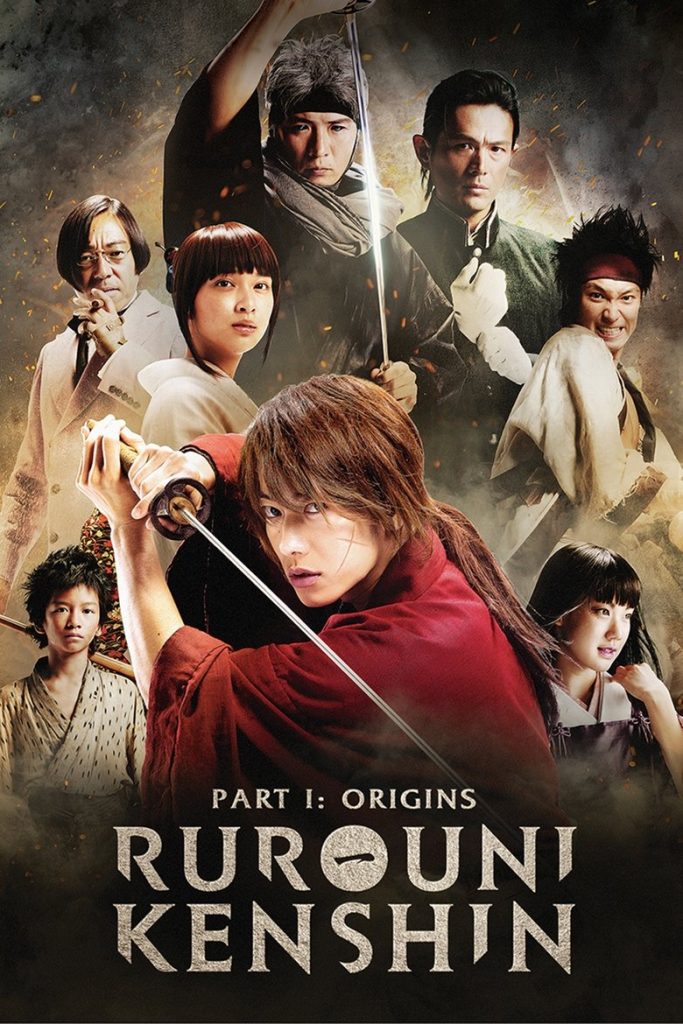
Rurouni Kenshin Part I: Origins is a 2012 Japanese action-adventure film set during the Meiji Restoration period. It follows a former assassin turned wandering swordsman who has sworn never to kill again, seeking redemption for his violent past. The story explores themes of honor, justice, and personal transformation against a historical backdrop of political upheaval and conflict.
Parent Guide
A historical action film with significant violence and mature themes about redemption and personal change. Best suited for teenagers with parental guidance.
Content breakdown
Contains frequent sword fights, combat scenes, and historical violence typical of samurai films. Characters engage in battles with weapons, though not excessively graphic.
Some intense action sequences and themes of past violence could be disturbing. Historical conflict settings may create tense atmospheres.
May contain some mild language appropriate to the historical context and dramatic situations.
No significant sexual content or nudity noted for this type of historical action film.
No notable substance use depicted in the film's historical setting.
Themes of redemption, past trauma, and personal transformation create emotional depth. Characters experience guilt, conflict, and moral dilemmas.
Parent tips
This film is rated TV-MA, indicating it's intended for mature audiences and may not be suitable for children under 17 without parental guidance. The movie contains significant action violence typical of samurai films, including sword fights and combat scenes that could be intense for younger viewers. Parents should consider their child's sensitivity to historical violence and themes of redemption before viewing.
Parent chat guide
Parent follow-up questions
- What did you think about the swords in the movie?
- How did the characters help each other?
- What colors did you see in the costumes?
- Was there any music you liked?
- What was your favorite part to watch?
- Why do you think the main character decided to stop fighting?
- How did the characters show bravery in the story?
- What does it mean to keep a promise?
- How did the setting look different from today?
- What lessons about friendship did you notice?
- What does redemption mean to you after watching this film?
- How does the historical period affect the characters' choices?
- What are the different ways characters show honor?
- How do the fight scenes serve the story beyond just action?
- What would you do if you wanted to change your life like the main character?
- How does the film explore the consequences of violence?
- What philosophical questions about justice does the movie raise?
- How does the historical context influence the film's themes?
- What does the film suggest about the possibility of personal transformation?
- How do the action sequences contribute to character development?
🎭 Story Kernel
The film explores the psychological prison of a violent past. Kenshin Himura isn't driven by a quest for peace, but by the impossibility of atonement. His vow not to kill is less a moral stance and more a self-imposed life sentence, a constant, physical reminder of the blood on his hands. The plot's engine is the collision between this rigid, penitential identity and a world that still demands the monster he was. The central tension isn't whether he'll fight, but whether he can fight without becoming the 'Battosai' again, making every action scene a crisis of identity.
🎬 Visual Aesthetics
The cinematography masterfully uses contrast to mirror Kenshin's duality. The 'Battosai' flashbacks are bathed in stark, high-contrast blacks, whites, and crimson blood, with frenetic, shaky camerawork. His present is rendered in warm, natural daylight and stable compositions, until violence intrudes. The action choreography is its own language: as the Battosai, his movements are brutally efficient and linear. As the wanderer, he fights with circular, defensive flourishes, using the *sakabatō*'s reverse blade not just as a tool, but as a visual symbol of his inverted purpose—every parry and strike consciously holding back the killing blow.
🔍 Details & Easter Eggs
💡 Behind the Scenes
Actor Takeru Satoh underwent intense, months-long kenjutsu (swordsmanship) training to perform nearly all his own stunts, aiming for authentic body mechanics. The iconic *sakabatō* (reverse-blade sword) prop was specially weighted and balanced to behave differently from a normal katana, influencing the fight choreography. Director Keishi Ōtomo insisted on practical effects and wirework over excessive CGI for the action sequences, seeking a tangible, visceral impact that digital effects often lack, which contributes to the film's grounded yet dynamic fight aesthetic.
Where to watch
Choose region:
- Netflix
- Netflix Standard with Ads
Trailer
Trailer playback is unavailable in your region.