
Rush (2013)
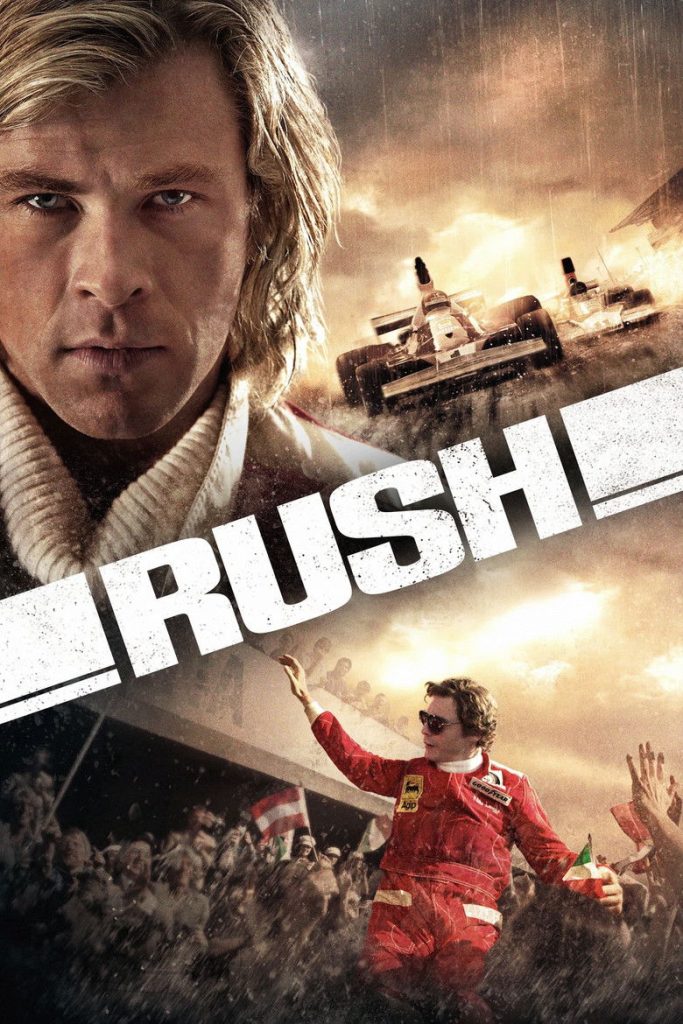
Story overview
Rush is a 2013 biographical drama that follows the intense rivalry between two Formula One drivers during the 1970s racing season. The film portrays their competitive drive for glory and fame, highlighting both their professional achievements and personal challenges. A serious accident creates a pivotal moment that tests their determination and reshapes their relationship with the sport.
Parent Guide
Rush is an intense biographical drama about Formula One racing rivalry with mature themes and content suitable for older teens.
Content breakdown
High-speed racing sequences with realistic crashes and peril; one major accident scene with injuries shown (not overly graphic)
Intense racing scenes with crashes; hospital scenes after accident; emotional intensity of competition and recovery
Frequent strong language including f-words and other profanity throughout
Sexual situations and nudity (brief rear nudity); characters engage in casual sexual relationships
Characters drink alcohol and smoke cigarettes and cigars regularly; party scenes with drinking
High-stakes competition, intense rivalry, and serious accident create emotional tension
Parent tips
Rush is rated R primarily for strong language, some sexual content, and intense racing sequences. The film depicts high-speed racing with realistic crash scenes that could be disturbing for younger viewers. Parents should be aware that characters engage in adult behaviors including drinking, smoking, and casual sexual relationships typical of the 1970s racing culture. The emotional intensity of the competition and aftermath of a serious accident may be challenging for sensitive viewers.
Parent chat guide
Parent follow-up questions
- What colors did you see in the racing cars?
- How did the cars move on the track?
- What sounds did the cars make?
- Did you see any people wearing special clothes?
- What was your favorite part of the movie?
- Why do you think the two drivers wanted to win so much?
- How did the drivers show they were competing against each other?
- What made the racing scenes exciting or scary?
- How do you think the drivers felt after the race?
- What does it mean to be determined or persistent?
- What qualities made each driver successful in their own way?
- How did the rivalry between the drivers affect their decisions?
- What risks do professional athletes take in their sports?
- How did the characters handle both success and setbacks?
- What does the movie show about friendship and competition?
- How does the film portray the balance between ambition and safety in extreme sports?
- What does the rivalry reveal about human nature and competition?
- How did the historical setting (1970s) influence the characters' behaviors and choices?
- What lessons about resilience and recovery can be taken from the story?
- How does the film handle themes of risk, consequence, and personal growth?
🎭 Story Kernel
Rush is fundamentally about masculine intimacy disguised as rivalry. Hunt and Lauda aren't competing for championships as much as they're each other's existential mirrors. Lauda's cold rationality needs Hunt's fiery passion to prove life has meaning beyond calculations. Hunt's reckless hedonism needs Lauda's discipline to prove his talent isn't just luck. Their relationship becomes a symbiotic dance where each pushes the other toward self-actualization. The racing is merely the arena where they work out their philosophical differences - whether life should be lived by spreadsheet or by instinct. The film argues that true greatness requires both approaches, which is why neither man becomes complete until they acknowledge their need for the other.
🎬 Visual Aesthetics
Ron Howard's camera work mirrors the psychological duel through contrasting visual languages. Hunt's world is saturated with warm, golden-hour tones and fluid tracking shots that emphasize his natural grace. Lauda's scenes feature cooler blues, precise symmetrical framing, and clinical compositions that reflect his analytical mind. The racing sequences use extreme close-ups of eyes in helmets and tight interior shots to emphasize the drivers' isolation despite the crowd. Most telling is the Nürburgring crash sequence - the fire is rendered not as Hollywood spectacle but as clinical horror, with sound dropping out to emphasize Lauda's trapped perspective. The film's color palette gradually converges as the characters do, ending with both men sharing the same visual space in mutual respect.
🔍 Details & Easter Eggs
💡 Behind the Scenes
Chris Hemsworth actually learned to drive race cars for the role, performing many driving sequences himself at lower speeds. The production used real 1970s Formula One cars whenever possible, with careful CGI enhancement. Daniel Brühl studied Lauda's speech patterns so meticulously that the real Niki Lauda reportedly said 'It's like watching myself.' Most racing scenes were filmed at actual Grand Prix locations, including Brands Hatch and the Nürburgring Nordschleife. Ron Howard insisted on minimal green screen, putting cameras in real moving cars to capture authentic driver perspectives.
Where to watch
Choose region:
- Amazon Video
- Apple TV Store
- Google Play Movies
- YouTube
- Fandango At Home
Trailer
Trailer playback is unavailable in your region.