
Salaar: Part 1 – Ceasefire (2023)
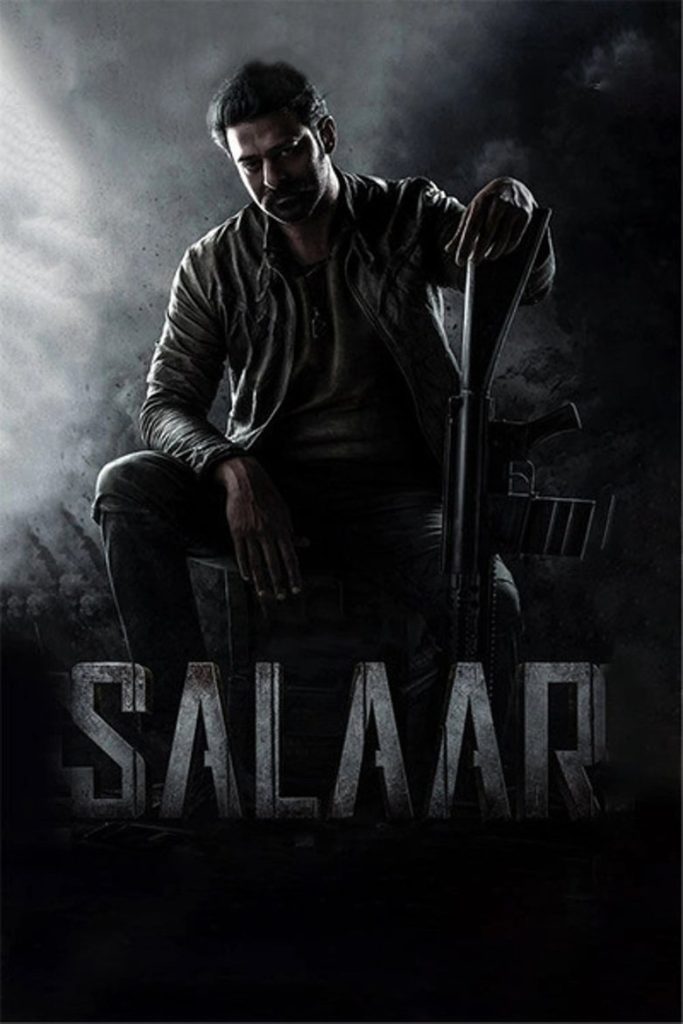
Story overview
Salaar: Part 1 - Ceasefire is a 2023 Indian action film set in the fictional dystopian city-state of Khansaar. It centers on the deep friendship between Deva, a tribesman, and Varadha, the prince of Khansaar. When Varadha's father's ministers and relatives plot a coup, Varadha turns to Deva for help to seize control and become Khansaar's undisputed ruler. The film explores themes of loyalty, power struggles, and rebellion in a gritty, violent setting.
Parent Guide
Salaar: Part 1 - Ceasefire is a violent action film with a complex plot involving political intrigue and betrayal. It is best suited for mature teens due to intense action sequences and thematic elements.
Content breakdown
Frequent and intense action violence including hand-to-hand combat, weapon use (guns, knives, explosives), large-scale battles, and perilous situations. Characters are injured or killed, with some blood and graphic moments.
The dystopian setting, political betrayal, and intense violence may be disturbing. Scenes of conflict and tension could frighten sensitive viewers.
May include mild strong language or aggressive dialogue subtitled in English, but no excessive profanity based on typical content for the genre.
No sexual content or nudity reported; focus is on action and drama.
No depiction of substance use; not a theme in the film.
High emotional intensity due to themes of loyalty, betrayal, and violence. The friendship and political stakes create tense, dramatic moments.
Parent tips
This film features intense action violence, including fights, weapons, and peril. The dystopian setting and political betrayal may be complex for younger viewers. Consider the child's sensitivity to violence and ability to follow a plot with political intrigue. Watch together to discuss the themes of friendship and power.
Parent chat guide
Parent follow-up questions
- Who were the friends in the movie?
- What colors did you see in Khansaar?
- Did you see any big fights?
- Why did Varadha need Deva's help?
- What is a coup?
- How did the friends help each other?
- What makes Khansaar a dystopian city?
- How did the violence affect the story?
- What does 'undisputed ruler' mean?
- How does the film portray political power and betrayal?
- What are the moral implications of Deva's actions?
- How does the dystopian setting reflect real-world issues?
🎭 Story Kernel
At its core, Salaar: Part 1 – Ceasefire is a Shakespearean tragedy disguised as a high-octane mass entertainer. It explores the volatile intersection of loyalty, power, and the crushing weight of legacy within the fictional, lawless city-state of Khansaar. The narrative centers on the bond between Deva and Varadha, examining how a childhood promise evolves into a weaponized pact. The film expresses the idea that true power is not found in a throne, but in the person who stands beside it. It deconstructs the savior trope by presenting Deva as a reluctant monster, tethered to his past by a blood oath. The story highlights the cyclical nature of violence, where the oppressed eventually adopt the brutality of their oppressors to survive, ultimately questioning if peace is ever possible in a world built on tribal dominance.
🎬 Visual Aesthetics
Prashanth Neel employs a brutalist aesthetic, characterized by a heavily desaturated palette of charcoal greys, deep blacks, and earthy ochre. This noir-industrial look, captured by cinematographer Bhuvan Gowda, transforms Khansaar into a claustrophobic, soot-stained fortress that feels both ancient and post-apocalyptic. The visual language relies on high-contrast lighting and the constant presence of smoke and fire, creating a sense of impending doom. Symbolism is embedded in the architecture; the towering walls and mechanical structures represent the rigid, unyielding social hierarchy of the tribes. The action is filmed with a focus on weight—every blow feels heavy and consequential, moving away from stylized wire-work toward a more grounded, visceral impact. The use of slow-motion is rhythmic, designed to mythologize the characters into larger-than-life icons amidst the grime of their environment.
🔍 Details & Easter Eggs
💡 Behind the Scenes
Director Prashanth Neel has acknowledged that Salaar draws inspiration from the core plot of his debut film Ugramm, but expanded into a much larger mythic canvas. To achieve the film's distinctively dark visual tone, the production team used a specific color-grading process to ensure that the black-heavy frames didn't lose detail on theater screens. Prabhas maintained a stoic, minimalist performance style to emphasize his character's internal suppression of rage. Prithviraj Sukumaran’s casting was pivotal, as Neel required an actor who could project intellectual authority to balance Prabhas’s raw physical power. The film's score by Ravi Basrur utilizes industrial sounds.
Where to watch
Choose region:
- Netflix
- Netflix Standard with Ads
Trailer
Trailer playback is unavailable in your region.