
Saripodhaa Sanivaaram (2024)
Story overview
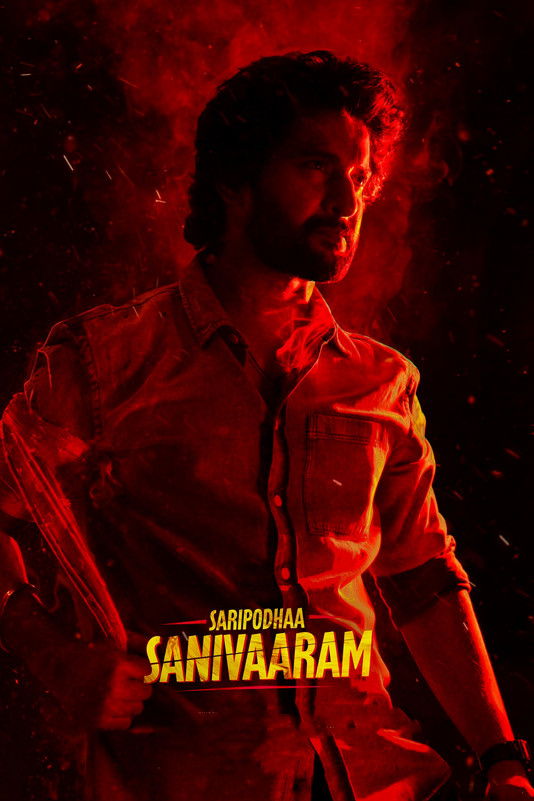
Set in Sokulapalem, Surya is an LIC agent who lives a disciplined life six days a week, keeping a ledger of grievances, and unleashes his pent-up anger only on Saturdays for justifiable reasons. A tragic event brings him into conflict with a ruthless, borderline-manic police officer named Daya, leading to intense confrontations.
Parent Guide
This film contains strong action violence, intense peril, and psychological themes that may be disturbing for younger viewers. Recommended for mature teens and adults.
Content breakdown
Intense action sequences including physical fights, chases, and confrontations with weapons. Perilous situations with life-threatening stakes. Graphic depictions of injuries and aggressive behavior.
Psychological tension and borderline-manic behavior from characters. Themes of anger, revenge, and moral conflict may be unsettling. Intense confrontations and emotional distress.
Occasional strong language or aggressive dialogue in tense situations. No pervasive profanity.
No sexual content or nudity present in the film.
No depiction of substance use or abuse.
High emotional stakes involving tragedy, anger, justice, and moral dilemmas. Intense character conflicts and psychological pressure.
Parent tips
This Telugu action-thriller features intense violence, perilous situations, and strong emotional themes. It explores anger management, justice, and moral dilemmas through high-stakes conflicts. Parents should be aware of the film's mature content and psychological tension.
Parent chat guide
Parent follow-up questions
—
- What did you think about Surya keeping a list of people who made him angry?
- How did you feel during the scary parts with the police officer?
- Do you think Surya's way of dealing with anger is a good idea? Why or why not?
- What makes the conflict between Surya and Daya so intense?
- How does the film explore the theme of justice versus revenge?
- What psychological elements did you notice in the characters' motivations and actions?
🎭 Story Kernel
The film explores the compartmentalization of human emotion, specifically anger, as a tool for justice rather than a destructive force. Surya’s "Saturday-only" rule is a psychological contract made with his mother to prevent him from becoming a monster, yet it evolves into a strategic weapon against CI Daya’s unchecked sociopathy. At its heart, the movie examines the friction between institutionalized power and grassroots resistance. It isn't just a vigilante story; it’s a study of how a community, symbolized by the people of Sokulapalem, finds its voice when a catalyst disrupts the status quo. The narrative cleverly uses the concept of time and restraint to build tension, suggesting that true heroism lies not in the act of violence itself, but in the discipline and purpose behind it.
🎬 Visual Aesthetics
Murali G.’s cinematography utilizes a distinct color palette to differentiate the mundane weekdays from the explosive Saturdays. The visual language often emphasizes the contrast between Surya’s restrained, almost invisible presence during the week and his dominant, shadow-heavy framing on Saturdays. The use of red and warm tones during action sequences underscores the heat of suppressed rage finally boiling over. Symbolism is woven through the recurring imagery of the calendar and the physical toll of the Sokulapalem environment. The framing of CI Daya often utilizes low angles to project his perceived god complex, which is gradually dismantled as Surya enters his space. The editing rhythm, particularly in the interval block, mirrors the ticking clock of Surya’s self-imposed deadline, creating a visceral sense of urgency.
🔍 Details & Easter Eggs
💡 Behind the Scenes
Saripodhaa Sanivaaram marks the second collaboration between director Vivek Athreya and actor Nani after the rom-com Ante Sundaraniki. This film represents a significant tonal shift for Athreya, who was previously known for light-hearted or non-linear narratives. S. J. Suryah’s performance as the antagonist was highly acclaimed for its eccentric intensity, a hallmark of his recent roles. The film’s music, composed by Jakes Bejoy, plays a crucial role in the storytelling, with the background score often acting as a rhythmic countdown to the protagonist's Saturday outbursts. The production involved extensive sets to recreate the fictional town of Sokulapalem.
Where to watch
Choose region:
- Netflix
- Netflix Standard with Ads
Trailer
Trailer playback is unavailable in your region.