
Saturday Night (2024)
Story overview
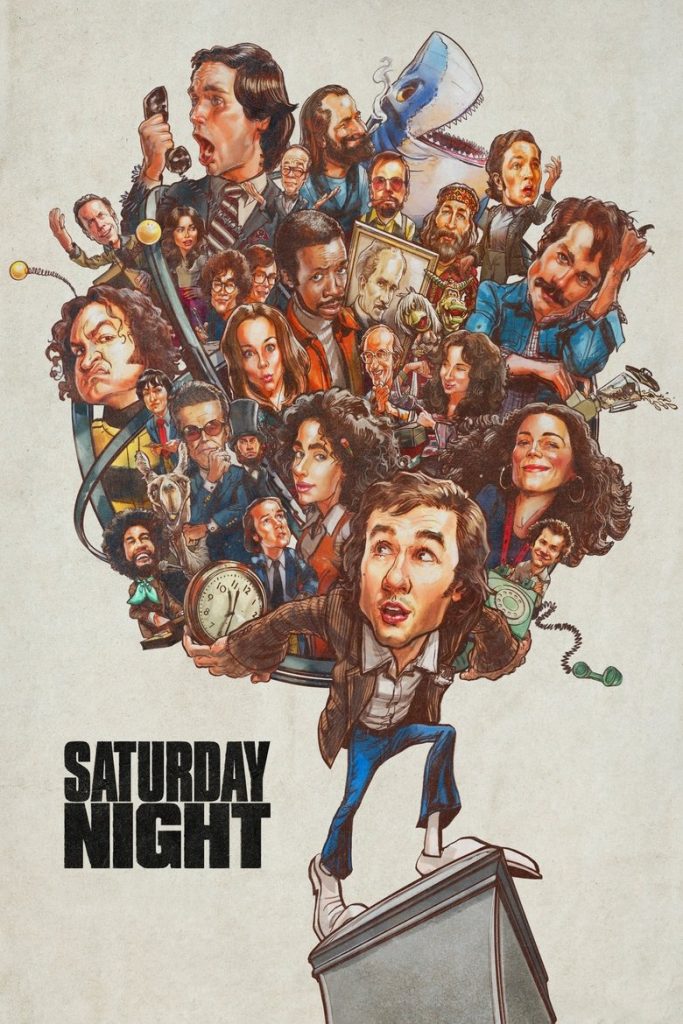
This historical comedy-drama recreates the chaotic 90 minutes before the first live broadcast of Saturday Night Live in 1975. It follows the young cast and writers as they scramble to prepare sketches, manage technical issues, and overcome creative conflicts under immense pressure, capturing the frantic energy and behind-the-scenes drama of this pivotal moment in television history.
Parent Guide
This behind-the-scenes drama about SNL's first broadcast contains strong language, adult humor, and substance references. While offering valuable historical insight, it's most appropriate for mature high school students who can contextualize the 1970s setting and workplace dynamics.
Content breakdown
No physical violence. Some tense moments as characters face professional pressure and potential career failure. Mild peril related to technical malfunctions and broadcast risks.
Mildly disturbing scenes of professional anxiety and workplace stress. Characters express fear of failure and public humiliation. Some chaotic moments as deadlines approach.
Frequent strong language including f-words, s-words, and other profanity typical of R-rated films. Language reflects the high-pressure creative environment and 1970s workplace culture.
Some sexual references and innuendo in comedy sketches being prepared. Brief discussions of relationships. No nudity or explicit sexual scenes.
Characters smoke cigarettes throughout. References to drug use (cocaine) in the 1970s entertainment industry context. Some scenes show characters drinking alcohol to cope with stress.
Sustained tension from countdown to broadcast. Characters experience anxiety, frustration, and creative conflict. Emotional moments of professional vulnerability and teamwork under pressure.
Parent tips
This R-rated film is best suited for mature teens due to strong language, adult humor, and references to substance use. It offers a fascinating look at television history and creative collaboration, but parents should be aware of the realistic portrayal of high-pressure work environments and occasional crude humor. Consider watching together with older teens to discuss media production, historical context, and workplace dynamics.
Parent chat guide
Parent follow-up questions
—
—
- What was most surprising about how TV shows were made in the 1970s?
- Which character handled the pressure best and why?
- How does this portrayal compare to modern behind-the-scenes documentaries?
- What ethical questions arise about depicting real people in historical dramas?
- How did the film balance comedy with the serious pressure of live television?
🎭 Story Kernel
The film explores the collision between youthful, counter-cultural idealism and the rigid, cynical machinery of corporate television. It is not a traditional biopic but a high-stakes countdown that examines the anxiety of creation. Lorne Michaels is portrayed as a visionary conductor trying to harmonize a chaotic ensemble of egos, substance use, and technical failures. The core theme is the sheer impossibility of the 'new'—how radical art often emerges from the brink of total collapse. It captures the transition from the safe, scripted variety shows of the past to the dangerous, live unpredictability that defined a generation. The movie expresses the desperation to prove that a new voice can exist, even when the set is literally falling apart and network executives are waiting with a backup tape to replace the broadcast.
🎬 Visual Aesthetics
Shot on 16mm film by cinematographer Eric Steelberg, the movie employs a gritty, grainy texture that feels authentically 1970s. The cinematography uses long, kinetic tracking shots to mirror the claustrophobic, frenetic energy of Studio 8H. This style emphasizes the ticking clock, making the audience feel the physical weight of the 90-minute deadline. The lighting shifts from the harsh, clinical glow of the hallways to the vibrant, experimental hues of the stage, symbolizing the transition from reality to performance. Symbolically, the constant presence of smoke, cables, and clutter represents the creative fog Michaels must navigate. The visual language is one of controlled chaos, where the camera acts as a frantic observer trying to keep up with a production that is perpetually seconds away from a total disaster.
🔍 Details & Easter Eggs
💡 Behind the Scenes
Jason Reitman and co-writer Gil Kenan conducted extensive interviews with living cast members, writers, and crew who were present on the night of October 11, 1975. This meticulous research informed the script's rapid-fire dialogue and specific anecdotes. Gabriel LaBelle, who plays Lorne Michaels, previously starred in Steven Spielberg's The Fabelmans. The film's score was composed by Jon Batiste, who also appears in the film as Billy Preston, the show's first musical guest. Batiste notably composed and recorded much of the music live on the soundstage to maintain the authentic, high-wire energy of a live broadcast.
Where to watch
Choose region:
- Netflix
- Amazon Video
- Apple TV Store
- Google Play Movies
- YouTube
- Fandango At Home
Trailer
Trailer playback is unavailable in your region.