
Saving Mr. Banks (2013)
Story overview
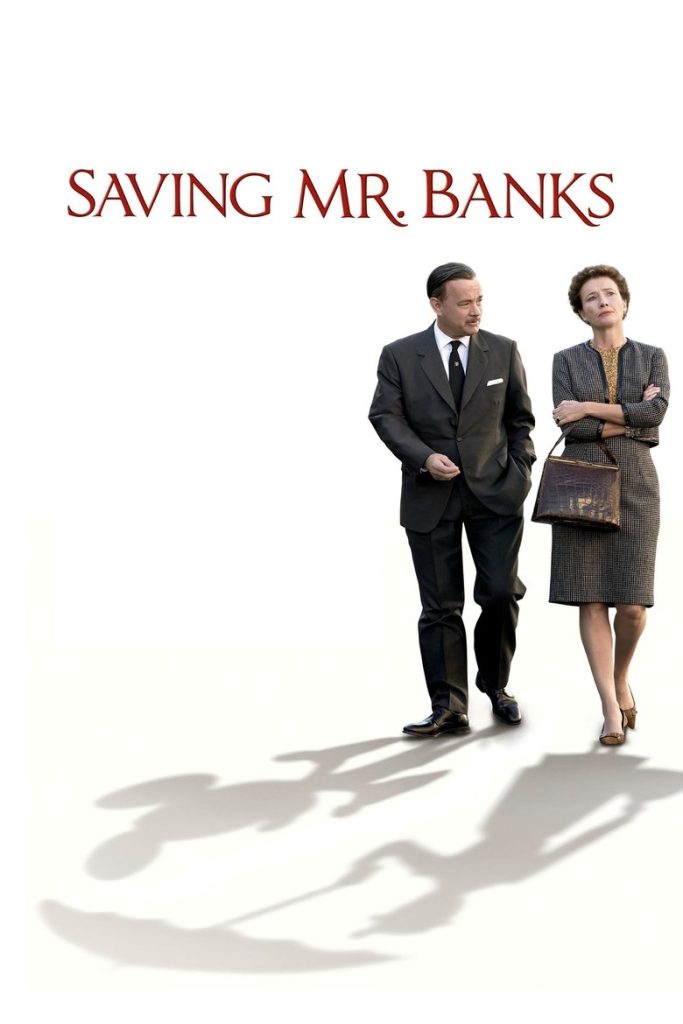
Saving Mr. Banks tells the story of author P.L. Travers as she reluctantly works with Walt Disney to adapt her beloved Mary Poppins books into a film. The movie alternates between 1960s Hollywood negotiations and flashbacks to Travers' childhood in Australia, revealing how her personal history influenced her creation of the magical nanny. It explores themes of creativity, childhood trauma, and the tension between artistic integrity and commercial adaptation through a blend of humor and emotional depth.
Parent Guide
A thoughtful drama about creativity and childhood memories with emotional depth suitable for mature children.
Content breakdown
No physical violence. Some tense family arguments and emotional confrontations. Brief peril in flashbacks involving a parent's health crisis.
Emotionally intense scenes depicting a father's alcoholism and its effects on family. Flashbacks show parental illness and family stress. No horror elements or jump scares.
Occasional mild language ('hell,' 'damn'). No strong profanity.
No sexual content or nudity. Brief romantic references are mild and age-appropriate.
Central theme includes parental alcoholism shown through drinking scenes. Alcohol consumption is portrayed negatively as causing family problems. No glorification of substance use.
Strong emotional themes involving childhood trauma, family dysfunction, grief, and creative struggle. Several poignant scenes may elicit tears or strong feelings. Uplifting resolution provides emotional balance.
Parent tips
This PG-13 film deals with mature themes including parental alcoholism, childhood trauma, and family dysfunction through flashbacks. While there's no graphic content, the emotional weight of these themes may be challenging for younger viewers. The movie is best suited for children who can understand historical context and process complex family dynamics without becoming distressed.
Parents should be prepared to discuss how childhood experiences shape adults, the realities of addiction, and the creative process. The film portrays a father's struggle with alcoholism and its impact on his family in a non-graphic but emotionally resonant way. Consider watching together with children ages 10+ to provide context and support during the more intense scenes.
Parent chat guide
For older children, conversations could address how media adaptations balance faithfulness to source material with commercial considerations. The film provides opportunities to discuss healthy ways to process childhood memories and the importance of both preserving and letting go of the past. Emphasize that while families face challenges, love and creativity can help heal wounds across generations.
Parent follow-up questions
- Did you see any characters who reminded you of people in your life?
- What was your favorite part of the movie?
- How did the music make you feel?
- Can you draw a picture of something happy from the movie?
- What makes a good story?
- Why do you think P.L. Travers was so protective of her Mary Poppins stories?
- How did the flashbacks help explain the author's feelings?
- What did you learn about how movies get made from books?
- How did the characters show respect for each other's ideas?
- What makes someone a good storyteller?
- How did P.L. Travers' childhood experiences influence her writing as an adult?
- What compromises do artists sometimes have to make when working with others?
- How does the film show the impact of a parent's struggles on a child?
- What did you think about the way memories were shown in the flashbacks?
- Why is it sometimes hard to let other people change your creative work?
- How does the film explore the relationship between personal trauma and artistic creation?
- What ethical considerations arise when adapting someone's deeply personal stories for entertainment?
- How does the film comment on the commercialization of art versus artistic integrity?
- In what ways do family secrets and unprocessed memories affect adult relationships?
- How does the film use structure (alternating timelines) to enhance its themes?
🎭 Story Kernel
At its heart, 'Saving Mr. Banks' is not about the creation of Mary Poppins, but about the painful negotiation of memory. P.L. Travers isn't protecting her book from Walt Disney; she's protecting her idealized father, Travers Goff, from the sanitized, musical revisionism of Hollywood. The film posits that art is often born from trauma, and that creative adaptation becomes a form of therapy. Travers's resistance stems from the fear that turning her father's tragic flaws into a charming, singing banker will erase the complex love she felt for him. The emotional climax isn't the film's premiere, but Travers's tearful acceptance that sharing her story—even in a changed form—might finally allow her to forgive her father and herself.
🎬 Visual Aesthetics
The film masterfully uses a dual color palette and cinematography to separate memory from reality. The 1961 Los Angeles scenes are shot in a bright, almost oversaturated Technicolor sheen, representing Disney's manufactured, commercial world. In stark contrast, the flashbacks to 1906 Australia are bathed in a golden, nostalgic, yet dusty and fragile sepia tone, visually embodying Travers's idealized yet painful memories. The camera in the flashbacks often adopts a child's-eye view, looking up at the adults, emphasizing young Ginty's perspective. The transition between these worlds is often triggered by sensory details—the smell of lemon, the taste of peppermint—visually linking present trauma to past triggers.
🔍 Details & Easter Eggs
💡 Behind the Scenes
Emma Thompson insisted on using P.L. Travers's actual recorded 1962 story meetings with the Sherman brothers as research, studying her voice and mannerisms meticulously. Tom Hanks, as Walt Disney, wore a prosthetic nose to better resemble the icon. The film faced significant challenges securing rights to use the original 'Mary Poppins' songs and footage from Disney, requiring delicate negotiations. The Australian flashbacks were filmed in the historic town of Carcoar, NSW, chosen for its preserved early-20th-century architecture. Colin Farrell, who played Travers Goff, prepared by researching the specific type of Australian accent from the period and the effects of tuberculosis.
Where to watch
Choose region:
- Disney Plus
- Amazon Video
- Apple TV
- Google Play Movies
- YouTube
- Fandango At Home
Trailer
Trailer playback is unavailable in your region.