
Say Her Name: The Life and Death of Sandra Bland (2018)
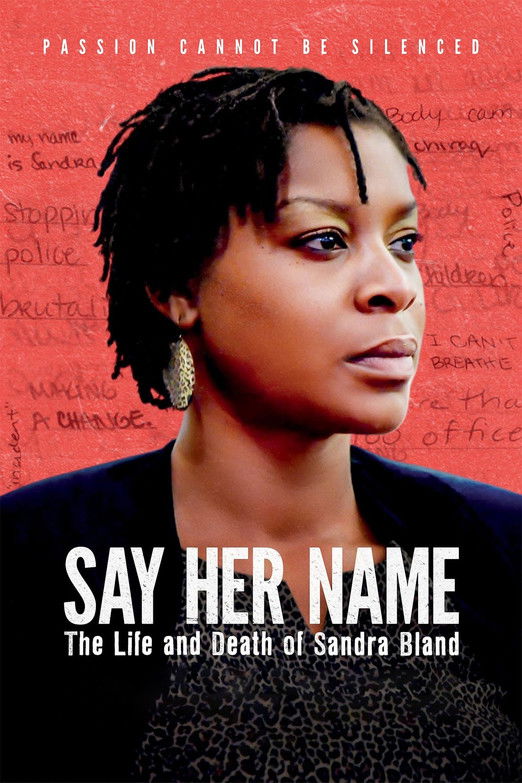
Story overview
This documentary examines the 2015 death of Sandra Bland, a 28-year-old Black woman who died in a Texas jail cell three days after a contentious traffic stop. Through archival footage, interviews, and investigative reporting, the film explores the circumstances surrounding her arrest and death, raising questions about racial bias, police conduct, and systemic injustice. The tone is serious and investigative, focusing on factual details and emotional impact rather than sensationalism.
Parent Guide
A serious documentary about real-life events involving police confrontation, incarceration, and death. Contains emotionally intense material suitable for mature audiences.
Content breakdown
Includes real footage of a heated police confrontation during a traffic stop, with shouting and physical restraint. Discussion of death in custody and references to suicide. No graphic violence shown.
Disturbing themes of wrongful death, institutional failure, and racial injustice. Emotional interviews with grieving family members. Discussion of suicide and mortality.
Some strong language in police footage and interviews, including occasional profanity. Not excessive or gratuitous.
No sexual content or nudity.
No substance use depicted or discussed.
High emotional intensity throughout. Themes of injustice, grief, anger, and systemic failure. May provoke strong emotional reactions.
Parent tips
This film deals with mature themes including police violence, racial injustice, and death. It contains footage of real confrontations, discussions of suicide, and emotional interviews. Best suited for older teens and adults who can process complex social issues. Parents should be prepared to discuss systemic racism, law enforcement, and mental health.
Parent chat guide
Parent follow-up questions
—
—
—
- What did you learn about Sandra Bland's story?
- How did the documentary present the facts of the case?
- What questions does this raise about police interactions?
- How can we respond to injustice in our community?
- What support systems are important in difficult situations?
🎭 Story Kernel
The documentary isn't just about Sandra Bland's death—it's a forensic examination of how systems designed to protect citizens instead dehumanize and destroy them. Through Bland's own social media videos and meticulous police footage reconstruction, the film reveals how her assertive personality—celebrated in her activism—became the catalyst for her fatal encounter with a system that demands submission. The driving force isn't individual malice but institutional machinery that processes human beings as threats, where a routine traffic violation escalates through bureaucratic protocols to a jail cell death. It exposes how Bland's case became a statistic in a system where Black women's lives are systematically discounted.
🎬 Visual Aesthetics
The film employs a chilling visual dichotomy: Bland's vibrant, self-recorded videos bursting with life and color contrast starkly with the sterile, grainy police dashcam and jail surveillance footage. The camera lingers on mundane details—the texture of a jail cell wall, the flicker of fluorescent lights—creating a suffocating atmosphere. When reconstructing the traffic stop, the documentary uses split screens showing multiple angles simultaneously, visually representing how truth becomes fragmented in official narratives. The color palette drains from Bland's warm social media tones to institutional blues and grays, mirroring her journey from freedom to confinement.
🔍 Details & Easter Eggs
💡 Behind the Scenes
Directors Kate Davis and David Heilbroner gained unprecedented access to Bland's family and their legal team, including footage from the family's private investigator. Much of the police footage was obtained through public records requests and legal battles. The documentary's power comes from using Bland's own words—her YouTube videos and social media posts—as narrative anchors, making her the author of her own story until the system takes over. The production team spent years verifying every detail through court documents and official records.
Where to watch
Choose region:
- HBO Max
- HBO Max Amazon Channel
- Amazon Video
- Google Play Movies
- YouTube
- Fandango At Home
- Apple TV Store
Trailer
Trailer playback is unavailable in your region.