
Sea of Hope: America’s Underwater Treasures (2017)
Story overview
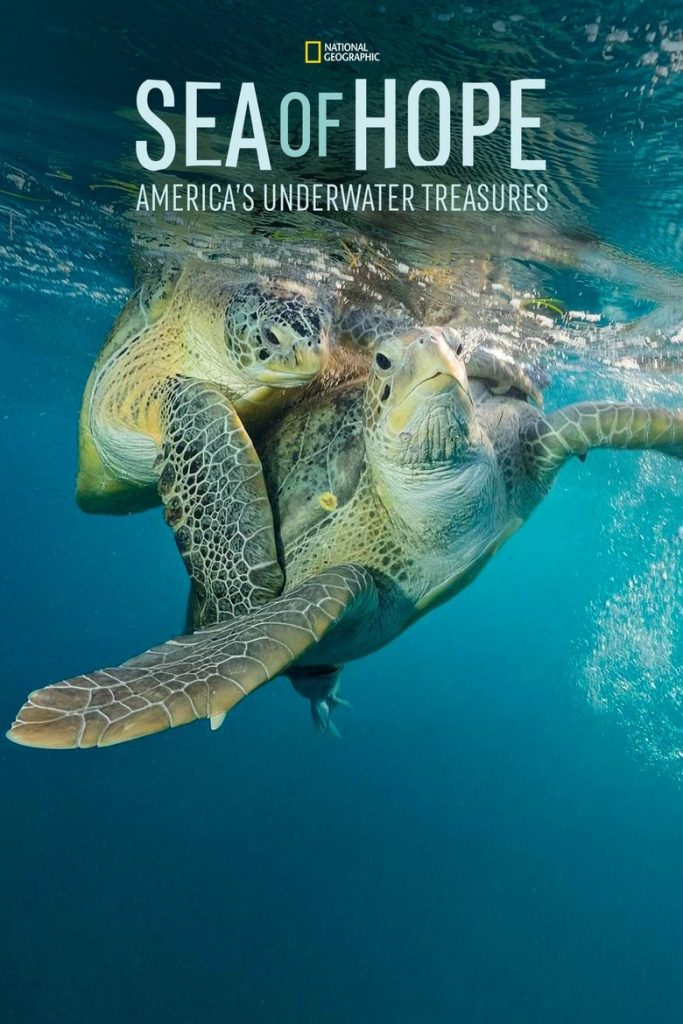
This 2017 documentary follows ocean explorer Sylvia Earle, photographer Brian Skerry, writer Max Kennedy, and a team of teenage aquanauts on a year-long mission to use science and photography to inspire President Obama to create new marine protected areas called 'Blue Parks' across America's underwater wilderness.
Parent Guide
Educational documentary about ocean conservation with no concerning content. Suitable for all ages interested in marine science and environmental protection.
Content breakdown
No violence or peril. The documentary focuses on scientific exploration and conservation advocacy.
No scary or disturbing content. Features beautiful underwater footage and educational discussions about marine ecosystems.
No offensive language. Professional and educational tone throughout.
No sexual content or nudity.
No substance use depicted or discussed.
Mild emotional intensity related to concern for ocean ecosystems and conservation efforts. Some scenes may evoke appreciation for marine life or concern about environmental threats.
Parent tips
This educational documentary focuses on ocean conservation and marine science. It features underwater footage of marine life and discussions about environmental protection. No concerning content is present, making it suitable for most ages. Consider watching together to discuss ocean ecosystems and conservation efforts.
Parent chat guide
Parent follow-up questions
- What sea animals did you see in the movie?
- What colors did you see in the ocean?
- Would you like to explore the ocean like the people in the movie?
- Why is it important to protect ocean habitats?
- What did the scientists and photographers do in the movie?
- How do you think marine protected areas help sea creatures?
- What are the main threats to ocean ecosystems discussed in the documentary?
- How does photography help convince people to protect the ocean?
- What role did the teenage aquanauts play in the mission?
- What are the most effective arguments for establishing marine protected areas?
- How does this documentary balance scientific information with advocacy?
- What are the biggest challenges facing ocean conservation today?
🎭 Story Kernel
The film isn't just a documentary about America's marine sanctuaries; it's a profound meditation on human stewardship and our relationship with the unseen world beneath the waves. It expresses the tension between exploitation and preservation, driven by scientists, indigenous voices, and activists who aren't just fighting for fish but for cultural memory and planetary health. Their motivation stems from witnessing both breathtaking resilience and heartbreaking fragility—a realization that these 'treasures' aren't ours to own but to protect. The core theme is reciprocity: what we take from the sea, we must return in care, making the ocean itself a silent but urgent character.
🎬 Visual Aesthetics
The cinematography masterfully contrasts two visual languages: sweeping, ethereal shots of vibrant coral reefs and marine life that feel almost otherworldly, using slow-motion and macro lenses to create intimacy, versus grittier, handheld footage of human impact like pollution or overfishing. The color palette shifts from deep blues and luminous neon during healthy ecosystem scenes to muted, murky tones in damaged areas, visually reinforcing the stakes. Symbolism emerges through recurring shots of light penetrating water—representing knowledge and hope—and circular compositions that mirror ecological cycles. The camera often lingers on small creatures, suggesting that grandeur lies in details.
🔍 Details & Easter Eggs
💡 Behind the Scenes
The film was shot over three years across 14 U.S. marine sanctuaries, from the Florida Keys to the remote Northwestern Hawaiian Islands. Much of the underwater footage required specialized rebreather diving equipment to minimize bubbles and disturbance, allowing for unusually close wildlife encounters. Notably, several scientists featured are also accomplished underwater photographers, blurring the line between research and artistry. Production faced challenges like unpredictable weather and strict permits to protect sensitive habitats, with some scenes captured using remotely operated vehicles to access depths beyond safe diving limits.
Where to watch
Choose region:
- Disney Plus