
Secrets of Christ’s Tomb (2017)
Story overview
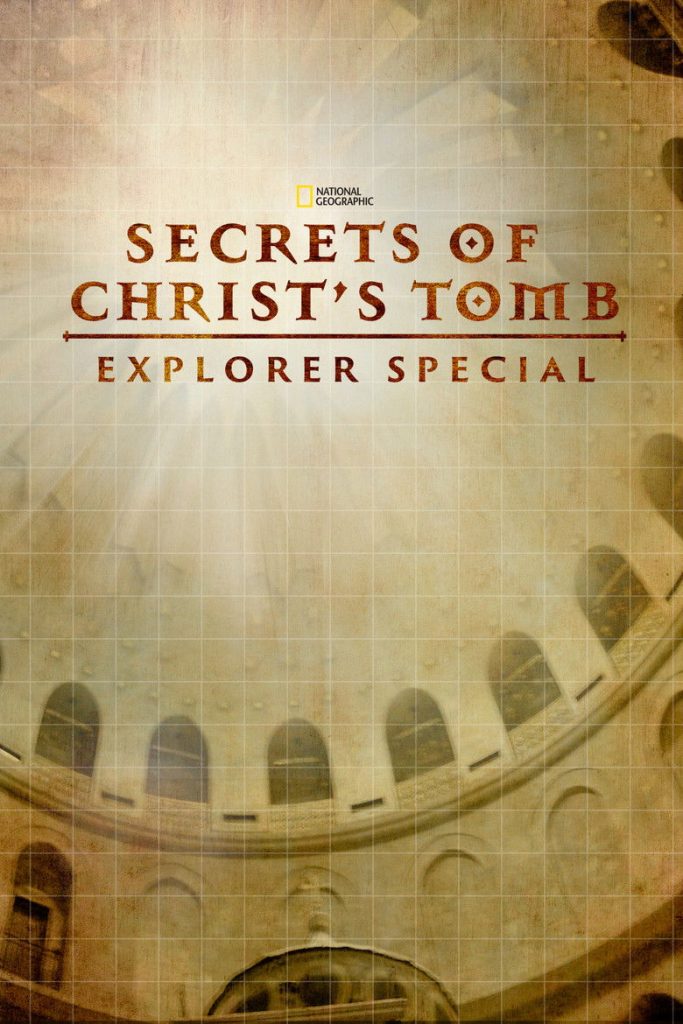
Secrets of Christ's Tomb is a 2017 documentary exploring historical and archaeological investigations into the traditional site of Jesus Christ's burial in Jerusalem. The film examines scientific research, religious traditions, and historical evidence surrounding the Church of the Holy Sepulchre. It presents various perspectives on the authenticity and significance of this sacred location without promoting any specific religious viewpoint.
Parent Guide
Educational documentary suitable for school-aged children interested in history or archaeology. Presents information in a factual manner without sensationalism.
Content breakdown
No violent content or perilous situations depicted.
No frightening or disturbing imagery; focuses on historical investigation.
No inappropriate language; uses academic and documentary-style dialogue.
No sexual content or nudity present.
No depiction of substance use.
Some discussions about religious significance might create thoughtful reflection, but no intense emotional content.
Parent tips
This documentary focuses on historical and archaeological examination of a religious site, presenting information in an educational manner. The content is suitable for children interested in history or religious studies, though younger viewers might find some scientific discussions complex. Parents should be prepared to discuss different religious perspectives as the film presents multiple viewpoints without endorsing any particular belief system.
Parent chat guide
Parent follow-up questions
- What tools do you think scientists use to study old places?
- Why do you think people care about very old buildings?
- What was your favorite part of the movie?
- How do scientists know how old something is?
- Why might different people have different ideas about the same place?
- What would you look for if you were studying an ancient site?
- What methods did the documentary show for investigating historical sites?
- How can scientific research and religious traditions work together or sometimes disagree?
- Why is it important to consider multiple perspectives when studying history?
- What ethical considerations arise when studying religious sites scientifically?
- How does this documentary balance historical evidence with religious significance?
- What challenges do researchers face when investigating sites with both historical and spiritual importance?
🎭 Story Kernel
The film is less about proving or disproving the Resurrection and more about the human compulsion to seek definitive answers in realms designed for mystery. It follows archaeologists and theologians not as adversaries, but as parallel seekers using different toolkits—trowels and radiocarbon dating versus scripture and tradition—to excavate the same profound question. Their shared drive isn't truth in an absolute sense, but the need to touch the intangible, to make physical contact with a cornerstone of faith. The real narrative tension comes from watching both sides grapple with evidence that is inherently ambiguous, revealing that the 'secret' of the tomb might be its stubborn refusal to offer a secret at all, only a mirror for our own beliefs.
🎬 Visual Aesthetics
The cinematography employs a stark, documentary-like realism, contrasting the sterile, clinically-lit modern lab with the shadowy, textured intimacy of the Church of the Holy Sepulchre. Handheld cameras during excavations create a sense of immediate, gritty discovery, while static, reverent shots within the Edicule emphasize its timeless, sacred weight. The color palette is deliberately muted—earthy browns, stone grays, and the faded gold of icons—avoiding melodrama and focusing on the materiality of the site. This visual restraint makes the few moments of revelation, like the scanning technology's blue-hued data visualizations, feel like intrusions of a foreign, digital language into an ancient, physical world.
🔍 Details & Easter Eggs
💡 Behind the Scenes
The documentary crew obtained unprecedented access for the 2016 restoration of the Edicule, a project led by a Greek team. This was the first time the burial bed had been exposed since at least 1555. Notably, the film's lead archaeologist, Fredrik Hiebert, is a National Geographic Explorer-in-Residence, and the project involved specialists from the National Technical University of Athens. Filming was tightly constrained by the Orthodox, Armenian, and Franciscan authorities who share custody of the site, requiring meticulous coordination for every shot inside the tomb itself, often during limited nighttime windows to avoid disrupting pilgrims.
Where to watch
Choose region:
- Disney Plus