Secrets of the Neanderthals (2024)
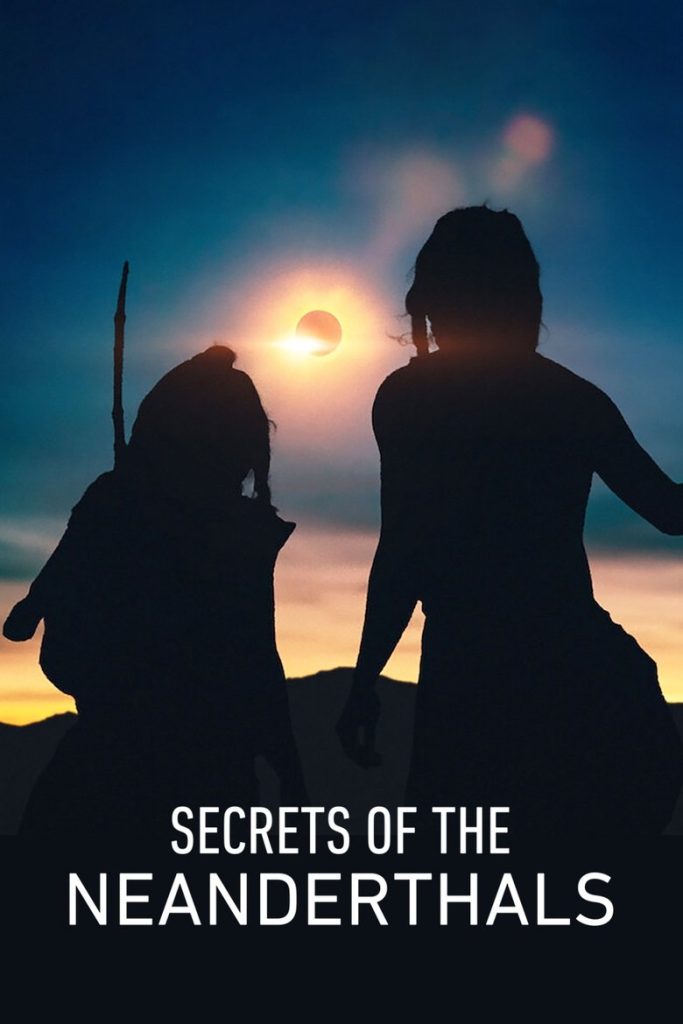
Story overview
This 2024 documentary explores the fascinating world of Neanderthals, examining their fossil records to uncover insights about their daily lives, social structures, and the theories surrounding their eventual disappearance. Narrated by Patrick Stewart, the film combines scientific analysis with visual reconstructions to make ancient history accessible and engaging.
Parent Guide
Educational documentary suitable for school-aged children with interest in history and science. Contains discussions of extinction and mortality that may require explanation for younger viewers.
Content breakdown
No violence depicted. The documentary discusses extinction events but does not show any violent acts or perilous situations.
Some children might find discussions of extinction or skeletal remains mildly unsettling, but these are presented in a scientific, educational context without graphic imagery.
No inappropriate language. The narration uses scientific terminology appropriate for the educational nature of the documentary.
No sexual content or nudity. Scientific reconstructions of Neanderthals are appropriately clothed or depicted in a respectful, educational manner.
No depiction or discussion of substance use.
The topic of extinction may evoke mild emotional responses, particularly for sensitive children, but is handled in a factual, educational manner throughout.
Parent tips
This documentary is educational and generally suitable for children interested in history and science. It presents scientific concepts in an accessible way, but younger viewers might need help understanding some terminology. The film includes discussions of extinction and mortality, which could prompt questions about life and death. No graphic violence or inappropriate content is present, making it a safe choice for family viewing with some guidance for sensitive topics.
Parent chat guide
Parent follow-up questions
- What did the Neanderthal people look like?
- What tools did they use?
- Did they have families like us?
- How do scientists know what Neanderthals ate?
- What evidence tells us about how they lived?
- Why do you think Neanderthals disappeared?
- What methods do archaeologists use to study Neanderthal sites?
- How were Neanderthals similar to and different from modern humans?
- What are the main theories about why Neanderthals went extinct?
- How has our understanding of Neanderthals changed with recent discoveries?
- What does genetic evidence tell us about Neanderthal-modern human interactions?
- What can Neanderthal extinction teach us about human adaptability and survival?
🎭 Story Kernel
The documentary moves beyond the primitive 'caveman' trope to explore the sophisticated social structures and emotional depth of Neanderthals. Centered on the Shanidar Cave excavations in Iraqi Kurdistan, it argues that these hominids possessed a capacity for empathy, ritual, and communal care previously thought unique to Homo sapiens. By examining the remains of 'Shanidar Z,' a female Neanderthal, the film expresses a profound continuity between us and them, suggesting that the 'secrets' aren't just about survival tactics, but about the origins of compassion and the shared experience of mortality. It reframes the extinction of Neanderthals not as a failure of intelligence or a violent conquest, but as a quiet absorption into the broader human story, challenging viewers to reconsider the biological and emotional boundaries that define our species.
🎬 Visual Aesthetics
The visual narrative balances gritty, tactile archaeological footage with high-end forensic reconstruction and atmospheric cinematography. The filming within the Shanidar Cave uses naturalistic, low-key lighting to emphasize the scale and somber atmosphere of the site, which serves as a prehistoric cemetery. The standout visual element is the hyper-realistic reconstruction of the female Neanderthal face by paleo-artists Adrie and Alfons Kennis. The camera lingers on the textures of skin and the depth of the eyes, effectively transforming a crushed skull into a relatable individual. This visual bridge between ancient bone and living flesh serves as a powerful metaphor for the film’s central thesis: the erasure of the 'otherness' that has historically defined our view of Neanderthals. Macro photography of stone tools and microscopic pollen grains further grounds the abstract history in tangible reality.
🔍 Details & Easter Eggs
💡 Behind the Scenes
Directed by Ashley Gething, the documentary is narrated by Sir Patrick Stewart, whose gravitas enhances the film's scholarly yet accessible tone. The production features prominent researchers from the University of Cambridge, including Professor Graeme Barker, who led the recent excavations at Shanidar Cave. The lifelike reconstruction of the Neanderthal woman was created by the Kennis brothers, who are world-renowned for their forensic accuracy in paleo-art. The film was produced by the BBC Studios Science Unit for Netflix, marking a significant high-budget collaboration focused on bringing recent paleoanthropological breakthroughs to a global audience.
Where to watch
Choose region:
- Netflix
- Netflix Standard with Ads
Trailer
Trailer playback is unavailable in your region.