
Secrets of the Saqqara Tomb (2020)
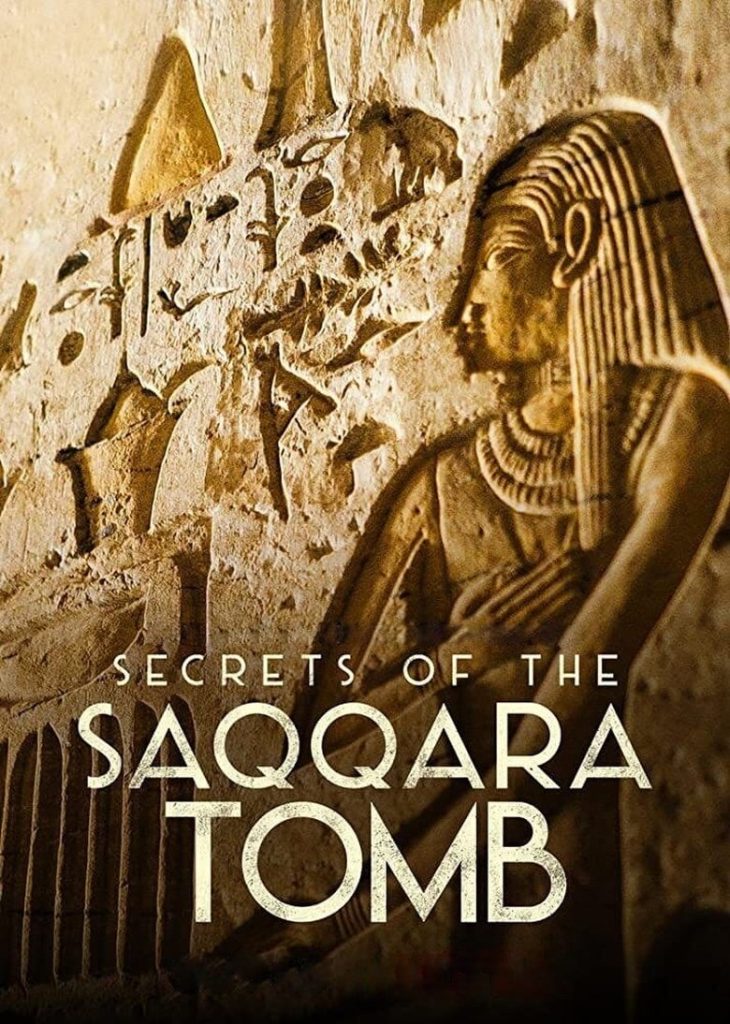
Story overview
This 2020 documentary follows archaeologists excavating unexplored tombs in Saqqara, Egypt, revealing significant discoveries about ancient Egyptian civilization through careful scientific work.
Parent Guide
Educational documentary suitable for most ages. Focuses on archaeological discovery without disturbing content.
Content breakdown
No violence or peril depicted. Shows careful excavation work.
Some scenes in dark tombs with ancient human remains might be slightly unsettling for very young children.
No offensive language. Professional, educational dialogue.
No sexual content or nudity. Shows ancient artifacts and remains respectfully.
No substance use depicted.
Mild excitement during discoveries. Professional tone throughout.
Parent tips
This educational documentary shows archaeological excavation and ancient artifacts. No violence, language, or mature content. Suitable for curious children interested in history and science.
Parent chat guide
Parent follow-up questions
- What tools do archaeologists use?
- What did you see in the tombs?
- Why do people study old things?
- How do archaeologists know where to dig?
- What can we learn from ancient tombs?
- Why is it important to preserve historical sites?
- What scientific methods do archaeologists use?
- How does this discovery change our understanding of ancient Egypt?
- What ethical considerations exist in excavating burial sites?
- How does this discovery fit into broader Egyptological research?
- What challenges do archaeologists face in preservation?
- How do modern technologies aid archaeological work?
🎭 Story Kernel
The film is less about discovering a tomb and more about excavating the human condition. It expresses the profound, almost spiritual, connection between the modern Egyptian archaeologists and the ancient family they uncover. The driving force isn't treasure or fame, but a deep, empathetic need to reconstruct a life story—to rescue the individual, named Wahtye, and his family from the anonymity of time. The archaeologists' meticulous work becomes an act of reverence, a dialogue with the past where every bone fragment and hieroglyph is a sentence in a 4,400-year-old biography. Their motivation is the universal human desire to be remembered, mirrored in their efforts to remember others.
🎬 Visual Aesthetics
The cinematography masterfully contrasts intimate, gritty close-ups of earth and bone with sweeping, majestic shots of the Saqqara necropolis. The color palette is dominated by the stark beige of sand and limestone, punctuated by the vibrant blues and golds of discovered artifacts, making them feel like sudden bursts of life. The camera often adopts the perspective of an archaeologist, peering into dark shafts or focusing intently on a small detail, immersing the viewer in the painstaking process. There's a tangible texture to the visuals—you can almost feel the dust and the weight of the stone, grounding the mystical quest in physical labor.
🔍 Details & Easter Eggs
💡 Behind the Scenes
The film is a documentary, so the 'actors' are real archaeologists, notably Dr. Mostafa Waziri and his team. Filming took place entirely on location during the actual 2018 excavation season at Saqqara, Egypt. A significant production challenge was gaining deep, sustained access to a live, sensitive archaeological dig, requiring immense trust between filmmakers and scientists. The discovery of the tomb's occupant, Wahtye, and his family was genuine and unfolded in real-time for the cameras, meaning the crew's reactions of wonder are completely authentic, not staged.
Where to watch
Choose region:
- Netflix
- Netflix Standard with Ads
Trailer
Trailer playback is unavailable in your region.