Seven Samurai (1954)
Story overview
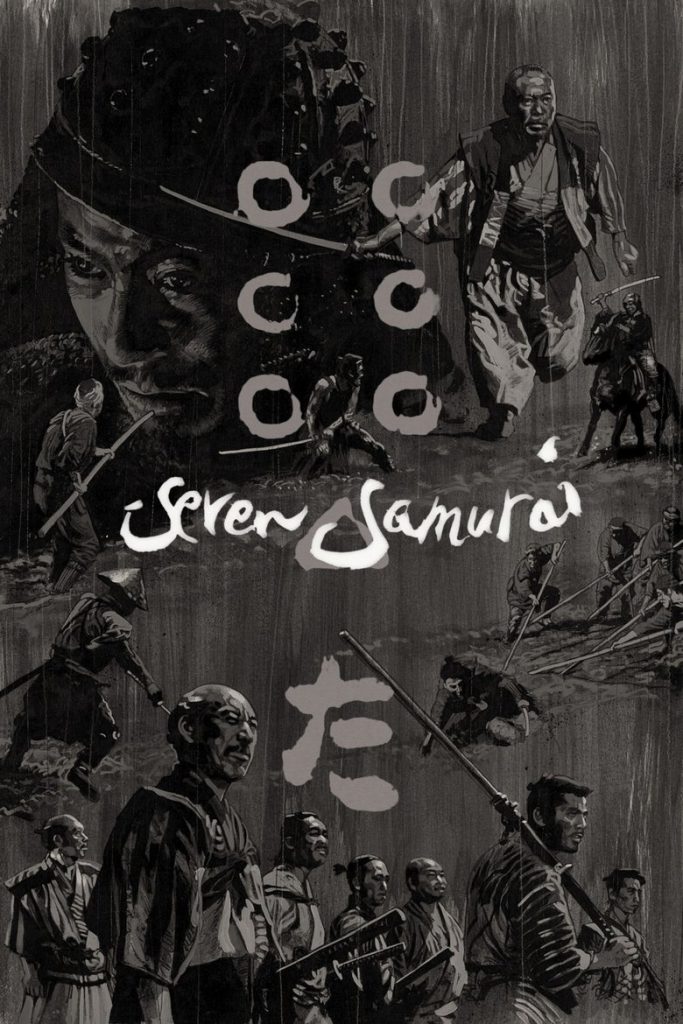
Seven Samurai is a classic Japanese film about a village that hires seven samurai to protect them from bandits. The story follows how these warriors train the villagers to defend themselves while exploring themes of honor, sacrifice, and community. Set in 16th century Japan, it's considered one of the most influential action films ever made, with a runtime of over three hours that builds tension toward a climactic battle.
Parent Guide
A classic action-drama with significant battle violence and mature themes best suited for older children and teens.
Content breakdown
Sword fighting, battles, and character deaths throughout, though in black-and-white with less graphic detail than modern films.
Tense situations and peril, but no jump scares or horror elements; some emotional scenes of villagers in distress.
No offensive language noted; dialogue is in Japanese with subtitles.
No sexual content or nudity present.
No substance use depicted.
Themes of sacrifice, poverty, and class struggle; characters face life-and-death situations with emotional weight.
Parent tips
This film contains significant violence including sword fighting, battles, and character deaths, though the black-and-white cinematography and older style make it less graphic than modern films. The emotional intensity is moderate to strong, with themes of sacrifice, poverty, and class differences that may require explanation for younger viewers. At 207 minutes, the film's length may challenge younger attention spans, so consider watching in segments or discussing the historical context of feudal Japan.
Parent chat guide
Parent follow-up questions
- Did you see any swords in the movie?
- How did the villagers feel when they needed help?
- What colors did you see in the movie?
- Why did the village need samurai to help them?
- What does it mean to be brave like the samurai?
- How did the villagers and samurai work together?
- What differences did you notice between the samurai and the villagers?
- How did the characters show honor in their actions?
- What might have happened if the villagers didn't learn to defend themselves?
- How does the film explore themes of social class and duty?
- What makes this story still relevant today despite being set centuries ago?
- How do different characters demonstrate leadership in challenging situations?
🎭 Story Kernel
At its core, 'Seven Samurai' explores the transactional nature of honor and the brutal reality of class conflict. The samurai aren't motivated by abstract ideals of heroism, but by the practical need for food and purpose in a society that has rendered them obsolete. The villagers, initially portrayed as helpless victims, reveal themselves as pragmatic survivors willing to manipulate and sacrifice the samurai for their own preservation. The film's true tragedy isn't the battle's casualties, but the realization that the alliance was always temporary—the farmers return to their rice, the surviving samurai are left with nothing but graves on a hill, highlighting the unbridgeable gap between classes even in shared struggle.
🎬 Visual Aesthetics
Kurosawa's visual language is one of controlled chaos and earthy realism. The famous rain-soaked final battle is a masterpiece of muddy, kinetic confusion—the camera lunges and stumbles with the combatants, making geography secondary to visceral impact. He contrasts wide, serene shots of the village and mountains with tight, claustrophobic frames during planning sessions, visually compressing the tension. The lack of a vibrant color palette (in the original black and white) emphasizes the film's gritty, elemental nature: earth, rain, blood, and steel. The samurai are often filmed from low angles, not to aggrandize them, but to ground them in the landscape they are doomed to leave.
🔍 Details & Easter Eggs
💡 Behind the Scenes
Toshiro Mifune's iconic, wild performance as Kikuchiyo was largely improvised, with Kurosawa giving him free rein. The actor reportedly stayed in character off-set, annoying the crew. The village set was constructed entirely from scratch in a remote area and was so authentic that locals mistakenly tried to buy vegetables there. To achieve the famous muddy battle scenes, the production team spent days saturating the ground with water, creating a quagmire that genuinely hampered the actors and extras, lending the sequence its palpable exhaustion and struggle.
Where to watch
Choose region:
- HBO Max
- HBO Max Amazon Channel
- Criterion Channel
- Amazon Video
- Apple TV
- Google Play Movies
- YouTube
- Fandango At Home
- Shout! Factory TV
- Kanopy
- Plex
- Plex Channel
Trailer
Trailer playback is unavailable in your region.