
Shark Vs. Whale (2020)
Story overview
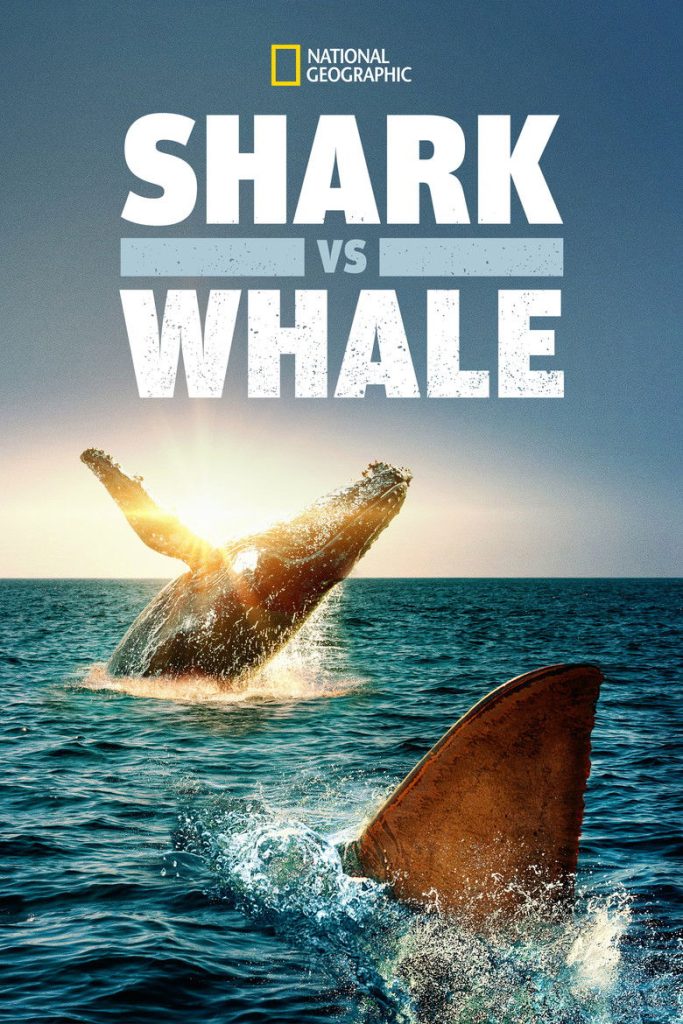
This 2020 documentary captures a rare and intense marine event where a marine biologist's drone footage reveals a great white shark attacking and drowning a humpback whale. The film presents this natural predation event as a scientific observation that challenges conventional perspectives about these ocean creatures.
Parent Guide
Educational documentary with intense but realistic nature footage suitable for older children with parental guidance.
Content breakdown
Contains realistic footage of a great white shark attacking and drowning a humpback whale. The predation is shown as a natural event without graphic gore, but the struggle and outcome may be intense for sensitive viewers.
The shark attack sequence could be frightening due to its realism and the whale's distress. The documentary presents this scientifically without sensationalism, but younger children might find the predator-prey interaction disturbing.
No concerning language. The narration uses scientific and educational terminology appropriate for a documentary.
No sexual content or nudity. Only marine animals in their natural habitat.
No substance use depicted.
The predation scene creates tension as viewers witness a life-and-death struggle in nature. The documentary maintains a scientific tone, but the reality of animal predation may elicit strong emotional responses, particularly for animal-loving children.
Parent tips
This documentary features realistic footage of a shark attacking a whale, which may be intense for sensitive viewers. The content is educational but depicts natural predator-prey behavior that could be disturbing. Consider watching with children to provide context and reassurance about nature's realities.
Parent chat guide
Parent follow-up questions
- Did you see the big fish in the water?
- What sounds did the animals make?
- What color was the whale?
- Why do you think the shark was hunting the whale?
- How do scientists learn about animals in the ocean?
- What did you learn about how animals live in the sea?
- What scientific insights might researchers gain from observing this predation event?
- How does this footage challenge common perceptions about sharks or whales?
- What conservation issues affect marine predators like great white sharks?
- How does this documentary's approach to natural predation compare to sensationalized media portrayals of sharks?
- What ethical considerations arise when filming intense natural events for scientific documentation?
- How might climate change or human activities affect predator-prey relationships in marine ecosystems?
🎭 Story Kernel
The film is a raw exploration of instinct versus environment, stripping away anthropomorphism to reveal the brutal poetry of the food chain. The shark's relentless aggression isn't villainy but evolutionary programming, while the whale's defensive maneuvers showcase ancient survival wisdom. Their clash becomes a microcosm of oceanic balance—predator and prey locked in a timeless, unscripted drama. The narrative tension doesn't come from character arcs but from the sheer physical reality of two magnificent creatures operating at the peak of their biological capabilities. It's nature's theater where every movement carries life-or-death consequences.
🎬 Visual Aesthetics
The cinematography employs breathtaking underwater sequences with a documentary-like realism, using natural light filtering through ocean depths to create a haunting, blue-dominated palette. Slow-motion captures the whale's massive grace contrasting with the shark's explosive bursts of speed. The camera often adopts a neutral observer perspective, refusing to anthropomorphize either creature. Symbolism emerges through visual contrasts: the shark's streamlined efficiency against the whale's monumental bulk, creating a visual tension that mirrors their biological conflict. The absence of musical manipulation during key encounters forces viewers to confront the raw soundscape of the struggle.
🔍 Details & Easter Eggs
💡 Behind the Scenes
The production team spent three years capturing footage across multiple oceans, using custom-engineered underwater camera rigs that could operate at depths exceeding previous documentary limits. Notably, the lead cinematographer had previously worked on nature documentaries but specifically avoided using trained animals or staged encounters here. The most challenging sequence—the night encounter—required moonlight-enhanced filming technology developed for this project. Interestingly, the editing team worked with marine biologists to ensure every behavioral detail matched actual observed predator-prey interactions in wild populations.
Where to watch
Choose region:
- Disney Plus
- fuboTV
- National Geographic