
Sherlock Jr. (1924)
Story overview
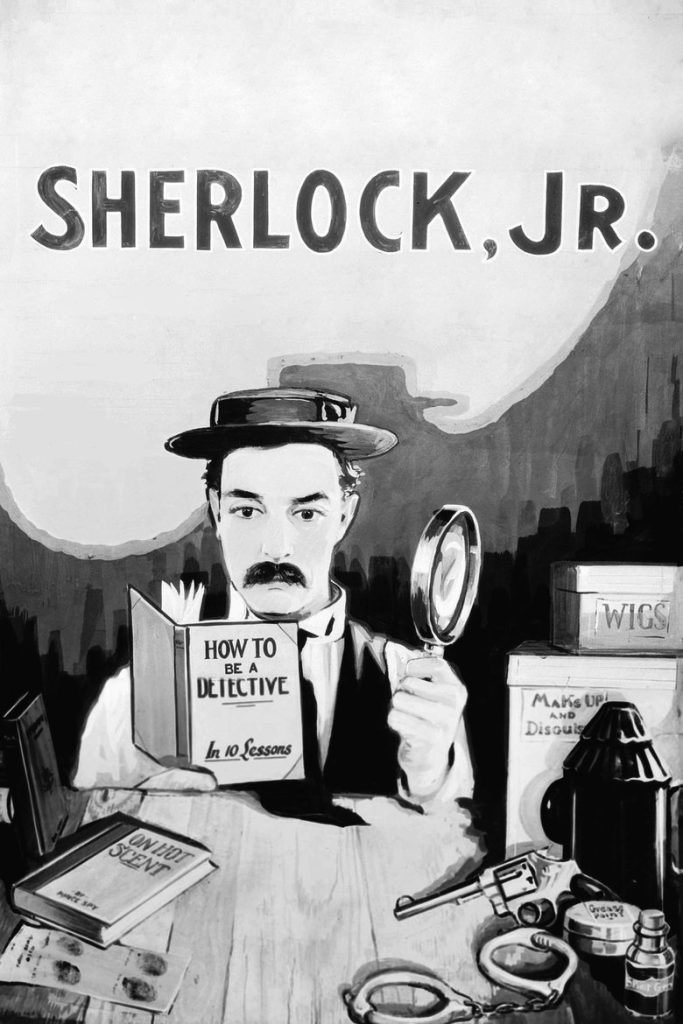
Sherlock Jr. is a silent comedy film from 1924 starring Buster Keaton as a movie projectionist who dreams of becoming a detective. When he's falsely accused of stealing a valuable pocket watch, he uses his imagination to solve the mystery. The film features clever visual gags, physical comedy, and imaginative dream sequences as the protagonist navigates both reality and fantasy.
Parent Guide
A classic silent comedy with imaginative storytelling and physical humor that remains accessible to modern audiences.
Content breakdown
Contains slapstick falls, chases, and comedic peril typical of silent film physical comedy. No graphic violence.
Some dream sequences and fantasy elements might be slightly intense for very young viewers, but nothing truly frightening.
Silent film with no spoken dialogue. Title cards contain simple text.
No sexual content or nudity. Characters are modestly dressed in period-appropriate clothing.
No depiction of substance use.
Mild emotional moments related to being falsely accused and romantic elements, but overall lighthearted tone.
Parent tips
This classic silent film is generally appropriate for most children, with no dialogue to worry about and physical comedy that remains entertaining decades later. Parents should note that while there's no graphic violence, there are some perilous situations and slapstick falls that might concern very young viewers. The film's black-and-white format and silent nature might require some explanation for modern children unfamiliar with this style of cinema.
Parent chat guide
Parent follow-up questions
- What was your favorite funny part?
- How did the characters show their feelings without talking?
- What do you think the main character was dreaming about?
- How is watching a silent movie different from movies today?
- What clues helped solve the mystery?
- Why do you think the main character wanted to be a detective?
- How does the film use visual comedy instead of dialogue?
- What does the film show about using imagination to solve problems?
- How does the movie blend reality and fantasy?
- How does this 1924 film compare to modern detective stories?
- What filmmaking techniques were innovative for their time?
- How does the silent format affect storytelling and character development?
🎭 Story Kernel
At its core, 'Sherlock Jr.' explores the escapism and agency found in cinema. The protagonist, a meek projectionist falsely accused of theft, literally steps into the film he's projecting, transforming into the master detective Sherlock Jr. This isn't just a fantasy sequence; it's a profound commentary on how movies allow us to inhabit idealized versions of ourselves to solve real-world powerlessness. His journey through the chaotic, logic-defying dream world—where he effortlessly navigates absurd dangers—directly empowers him to confront his accuser in reality. The film argues that the narratives we consume don't just distract us; they provide the blueprint and confidence to assert control over our own stories.
🎬 Visual Aesthetics
Buster Keaton's visual genius lies in seamless, inventive camerawork that serves the theme. The iconic scene where he leaps into the movie screen is a masterclass in practical effects, creating a literal and metaphorical portal. The dream sequences utilize rapid, illogical scene transitions (from a garden to a cliff to a lion's den) to visualize the disjointed, rule-free nature of dreams and film editing itself. Keaton's trademark deadpan expression contrasts with the chaotic, physics-defying stunts, emphasizing the character's resilient composure. The black-and-white palette heightens the contrast between the drab reality of the theater and the high-contrast, dramatic world of the film-within-a-film.
🔍 Details & Easter Eggs
💡 Behind the Scenes
Buster Keaton performed nearly all his own dangerous stunts. The iconic scene where a water tower drenches him was done in one take; the weight of the water was so immense it broke his neck, though he didn't realize the severity until years later. The film was shot mostly in Los Angeles, with the theater interior likely a studio set. Keaton co-directed with Roscoe 'Fatty' Arbuckle's former collaborator, but Keaton's singular vision for physical comedy and cinematic innovation is dominant. The film was a commercial disappointment upon release but is now hailed as a pioneering masterpiece of silent comedy and metafilm.
Where to watch
Choose region:
- Criterion Channel
- FlixFling
- IndieFlix
- Kino Film Collection
- IndieFlix Shorts Amazon Channel
- FilmBox Live Amazon Channel
- Amazon Video
- Apple TV
- Google Play Movies
- YouTube
- Fandango At Home
- Tubi TV
- Kanopy
- JustWatchTV
- Plex
- Plex Channel
- Public Domain Movies
- Fawesome
Trailer
Trailer playback is unavailable in your region.