
She’s Gotta Have It (1986)
Story overview
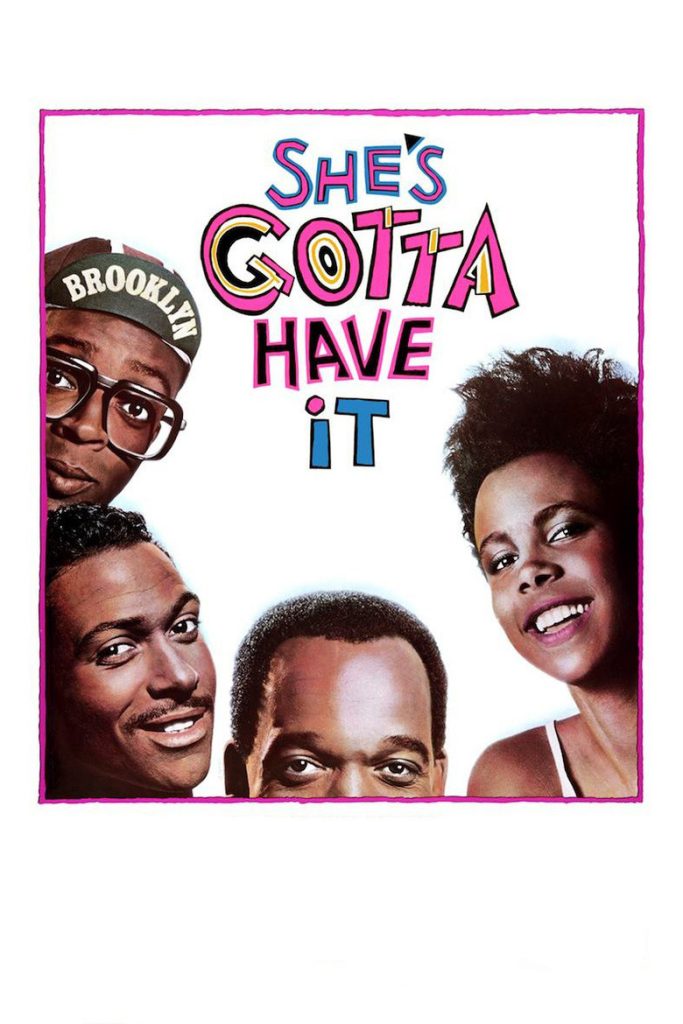
She's Gotta Have It is a 1986 romantic comedy by Spike Lee that follows Nola Darling, a confident young woman in Brooklyn who maintains simultaneous sexual relationships with three different men. The film explores themes of female independence, sexual agency, and societal expectations through a mix of direct address, humor, and candid conversations. Nola resists pressure from her partners to commit to just one, asserting her right to define her own relationships on her terms.
Parent Guide
This film contains mature content appropriate only for older teenagers and adults. The R rating reflects significant sexual content, nudity, and strong language throughout. While the film has comedic elements and explores important themes about independence, it presents adult relationships in a frank, explicit manner that requires maturity to process.
Content breakdown
One brief scene shows a character being grabbed aggressively during an argument. Some verbal confrontations between characters. No physical violence or peril beyond this minor incident.
Some emotionally intense conversations about relationships and commitment. One scene depicts a character having a nightmare. The frank discussions about sexuality and relationships might be uncomfortable for younger viewers.
Frequent strong language including multiple uses of f***, s***, a**, and other profanity. Sexual references and crude language throughout the dialogue.
Extensive sexual content including: multiple scenes depicting sexual situations (though not graphically explicit), partial nudity (breasts, buttocks), frank discussions about sex and relationships, themes of promiscuity and non-monogamy. The central plot revolves around a woman's sexual relationships with three different men.
Social drinking in several scenes (wine, beer). Characters smoke cigarettes. No depiction of drug use or intoxication.
Emotionally charged conversations about relationships, commitment, and independence. Characters express jealousy, frustration, and desire. The film explores complex emotional territory regarding personal freedom versus relationship expectations.
Parent tips
This film is rated R primarily for sexual content, nudity, and strong language. It presents mature themes about relationships and sexuality in a frank, adult-oriented way. Parents should be aware that while the film has comedic elements, it contains explicit discussions about sex, partial nudity, and scenes depicting sexual situations. The content is not suitable for children or young teenagers without parental guidance and discussion.
Parent chat guide
Parent follow-up questions
—
—
—
- What did you think about how Nola handled having three relationships at once?
- How do you think society's views about women's independence have changed since this film was made?
- What did you notice about how the different men tried to convince Nola to choose only them?
- How does this film's portrayal of relationships compare to more recent movies you've seen?
🎭 Story Kernel
Spike Lee's debut isn't just about Nola Darling's polyamory; it's a radical interrogation of ownership and autonomy in a patriarchal society. The film's true conflict isn't Nola's relationships with Jamie, Greer, and Mars, but their collective inability to accept her as a complete, self-possessed individual rather than a prize to be won. Each man represents a different form of patriarchal expectation—romantic possession, materialistic control, and immature fantasy—that Nola systematically rejects. The movie's power lies in its refusal to judge Nola's choices while exposing the fragility of male egos that crumble when faced with female agency. The controversial rape scene, often debated, brutally underscores the ultimate violation that occurs when men feel entitled to women's bodies and choices.
🎬 Visual Aesthetics
Lee's stark black-and-white cinematography creates a documentary-like intimacy while elevating Nola's story to mythic proportions. The direct-to-camera interviews break the fourth wall, making viewers complicit in judging Nola's life. Visual contrasts abound: Nola's vibrant, artistic apartment versus the men's spaces that feel like extensions of their egos. Notice how Mars's scenes have more chaotic camera movement, reflecting his immature energy, while Greer's are composed and static, mirroring his controlled arrogance. The color sequence where Nola wears red in a black-and-white world isn't just aesthetic—it visually screams her refusal to be monochromatic in others' eyes. Lee's signature double-dolly shot appears here in its infancy, floating characters in emotional limbo.
🔍 Details & Easter Eggs
💡 Behind the Scenes
Shot in just 12 days on a shoestring $175,000 budget, Lee filmed in his own Brooklyn apartment and neighborhood. Tracy Camilla Johns (Nola) was a complete unknown—Lee preferred authentic presence over polished acting. The famous 'Please baby please' scene was improvised when actor Tommy Redmond Hicks forgot his lines. Lee himself plays Mars Blackmon, creating one of cinema's most memorable hype-man characters. The film's success directly funded Lee's next project, 'School Daze,' and established his production company, 40 Acres and a Mule Filmworks.
Where to watch
Choose region:
- Netflix
- Netflix Standard with Ads
Trailer
Trailer playback is unavailable in your region.