
Shirley (2024)
Story overview
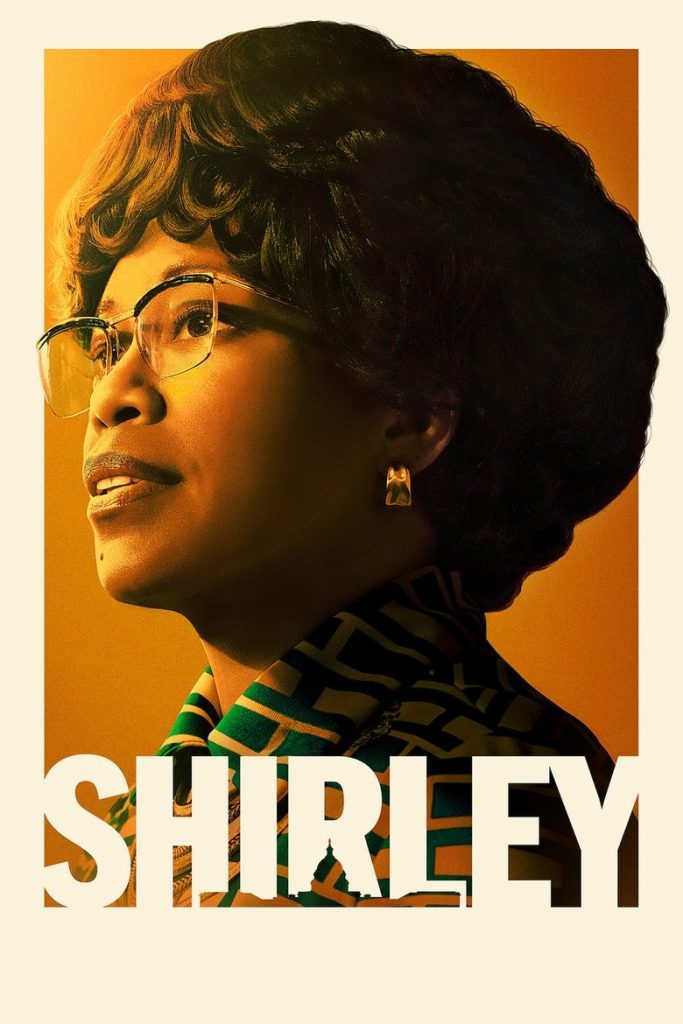
Shirley is a 2024 historical drama directed by John Ridley, starring Regina King as Shirley Chisholm. The film chronicles Chisholm's groundbreaking 1972 campaign for the Democratic presidential nomination, following her historic election as the first Black woman in Congress. It explores themes of political courage, racial and gender barriers, and democratic ideals through a biographical lens.
Parent Guide
A historically significant biographical drama about political trailblazing with minimal concerning content. Best for mature middle schoolers and up who can understand political context.
Content breakdown
Political tension and verbal confrontations; no physical violence shown.
Scenes depicting historical racism and sexism may be unsettling but are presented educationally.
Occasional mild political language; no strong profanity expected given PG-13 rating.
No sexual content or nudity; focus is on political narrative.
No depiction of substance use.
Emotional moments related to political struggles and personal determination; not overly intense.
Parent tips
This PG-13 rated film is suitable for mature children aged 13+ due to its political themes and mild content. Parents should note: 1) The film depicts historical racism and sexism in 1970s politics, which may require context for younger viewers. 2) There are scenes of political tension and confrontation. 3) It serves as an educational opportunity about civil rights history and political processes. 4) The runtime is nearly 2 hours, requiring sustained attention.
Parent chat guide
Parent follow-up questions
- Who was the brave lady in the movie?
- What color was her dress?
- Did she help people?
- Why was Shirley Chisholm special?
- What job did she want?
- What does 'president' mean?
- What historical barriers did Chisholm break?
- Why was her campaign significant?
- How did people react to her candidacy?
- Analyze the intersection of race and gender in Chisholm's campaign.
- How did the political system respond to her candidacy?
- What contemporary parallels exist in today's politics?
- What leadership qualities did she demonstrate?
🎭 Story Kernel
The film focuses on Shirley Chisholm's historic 1972 run for the Democratic presidential nomination, eschewing the traditional cradle-to-grave biopic structure for a focused procedural on the mechanics of her grassroots campaign. It explores the intersectionality of race and gender in American politics, highlighting Chisholm's refusal to be a mere symbol while being treated as one by the establishment. The narrative delves into the friction between idealism and pragmatism, illustrating the betrayals she faced from within the Congressional Black Caucus and the Democratic Party. Ultimately, it expresses that being 'unbought and unbossed' is not just a slogan but a grueling lifestyle that requires immense personal sacrifice. The movie portrays Chisholm not as a saint, but as a calculated, fierce, and often isolated pioneer who understood that her run was less about winning the presidency and more about forcing a seat at the table.
🎬 Visual Aesthetics
John Ridley and cinematographer Ramsey Nickell opt for a naturalistic, almost documentary-like aesthetic that favors tight framing and handheld movements to capture the claustrophobia of campaign offices and hotel rooms. The color palette leans heavily into the muted, earthy tones of the 1970s—mustard yellows, deep browns, and oranges—which grounds the high-stakes political drama in a gritty, tactile reality. Symbolism is frequently found in the use of reflections and glass barriers, visually manifesting the 'glass ceiling' Chisholm was actively shattering. The lighting often isolates Regina King in the frame, emphasizing her singular position as a trailblazer. By avoiding the glossy, high-contrast sheen of contemporary political dramas, the visual language maintains a textured, lived-in feel that mirrors the 'boots on the ground' nature of her historic, underfunded, and defiant run for the highest office in the land.
🔍 Details & Easter Eggs
💡 Behind the Scenes
Regina King spent over 15 years trying to get this project produced, serving as a producer alongside her sister, Reina King, to ensure Chisholm's story reached the screen. The film marks one of the final screen appearances of Lance Reddick, who portrays campaign manager Wesley McDonald 'Mac' Holder; the film is dedicated to his memory. Director John Ridley, an Academy Award winner for the '12 Years a Slave' screenplay, conducted extensive research to ensure the dialogue reflected Chisholm's specific cadence and rhetorical style. The production utilized locations in Cincinnati to stand in for 1970s Brooklyn and Washington D.C.
Where to watch
Choose region:
- Netflix
- Netflix Standard with Ads
Trailer
Trailer playback is unavailable in your region.