
Shutter Island (2010)
Story overview
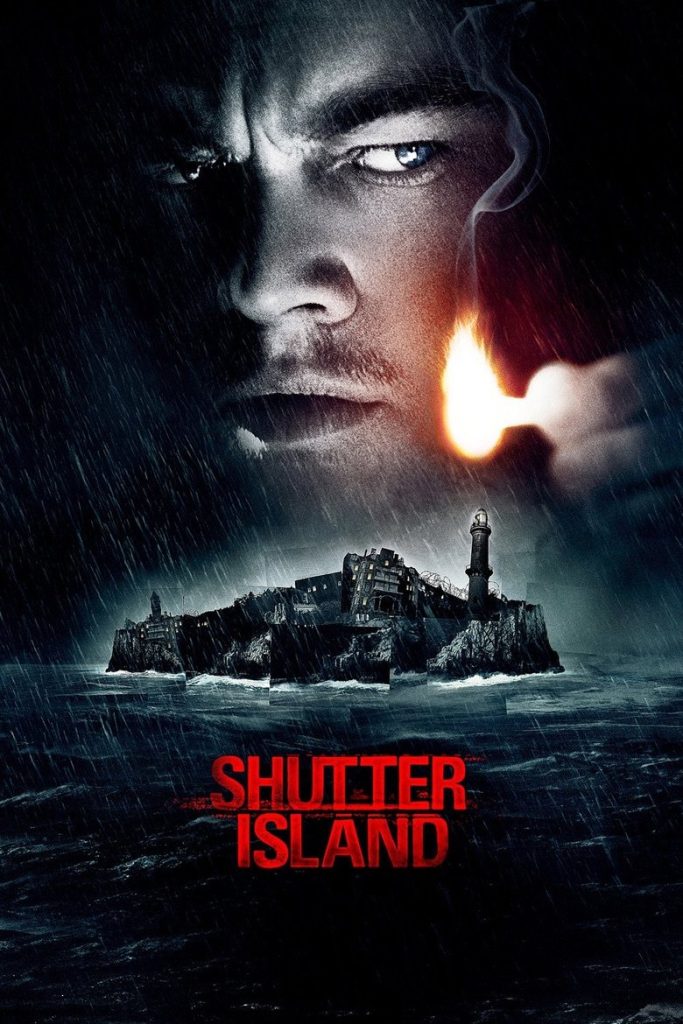
Shutter Island is a psychological thriller set in 1954 that follows U.S. Marshal Teddy Daniels as he investigates a patient's disappearance from a remote hospital for the criminally insane. The investigation becomes increasingly complex as Daniels experiences disturbing visions and encounters mysterious medical staff. The film explores themes of reality, memory, and psychological trauma through its atmospheric setting and tense narrative.
Parent Guide
A psychologically intense thriller with mature themes and disturbing content suitable only for older teens and adults.
Content breakdown
Contains graphic violence including shootings, bloody injuries, violent confrontations, and perilous situations. Scenes depict wartime violence through flashbacks and present-day physical conflicts.
Features intense psychological horror, disturbing imagery, unsettling medical procedures, and scenes of mental distress. The atmospheric tension and reality-bending narrative create sustained unease.
Includes some strong language and profanity throughout the film, though not excessive. Typical of R-rated dialogue in tense dramatic situations.
Contains brief suggestive references and romantic elements, but no explicit sexual content or nudity. Some emotional intimacy is shown in flashback sequences.
Shows occasional smoking and drinking consistent with the 1950s setting. Some medication references related to psychiatric treatment.
High emotional intensity throughout with themes of grief, trauma, guilt, and psychological unraveling. The film maintains a consistently tense and unsettling mood.
Parent tips
This R-rated psychological thriller contains intense psychological themes, disturbing imagery, and strong violence that make it unsuitable for younger viewers. The film deals with mental illness, trauma, and reality distortion in ways that could be confusing or frightening for children and sensitive teens. Parents should be aware that the movie's unsettling atmosphere, graphic violence, and mature themes require careful consideration before viewing with older teenagers.
Parent chat guide
Parent follow-up questions
- What did you think about the island in the movie?
- How did the music make you feel?
- What colors did you notice most?
- Was there anything that made you feel safe?
- What was your favorite part of the movie?
- What made the island seem scary or mysterious?
- How did the main character show he was brave?
- What clues did he look for in his investigation?
- Why do you think people might feel confused in that place?
- What would you do if you visited an island like that?
- How does the movie show the difference between reality and imagination?
- What challenges did the main character face in his investigation?
- How did the setting affect the mood of the story?
- What does the movie suggest about how we remember difficult experiences?
- Why is it important to understand someone's perspective before judging them?
- How does the film explore themes of trauma and memory?
- What commentary does the movie make about mental health treatment in the 1950s?
- How does the cinematography and score contribute to the psychological tension?
- What ethical questions does the investigation raise?
- How does the ending challenge viewers' understanding of reality and perception?
🎭 Story Kernel
At its core, 'Shutter Island' explores the human psyche's desperate defense mechanisms against unbearable trauma. Teddy Daniels isn't solving a mystery—he's constructing one to avoid confronting the horrifying truth that he murdered his depressed wife after she drowned their three children. The entire investigation is an elaborate role-playing therapy designed by Dr. Cawley to break through Teddy's dissociative identity disorder. The driving force isn't justice but the fundamental human need for narrative coherence, even when that narrative is a protective fiction. The film asks whether we choose painful truth or comforting delusion, with Teddy's final line revealing his tragic choice.
🎬 Visual Aesthetics
Scorsese employs a visual language of psychological disintegration through oppressive Gothic architecture, disorienting Dutch angles, and a desaturated color palette that bleeds into vivid, traumatic flashbacks. The lighthouse—both literal and metaphorical—dominates the landscape as the supposed center of horrors, while recurring water imagery (rain, ocean, drinking glasses) visually connects to the drowning trauma. Camera movements shift from steady investigative tracking shots to chaotic, handheld sequences during Teddy's migraines and flashbacks, mirroring his crumbling mental state. The final shot's symmetrical composition contrasts with everything before it, suggesting Teddy has achieved a terrible, stable peace in his chosen reality.
🔍 Details & Easter Eggs
💡 Behind the Scenes
Leonardo DiCaprio prepared by studying dissociative disorders with psychiatrists and visiting mental institutions. The film was shot at several Massachusetts locations including the former Medfield State Hospital, which provided the authentically eerie asylum setting. Max von Sydow's casting as Dr. Naehring was a deliberate homage to Ingmar Bergman's psychological films. Scorsese and editor Thelma Schoonmaker created the disorienting dream sequences by manipulating film speed and using unconventional cuts. The lighthouse exterior was built on a peninsula in Boston Harbor, while interior scenes used a soundstage.
Where to watch
Choose region:
- MGM Plus
- Paramount Plus Essential
- Paramount Plus Premium
- Amazon Video
- Apple TV
- Google Play Movies
- YouTube
- Fandango At Home
- JustWatchTV
- Spectrum On Demand
- Kanopy
Trailer
Trailer playback is unavailable in your region.