
Sing (2016)
Story overview
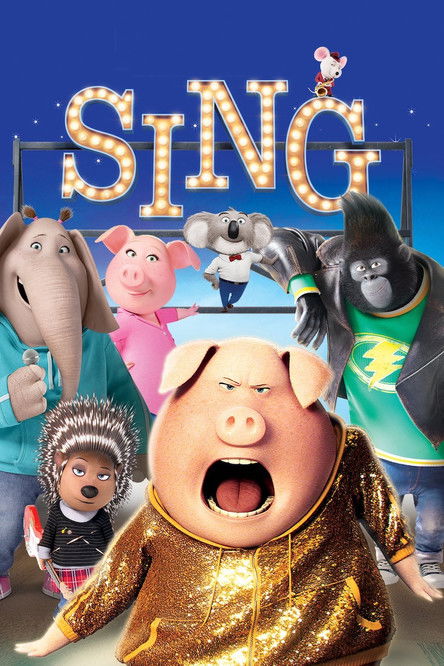
Sing is an animated musical comedy about a determined koala who organizes a singing competition to save his struggling theater. The film follows a diverse group of animal contestants as they pursue their dreams of performing on stage. Through humor and catchy musical numbers, it explores themes of perseverance, friendship, and following one's passion despite obstacles.
Parent Guide
A generally family-friendly animated musical with positive messages about perseverance and following dreams, suitable for most elementary school children.
Content breakdown
Cartoonish peril including a theater collapse scene and some chase sequences. No graphic violence.
Some tense moments during peril scenes, but nothing overly frightening. The theater collapse might briefly startle very young viewers.
Occasional mild rude humor and innuendos that may go over younger children's heads. No strong profanity.
No sexual content or nudity. Some mild flirtation between characters.
No depiction of substance use.
Characters experience disappointment and setbacks, but the overall tone remains upbeat. Some emotional moments when characters face challenges.
Parent tips
This PG-rated animated film is generally family-friendly with positive messages about chasing dreams and teamwork. Parents should be aware that some characters face mild peril situations (like a theater collapse) and there are occasional crude jokes or innuendos that might go over younger children's heads. The film's 108-minute runtime might be long for very young viewers, but the musical sequences help maintain engagement.
Most content is appropriate for elementary school ages and up, with the main considerations being some cartoonish action and mild thematic elements. The diverse cast of animal characters and uplifting musical performances make it entertaining for family viewing.
Parent chat guide
For younger viewers, focus conversations on the friendship aspects and how characters help each other. With older children, you can discuss more complex themes like dealing with failure, managing stage fright, or balancing dreams with practical responsibilities.
Parent follow-up questions
- Which animal character did you like the most and why?
- What was your favorite song from the movie?
- How did the characters help each other?
- What makes you feel brave like the characters?
- What would you sing if you were in the competition?
- Why do you think Buster wanted to save his theater?
- How did the characters overcome their fears about performing?
- What does it mean to be a good friend in the movie?
- What would you do if something you worked hard for didn't work out?
- How did the competition bring the characters together?
- What different challenges did the characters face in pursuing their dreams?
- How did the movie show that success isn't just about winning?
- What responsibilities did Buster have as the competition organizer?
- How did the characters balance their personal lives with their dreams?
- What did you learn about teamwork from different character relationships?
- How does the film portray the entertainment industry and pursuing artistic careers?
- What commentary does the movie make about fame and authenticity?
- How do the characters' different backgrounds influence their approaches to the competition?
- What ethical dilemmas did Buster face in organizing the competition?
- How does the film balance commercial entertainment with artistic integrity?
🎭 Story Kernel
Beneath its singing competition premise, 'Sing' explores the universal struggle against internal and external limitations. Each character's journey is driven by a core desire to reclaim a lost part of themselves—Buster Moon seeks validation for his father's failed dream, Rosita yearns for the excitement stolen by domesticity, and Johnny fights to escape a criminal identity imposed by his family. The film argues that the stage is merely a catalyst; the true transformation happens in the quiet moments of choosing courage over fear. It's less about winning a contest and more about the radical act of showing up as your authentic self, despite the risk of public failure. The theater's collapse becomes the ultimate test: will their newfound passion survive when the spectacle is gone?
🎬 Visual Aesthetics
The film employs a vibrant, saturated color palette that mirrors its theatrical world—neon-lit streets, the warm gold of the Moon Theater, and the stark contrast of Johnny's gloomy criminal hideouts. Camera work often uses wide shots to emphasize the scale of Buster's ambitions and the loneliness of individual struggles, then tight close-ups during performances to capture raw, vulnerable emotion. The animation style blends cartoonish expressiveness with surprisingly detailed textures, like the worn velvet of theater seats or Rosita's frazzled fur. Symbolism is straightforward but effective: the dilapidated theater represents forgotten dreams, while its eventual destruction and rebirth through water (the flood) visually washes away the old failure, allowing for a genuine, community-built revival.
🔍 Details & Easter Eggs
💡 Behind the Scenes
The voice cast is a who's who of musical talent, with several actors performing their own songs. Taron Egerton (Johnny) actually sang 'I'm Still Standing,' and Scarlett Johansson (Ash) co-wrote her original song 'Set It All Free' with director Garth Jennings. Reese Witherspoon recorded Rosita's parts while bouncing on a mini-trampoline to sound authentically out of breath. The film's development name was 'Loud House,' and early concepts were much darker, with Buster Moon originally envisioned as a human impresario before becoming the optimistic koala. Director Garth Jennings also provided the voice for the Miss Crawly, the elderly lizard secretary with a prosthetic eye.
Where to watch
Choose region:
- Netflix
- Netflix Standard with Ads
- Amazon Video
- Apple TV
- Google Play Movies
- YouTube
- Fandango At Home
- FlixFling
Trailer
Trailer playback is unavailable in your region.