
Sitara: Let Girls Dream (2019)
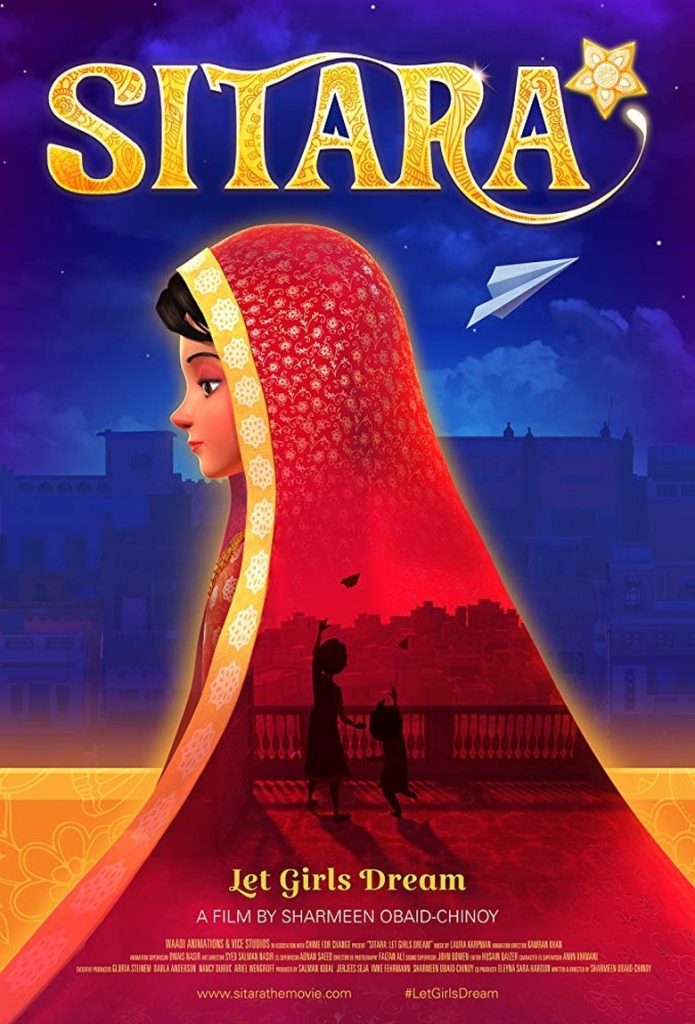
Story overview
Sitara: Let Girls Dream is a 15-minute animated drama from Pakistan that tells the story of 14-year-old Pari, who dreams of becoming a pilot despite living in a society that restricts girls' aspirations. The film explores themes of gender inequality, societal expectations, and the power of dreams through Pari's emotional journey as she confronts barriers to her ambitions.
Parent Guide
An emotionally resonant animated short that addresses gender inequality and the importance of pursuing dreams, suitable for children who can understand discussions about social issues.
Content breakdown
No physical violence or perilous situations depicted.
Contains emotional themes of disappointment and societal restriction that may be saddening for sensitive viewers, but no frightening imagery.
No offensive or inappropriate language.
No sexual content or nudity.
No depiction of substance use.
Contains emotional themes of frustration, disappointment, and societal constraints that may resonate strongly with viewers, particularly those who understand gender inequality issues.
Parent tips
This short film addresses important themes of gender equality and pursuing dreams against societal constraints. It's suitable for children who can understand discussions about cultural differences and gender roles. The emotional content may be more impactful for older children who can grasp the social commentary. Consider watching together to discuss Pari's challenges and the film's message about empowerment.
Parent chat guide
Parent follow-up questions
- What did you like about Pari?
- What do you dream about when you grow up?
- How did Pari feel when she couldn't follow her dream?
- Why do you think some people didn't want Pari to be a pilot?
- What does it mean to have a dream?
- How did Pari show courage in the story?
- What societal pressures did Pari face?
- How does this film relate to real-world gender inequality?
- What message do you think the director wanted to share?
- Analyze how the film uses animation to convey its social message.
- Discuss the cultural context of gender roles in different societies.
- How does this short film contribute to conversations about girls' education and empowerment globally?
🎭 Story Kernel
At its core, 'Sitara: Let Girls Dream' is a devastatingly simple indictment of child marriage, using the universal language of childhood play to expose a brutal economic transaction. The film's power lies not in complex plotting but in the stark juxtaposition of a young girl's imaginative world—where she pilots paper airplanes—against the crushing reality of her impending wedding. The characters are driven by silent desperation: Pari by her innocent desire to fly and explore, her family by the unspoken pressures of poverty and tradition that make her childhood a currency. The film expresses how systemic oppression operates not through overt violence, but through the quiet extinguishing of potential, making the final image of the grounded paper airplane one of cinema's most heartbreaking metaphors for clipped wings.
🎬 Visual Aesthetics
The animation employs a soft, almost storybook aesthetic with a warm, pastel-dominated color palette—initially creating a sense of whimsical safety that makes the narrative's turn so gut-wrenching. This visual gentleness is the film's masterstroke; the horror of child marriage isn't presented through darkness but through the invasion of marital symbolism (like the henna and wedding bangles) into this innocent, colorful space. The camera language is intimate, often at Pari's eye level, immersing us in her perspective. The paper airplanes serve as the primary visual motif—their graceful, looping flight contrasting sharply with the static, confined frames of the wedding preparations, visually mapping the transition from freedom to imprisonment.
🔍 Details & Easter Eggs
💡 Behind the Scenes
This 15-minute animated short was produced by Pakistani filmmaker Sharmeen Obaid-Chinoy's studio, SOC Films, and released in 2020. It premiered at the 2019 Annecy International Animated Film Festival. The film is dialogue-free, a deliberate choice to make its message about child marriage universally accessible, transcending language barriers. The animation style, while seemingly simple, required meticulous hand-drawn techniques to achieve its expressive, emotive quality. The title 'Sitara' means 'star' in Urdu, adding a layer of tragic irony to the story of a girl whose light is dimmed before it can truly shine.
Where to watch
Choose region:
- Netflix
- Netflix Standard with Ads