
Sixty Minutes (2024)
Story overview
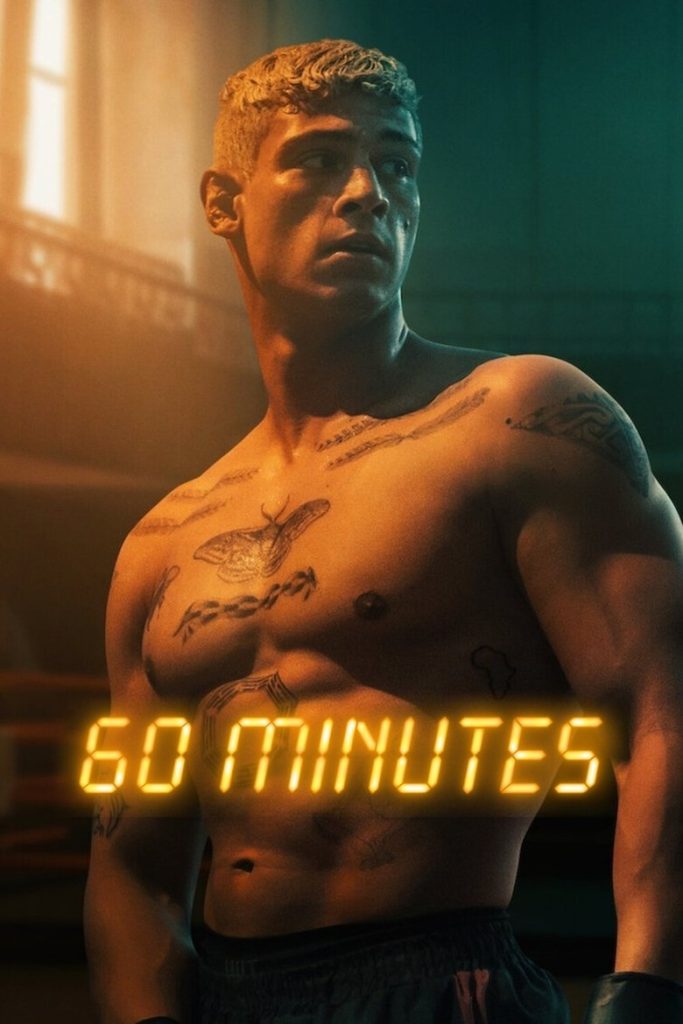
A mixed martial arts fighter must race across Berlin in 60 minutes to reach his daughter's birthday party, risking his career and facing dangerous obstacles to maintain custody.
Parent Guide
Intense action thriller with martial arts violence, high-stakes peril, and mature themes about parental custody battles. Not suitable for young children.
Content breakdown
Multiple MMA fight sequences with realistic combat, punches, kicks, and grappling. High-speed chases through city streets with vehicles and pedestrians in danger. Characters face life-threatening situations throughout the race against time.
Intense suspense as protagonist races against clock. Tense situations involving potential loss of child custody. Some scenes of characters in peril that could be frightening to sensitive viewers.
Some strong language likely present given TV-MA rating, including profanity during intense situations. German dialogue with English subtitles.
No sexual content or nudity indicated based on provided information. Focus is on action and family drama.
Possible social drinking in background scenes, but not a focus of the film. No prominent substance abuse depicted.
High emotional stakes involving potential loss of child custody. Desperation and determination drive the protagonist. Themes of parental love and sacrifice under extreme pressure.
Parent tips
This film contains intense fight sequences, perilous situations, and themes of parental desperation. The TV-MA rating indicates it's designed for mature audiences. Consider the child's sensitivity to violence and tension before viewing.
Parent chat guide
Parent follow-up questions
- How did the daddy try to get to his daughter's party?
- What do you think the little girl felt when her daddy was late?
- Why was it so important for the fighter to get to the birthday party?
- What would you do if you had to choose between something important for work and something important for family?
- What does this movie show about what parents will do for their children?
- How does the main character show determination even when things get dangerous?
- How does this film portray the legal and emotional challenges of custody battles?
- What commentary does the movie make about professional sports and personal responsibilities?
🎭 Story Kernel
At its core, Sixty Minutes is a high-stakes exploration of redemption through the lens of fatherhood. Octavio Bergmann is not just fighting thugs; he is fighting the gravitational pull of his own poor choices. The film strips away the glamour of professional fighting, presenting it as a trap that threatens to sever his last remaining tether to humanity: his daughter. By choosing a birthday party over a fixed fight, Octavio attempts to reclaim his agency. The narrative expresses the desperation of a man realizing that his time—both on the clock and in his child's life—is a finite resource. It is a visceral study of how the consequences of a violent lifestyle can only be outrun for so long before they demand a final, bloody confrontation with the past.
🎬 Visual Aesthetics
Oliver Kienle employs a kinetic, claustrophobic visual style that mirrors Octavio’s mounting panic. The cinematography utilizes a handheld aesthetic that stays uncomfortably close to the protagonist, making the viewer a participant in his physical exhaustion. Berlin is rendered not as a landmark city, but as a labyrinth of cold concrete, neon-lit subway stations, and shadowy alleyways. The lighting shifts from the harsh, clinical glare of the gym to the saturated, disorienting hues of the city’s nightlife. Symbolically, the constant presence of clocks and digital timers serves as a visual metronome, heightening the tension. The fight choreography is grounded and messy, eschewing cinematic flair for a raw, utilitarian violence that emphasizes the physical toll of Octavio’s journey across the urban landscape through long, grueling takes.
🔍 Details & Easter Eggs
💡 Behind the Scenes
Lead actor Emilio Sakraya is a highly skilled martial artist in real life, having trained in karate and kung fu from a young age. This background allowed for the film's intense fight sequences to be performed with minimal stunt doubling, providing a level of authenticity rarely seen in European action cinema. Director Oliver Kienle prioritized this realism, wanting to capture the genuine physical exhaustion of a fighter. The film was shot on location in Berlin, utilizing actual public transport and streets to maintain a sense of gritty, urban realism. It marks a significant tonal departure for Kienle from his previous work.
Where to watch
Choose region:
- Netflix
- Netflix Standard with Ads
Trailer
Trailer playback is unavailable in your region.