
Skandal! Bringing Down Wirecard (2022)
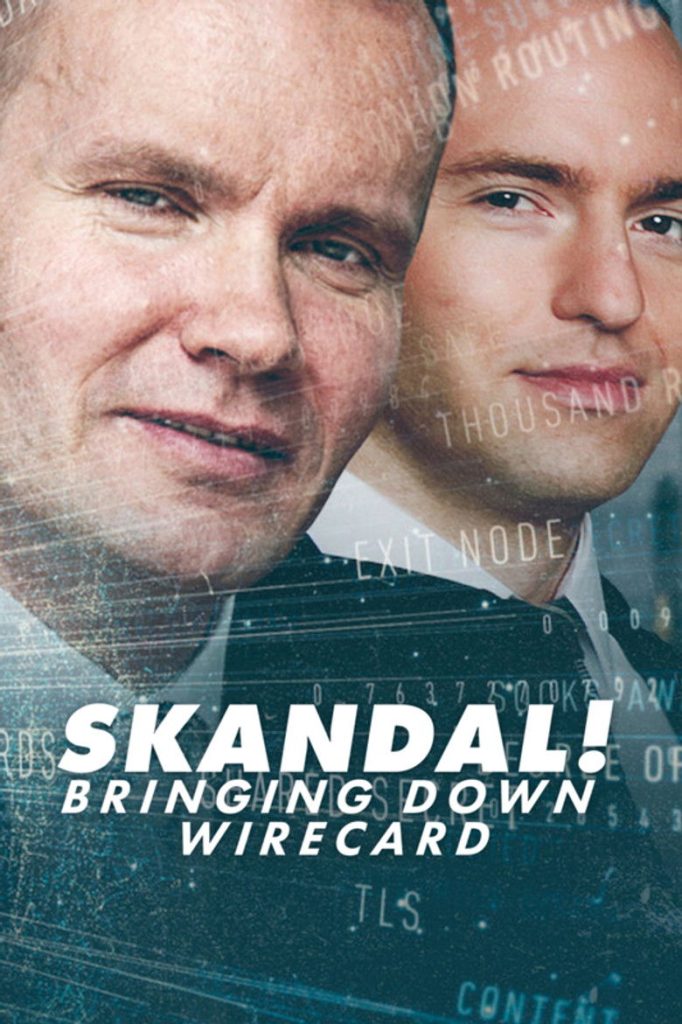
Story overview
This documentary examines the rise and fall of Wirecard, a German payment processing company that was once a financial darling before being exposed as a massive fraud. The film follows investigative journalists as they uncover evidence of accounting irregularities, fabricated transactions, and corporate deception that led to the company's collapse. It explores themes of corporate greed, journalistic perseverance, and financial accountability in the modern digital economy.
Parent Guide
A documentary about financial fraud investigation suitable for mature middle schoolers and teens. No graphic content but deals with complex business deception.
Content breakdown
No physical violence or peril depicted. The film focuses on financial and corporate misconduct.
Some viewers might find the scale of deception and its consequences unsettling, but no intentionally frightening scenes.
Occasional mild business-related language about fraud and deception, but no strong profanity.
No sexual content or nudity.
No depiction of substance use.
The film explores serious themes of betrayal, financial ruin, and institutional failure that may be emotionally engaging for mature viewers.
Parent tips
This documentary deals with complex financial fraud and corporate misconduct. While there's no graphic content, the subject matter involves deception, legal investigations, and financial ruin that may be difficult for younger children to understand. Best suited for mature middle schoolers and teens who can grasp business concepts. The film serves as a good discussion starter about ethics, journalism, and financial literacy.
Parent chat guide
Parent follow-up questions
—
- What does it mean when someone tells lies about money?
- Why were the journalists trying to find out the truth?
- What clues did the journalists follow to uncover the fraud?
- How did Wirecard trick so many people for so long?
- What consequences did the fraud have for employees and investors?
- What systemic failures allowed Wirecard's fraud to continue for years?
- How does this case reflect broader issues in financial regulation?
- What ethical responsibilities do corporations have to their stakeholders?
- How has digital technology changed both financial fraud and investigative journalism?
🎭 Story Kernel
At its core, 'Skandal! Bringing Down Wirecard' is less about financial fraud and more about the psychology of belief in the digital age. The film masterfully explores how Wirecard's success wasn't just built on fabricated numbers, but on society's collective desire to believe in a German tech champion. The driving force isn't greed alone, but the characters' need for validation—the whistleblowers seeking justice, the executives clinging to their fabricated empire, and the journalists chasing truth in a post-truth landscape. It reveals how modern fraud exploits our trust in technology and national pride, making complicit believers of investors, regulators, and even the media until the evidence becomes undeniable.
🎬 Visual Aesthetics
The film employs a stark, clinical visual palette dominated by glass office towers, sterile boardrooms, and the blue glow of computer screens, mirroring the cold, digital nature of the crime. Cinematography frequently uses tight close-ups during tense phone calls and document reviews, emphasizing the claustrophobic pressure on the investigators. Symbolically, recurring shots of elevators in Wirecard's headquarters represent the company's artificial ascent and eventual collapse. The contrast between the sleek, modern Wirecard offices and the modest, paper-strewn Financial Times newsroom visually underscores the disparity between illusion and the gritty reality of investigative work.
🔍 Details & Easter Eggs
💡 Behind the Scenes
The film is based on the real-life investigative work documented in the book 'Billion Dollar Loser' by FT journalists Dan McCrum and Stefania Palma, who are central characters. To achieve authenticity, the production consulted extensively with the real journalists and whistleblowers. Actor Christoph Letkowski, who plays whistleblower Pav Gill, studied hours of interview footage to capture Gill's specific mannerisms and cadence of speech. Key scenes set in the Financial Times London office were filmed on a meticulously recreated set, as access to the actual newsroom was not possible during production.
Where to watch
Choose region:
- Netflix
- Netflix Standard with Ads