
Sleepaway Camp (1983)
Story overview
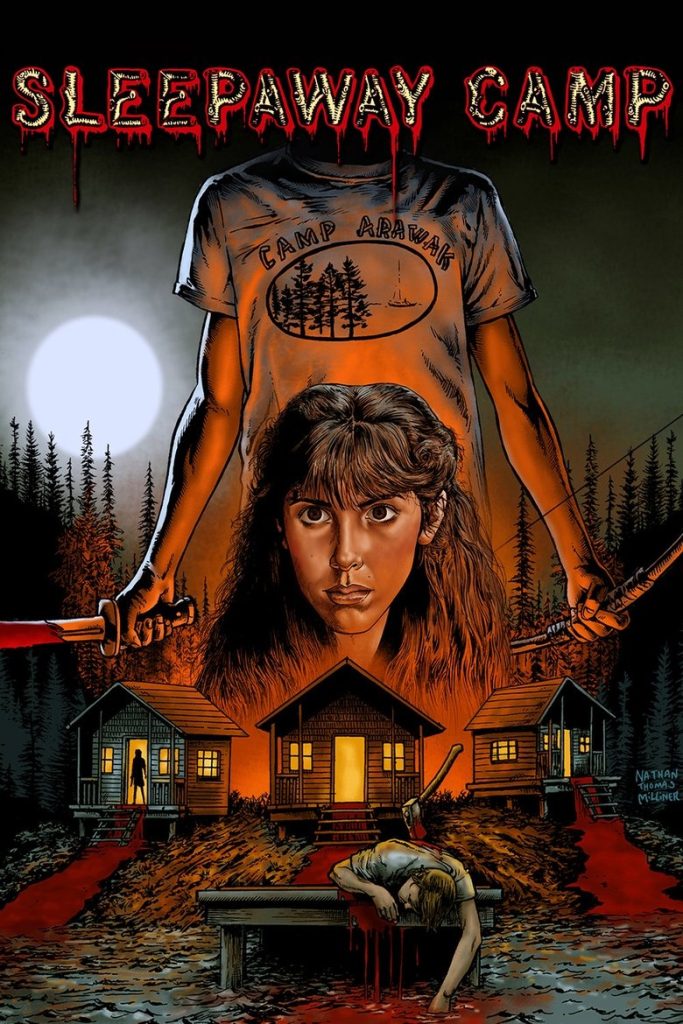
Sleepaway Camp is a 1983 American horror film directed by Robert Hiltzik. The story follows Angela, a shy and traumatized teenager who, years after a tragic boating accident, is sent to Camp Arawak for the summer. As Angela struggles to fit in with other campers, a series of bizarre and violent 'accidents' begin to claim the lives of various campers and staff. The film blends slasher horror elements with mystery, culminating in a shocking and infamous twist ending that has made it a cult classic in the horror genre.
Parent Guide
Sleepaway Camp is a graphic and intense horror film with strong violent and disturbing content. It is not appropriate for viewers under 17 due to its explicit depictions of murder, psychological themes, and shocking twist. Parents should exercise extreme caution and consider the mature themes (including gender identity and trauma) before allowing older teenagers to view it.
Content breakdown
Frequent and graphic violence including stabbings, burnings, drowning, and other murders. Victims are shown in distress, with blood and injury details. The peril is intense and sustained throughout, with characters in life-threatening situations.
Extremely scary and disturbing content. Includes jump scares, eerie atmosphere, and psychological horror. The twist ending is notoriously shocking and deals with themes of identity and trauma that could be deeply unsettling. Some scenes involve body horror and unsettling imagery.
Includes moderate profanity such as 'hell', 'damn', and occasional stronger terms. Not excessively frequent but present in dialogue among teens and adults.
Brief nudity in a non-sexual context (e.g., in a shower scene). Some sexual references and innuendo among teen characters, but no explicit sexual acts. Themes related to sexuality and gender are central to the plot.
Minor references to alcohol use by adult characters, such as counselors drinking beer. No depiction of drug use or abuse.
High emotional intensity due to themes of trauma, bullying, isolation, and identity confusion. The film's climax is psychologically intense and could provoke strong reactions like anxiety, shock, or discomfort. Not suitable for sensitive viewers.
Parent tips
This film is rated R for strong horror violence, disturbing content, language, and brief nudity. It is not suitable for children or young teenagers. The movie contains graphic depictions of murders (including stabbings, burnings, and other violent deaths), intense psychological themes related to trauma and identity, and a highly disturbing twist ending. Parents should be aware that this film includes scenes that could be deeply unsettling for viewers of any age, particularly due to its themes of gender identity and violence. It is best reserved for mature audiences (17+) who are familiar with and enjoy intense horror films.
Parent chat guide
Parent follow-up questions
—
—
—
- What do you think the film was trying to say about how people treat those who are different?
- How did the twist ending change your perspective on the story?
- Do you think the violence in the movie was necessary to tell the story, or was it excessive?
- How does this film compare to other horror movies you've seen in terms of scariness?
🎭 Story Kernel
At its core, 'Sleepaway Camp' is a brutal critique of societal pressures surrounding gender identity and conformity. The film's horror stems not just from a masked killer, but from the toxic environment of bullying and exclusion at Camp Arawak. Angela, the traumatized survivor of a childhood boating accident, is forced into a rigid, feminine role by her overbearing aunt, suppressing her true self. The murders, often targeting those who mock or harass Angela, act as a violent, distorted form of rebellion against this forced assimilation. The infamous ending reveals the killer's identity and Angela's secret, framing the entire narrative as a tragic, bloody consequence of trauma and the failure to accept someone outside prescribed norms.
🎬 Visual Aesthetics
The film employs a deceptively sunny, low-budget aesthetic that lulls viewers into a false sense of security. The daytime camp scenes are washed in bright, almost garish colors, contrasting sharply with the gritty, shadowy kill sequences. Camera work is often static and observational, mimicking the voyeuristic gaze of the campers and counselors, which amplifies the feeling of pervasive judgment. Key symbolism is blunt but effective: Angela's constant, silent stares directly into the camera break the fourth wall, implicating the audience in her ostracization. The final shot's grotesque, frozen scream and reveal is a masterclass in using a single, shocking image to redefine everything that came before.
🔍 Details & Easter Eggs
💡 Behind the Scenes
The film's shocking finale required a special prosthetic mask for actor Michael A. Simpson. The now-iconic final shot of Angela's face was achieved by having actress Felissa Rose hold a specific, pained expression for an extended period while the mask was applied. Much of the film was shot at an actual summer camp in New York during its off-season, lending an authentic, slightly rundown atmosphere. Director Robert Hiltzik reportedly used his own childhood camp experiences to inform the film's setting and the dynamics between the young cast members.
Where to watch
Choose region:
- Amazon Prime Video
- fuboTV
- Peacock Premium
- Philo
- Night Flight Plus
- Screambox Amazon Channel
- Amazon Prime Video with Ads
- Peacock Premium Plus
- Midnight Pulp Amazon Channel
- Shout! Factory Amazon Channel
- The Roku Channel
- Pluto TV
- Shout! Factory TV
- Amazon Prime Video Free with Ads
- Cineverse
- Midnight Pulp
- Tubi TV
- Amazon Video
- Apple TV Store
- Fandango At Home
Trailer
Trailer playback is unavailable in your region.