
Sleeping Beauty (1959)
Story overview
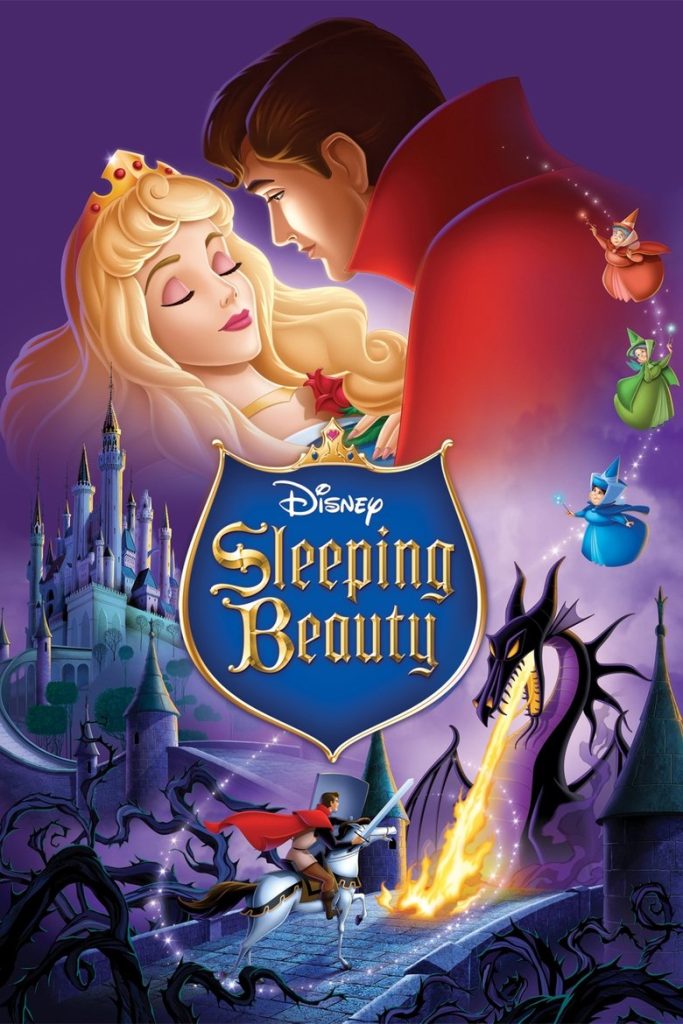
This classic animated fairy tale follows Princess Aurora, who is cursed as an infant by the evil fairy Maleficent to die on her 16th birthday. Three good fairies hide and protect the princess, raising her in secret while trying to prevent the curse. The story explores themes of good versus evil, destiny, and true love's power to overcome darkness.
Parent Guide
A classic fairy tale with beautiful animation and memorable music, containing some potentially frightening fantasy elements.
Content breakdown
Fantasy peril includes a curse, a dragon confrontation, and characters in danger. No graphic violence.
The villain Maleficent is menacing, with dark imagery and transformation into a dragon. The sleeping death concept might disturb some children.
No offensive language.
No sexual content. Characters are modestly dressed in period-style clothing.
No substance use depicted.
Emotional moments include separation, danger, and dramatic confrontations, balanced with joyful scenes and a happy ending.
Parent tips
This G-rated Disney classic contains some potentially frightening elements for young children, particularly the villain Maleficent and her transformation into a dragon. The curse and sleeping death concept might be confusing or scary for preschoolers. The film's themes of good triumphing over evil and the power of true love are positive messages that parents can discuss with children.
While the animation is beautiful and the music memorable, parents should be aware that some scenes feature dark imagery and a menacing villain. The film's resolution is happy and reassuring, but the journey includes moments of peril that might be intense for sensitive viewers.
This film provides opportunities to discuss how characters show courage in the face of danger and how kindness and love can overcome even powerful curses. The fairies' protective actions and the prince's bravery offer positive examples for children.
Parent chat guide
During viewing, pause if children seem frightened by Maleficent or the dragon scene. Remind them that this is a story and that the good characters are working to protect Aurora. Point out how the fairies use their magic for protection and how characters show courage.
After watching, discuss how the characters solved problems and what lessons the story teaches. Ask about favorite parts and any questions they have about the magic or characters' choices. Reinforce the positive messages about love overcoming darkness.
Parent follow-up questions
- What was your favorite part of the movie?
- How did the fairies help protect Aurora?
- What made you feel happy in the story?
- What colors did you like in the movie?
- How did the prince help Aurora?
- Why do you think Maleficent wanted to curse Aurora?
- How did the fairies show they cared about Aurora?
- What would you do if you had magic like the fairies?
- What made the prince brave?
- How did love help break the curse?
- What does this story teach us about good versus evil?
- How did the characters show loyalty to each other?
- What might have happened if the fairies hadn't protected Aurora?
- Why do you think true love was powerful in this story?
- How did the characters handle difficult situations?
- What themes about destiny and choice does this story explore?
- How does the film portray the conflict between good and evil magic?
- What messages does the story convey about protection and responsibility?
- How might this fairy tale reflect cultural values about love and courage?
- What makes this classic story continue to resonate with audiences?
🎭 Story Kernel
At its core, 'Sleeping Beauty' explores the commodification of youth and the passive surrender of agency. Lucy, a university student, isn't driven by financial desperation alone but by a profound nihilism and curiosity about her own limits. Her descent into the high-end escort service, specifically the 'Sleeping Beauty' role where she's drugged unconscious for wealthy elderly clients, represents a complete abdication of self. The film asks what happens when the body becomes a vessel, and consciousness—the very thing that makes us human—is willingly surrendered. It's less about exploitation by others and more about Lucy's internal void, her search for meaning through extreme passivity, making her a modern, tragic inversion of the fairy tale princess.
🎬 Visual Aesthetics
Director Julia Leigh employs a cold, detached visual language dominated by static, symmetrical shots that create a clinical, museum-like atmosphere. The color palette is austere: muted greys, beiges, and sterile whites in Lucy's daily life contrast sharply with the opulent, dark wood and deep reds of the mansion. This isn't sensual eroticism but a stark examination. The camera often observes Lucy as an object, framing her in doorways or lying motionless, emphasizing her passivity. The infamous 'Sleeping Beauty' sequences are shot with a haunting, still-life quality, making the violation feel archaeological rather than violent, which is ultimately more disturbing.
🔍 Details & Easter Eggs
💡 Behind the Scenes
This was the directorial debut of Australian novelist Julia Leigh. The film premiered in competition at the Cannes Film Festival in 2011. Emily Browning, who plays Lucy, performed all her nude scenes herself, discussing with Leigh the importance of avoiding a voyeuristic gaze. The sterile mansion scenes were filmed at a historic property in Sydney. Leigh's background in literature is evident in the film's deliberate, almost novelistic pacing and its focus on psychological interiority over conventional plot.
Where to watch
Choose region:
- Disney Plus
- Amazon Video
- Apple TV
- Google Play Movies
- YouTube
- Fandango At Home
- Kanopy
Trailer
Trailer playback is unavailable in your region.